The 2010s File Feature
Who Dat
"Who Dat" — J. Cole Fayetteville to the Hot 100: A Career in Motion The summer of 2010 felt, in retrospect, like the last great moment of hip-hop anticipatio…
01 The Story
"Who Dat" — J. Cole
Fayetteville to the Hot 100: A Career in Motion
The summer of 2010 felt, in retrospect, like the last great moment of hip-hop anticipation as it had existed for two decades: the era when a rapper could build a reputation through mixtapes and street buzz, then convert that underground heat into a proper major-label debut with the whole industry watching. Jermaine Lamarr Cole, the Fayetteville, North Carolina native who had grown up between military bases and eventually landed at St. John's University in New York, was in the middle of exactly that transition. He had spent years building credibility in the mixtape circuit, earning a cosign from Jay-Z's Roc Nation imprint that gave him both resources and a spotlight. "Who Dat" arrived as a statement of arrival, a first proper single released ahead of what would become Cole World: The Sideline Story.
At the time, J. Cole occupied a specific and somewhat uncomfortable position in rap: critically beloved, widely anticipated, but not yet commercially proven. His mixtapes, particularly The Warm Up and Friday Night Lights, had earned him a passionate following among listeners who valued technical skill and lyrical density over maximalist production values. The question in 2010 was whether that fanbase could translate into mainstream chart success, and whether J. Cole himself wanted to pursue the kind of radio-friendly sound that guaranteed commercial performance.
The Sound of 2010 Rap
"Who Dat" answered that question with some confidence. Produced by J. Cole himself, the track featured a driving, assertive beat that leaned into the harder end of his sonic range without abandoning the technical precision that characterized his mixtape work. The production was aggressive enough to compete on radio but sophisticated enough to satisfy listeners who had been following his trajectory for years. Cole has spoken about producing his own material as a way of maintaining full creative control; on "Who Dat," that control is audible in the way the beat and the vocal performance feel designed in conversation with each other.
The lyrical content of "Who Dat" engaged directly with J. Cole's emerging narrative: the hungry, underestimated rapper demanding acknowledgment from a hip-hop world that had not yet granted him full status. The title itself functions as a challenge, a demand for recognition directed at both skeptics and peers. Cole's delivery was sharp and confident throughout, showcasing the flow technique and internal rhyme structures that had made his mixtapes so compelling.
Chart Performance and Industry Context
The track debuted at number 93 on the Billboard Hot 100 on June 12, 2010, spending one week on the chart. For a first proper commercial single from a rapper who had not yet released a studio album, that placement represented genuine traction. The Hot 100 of 2010 was a competitive environment, with Ke$ha, Eminem, and Katy Perry occupying the upper positions; landing on the chart at all with a track this lyrically demanding and relatively uncompromising signaled real listener interest.
The single served its commercial purpose effectively, generating attention for J. Cole as a proper artist in transition rather than simply a critically admired mixtape figure. The rap industry was watching to see whether the Roc Nation cosign could be converted into genuine audience reach, and "Who Dat" provided early evidence that it could.
Roc Nation and the Weight of Expectation
The relationship between J. Cole and Jay-Z's Roc Nation was, from the beginning, a study in expectations. Jay-Z had signed Cole after hearing his mixtapes and recognizing technical talent of an unusual order. The Roc Nation affiliation gave Cole access to resources and industry connections that independent or less prominently affiliated artists could not access, but it also intensified scrutiny. Every early release was evaluated not just on its own terms but as evidence of whether Jay-Z's judgment had been sound.
"Who Dat" held up to that scrutiny. The track circulated widely in the months before Cole's proper debut album, building commercial momentum and demonstrating that his audience had genuine size. The single version benefited from radio spins that introduced him to listeners who might not have encountered his mixtapes.
A Preview of What Was Coming
Listening to "Who Dat" in the context of J. Cole's subsequent career, the track reads as an accurate preview of the artistic philosophy he would pursue for the following decade and beyond. The emphasis on self-production, the lyrical ambition, the competitive hunger, all of these elements would recur across albums including Born Sinner, 2014 Forest Hills Drive, and KOD. Cole's commitment to artistic integrity, visible even in this early commercial effort, would eventually earn him one of the most devoted fanbases in hip-hop. "Who Dat" was the first widely heard evidence that this was an artist with a coherent vision and the skills to execute it. Press play and catch the moment before it all really began.
"Who Dat" — J. Cole's singular moment on the 2010s charts.
02 Song Meaning
"Who Dat" — Recognition, Hunger, and the Emerging Voice of J. Cole
The Anthem of the Unproven
Every artist who builds a reputation through underground work before crossing into mainstream visibility faces the same essential challenge: how do you signal genuine confidence without abandoning the authenticity that built your credibility in the first place? "Who Dat" is J. Cole's answer to that question in 2010, a track organized entirely around the tension between demanding recognition and having not yet fully received it. The song's central emotional posture is competitive hunger, the specific feeling of an artist who knows his own value and is actively challenging the world to catch up.
Recognition as Theme
The question embedded in the title points directly at the song's thematic core. "Who dat?" functions simultaneously as a boast and a challenge. The rapper is both announcing himself and daring listeners to ask the question, to not yet know the answer. There is something self-aware about this framing: Cole was genuinely not yet widely known in 2010, and the song acknowledges that reality while insisting it is temporary. The lyrical confidence throughout the track reads not as delusional arrogance but as a statement of intent backed by demonstrable skill.
Cole's approach to self-assertion has always differed from the more maximalist braggadocio common in commercial rap. His claims tend to be grounded in craft rather than wealth or status. "Who Dat" references technical skill, hunger, and preparation, the qualities of an artist who has spent years developing his abilities and is now ready for the stage to expand. That framing resonates particularly with listeners who value effort and craft over spectacle.
The Self-Producer's Statement
J. Cole's decision to produce "Who Dat" himself carries its own meaning, beyond the practical. Self-production in hip-hop signals a particular kind of artistic autonomy, a refusal to outsource the sonic environment of your work to someone else's vision. Cole's production aesthetic tends toward the understated, favoring rhythmic precision and carefully placed samples over overwhelming maximalism. On "Who Dat," the beat serves the performance rather than competing with it, a choice that speaks to the song's priorities: the message is in the words, and the production is the frame.
Cultural Context: 2010 Hip-Hop's Lyrical Debate
The year 2010 was a fascinating moment in the ongoing conversation about what hip-hop was supposed to value. Commercial rap had drifted heavily toward electronic-influenced production and simplified lyrical content, and a counter-current of listeners were actively seeking artists who prioritized technical skill and thematic depth. J. Cole was positioned, almost perfectly, to serve that audience. His arrival on the Hot 100 with "Who Dat" represented a constituency of hip-hop listeners who wanted the chart to include their preferences, who pushed his music not just for enjoyment but as a kind of cultural statement about what mattered.
The track's themes of unrecognized talent and imminent breakthrough spoke to those listeners' own experience of rooting for artists they believed in before the mainstream caught on. There was collective investment in J. Cole's success that went beyond individual fandom.
What the Track Promised
Considered as a statement of intent, "Who Dat" holds up remarkably well. The qualities the song claims, lyrical precision, self-sufficiency, authentic hunger, are the qualities J. Cole's subsequent career genuinely demonstrated. The track functions now as the opening line of a long argument Cole has been making through his music: that commercial success and artistic integrity are not mutually exclusive, that an audience exists for work that respects their intelligence. "Who Dat" was the beginning of that argument, and the following decade of his career became the evidence.
"Who Dat" — J. Cole's singular moment on the 2010s charts.
→ More from J. Cole
View all J. Cole hits →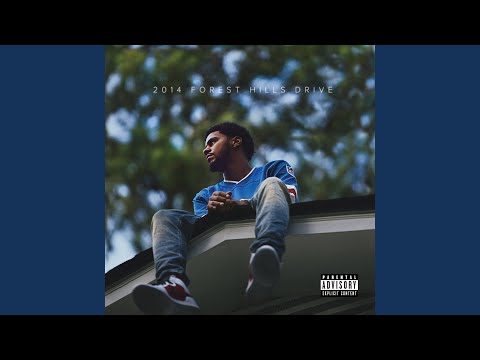



→ More from the 2010s File
View all 2010s hits →



Keep digging