The 2010s File Feature
Immortal
J. Cole's "Immortal": Recording, Release, and Chart History When J. Cole released "Immortal" in December 2016, the track arrived not as a planned single but …
01 The Story
J. Cole's "Immortal": Recording, Release, and Chart History
When J. Cole released "Immortal" in December 2016, the track arrived not as a planned single but as a loosie — a standalone record distributed without the scaffolding of an album campaign. That context shaped how the song landed commercially and critically, demonstrating the degree to which Cole had cultivated a devoted audience willing to engage with his work on his own terms and timeline.
The track was recorded and produced entirely by Cole himself, who had been operating as both rapper and producer since his early mixtape days on the Dreamville imprint. By late 2016, he had released four studio albums, each debuting at number one on the Billboard 200, and he had built a reputation as one of the most meticulous craftsmen in mainstream hip-hop. "Immortal" was recorded in a period when Cole was working through a range of material in the studio, and the decision to release it independently of a larger project was consistent with his practice of occasionally dropping music directly to the public without promotional buildup.
Dreamville Records and Interscope distributed "Immortal" to streaming platforms and digital retailers in December 2016, and the song charted on the Billboard Hot 100 almost immediately. It debuted and eventually peaked at number eleven, spending five weeks on the chart. That peak represented a significant commercial achievement for a loosie, a format that typically underperforms compared to album-driven releases that benefit from cross-promotional momentum. The result underscored how thoroughly streaming had reshaped chart dynamics by mid-decade, rewarding artists who had cultivated loyal listening audiences rather than those who simply had conventional radio campaigns behind them.
The production on "Immortal" is sparse and deliberate. Cole constructs the instrumental around a looping, soul-inflected foundation, using space rather than density to let the vocal performance occupy center stage. The approach reflected his ongoing interest in minimalism as a compositional philosophy, one he had explored at length on his 2014 album 2014 Forest Hills Drive, which was recorded with almost no guest appearances and very few overt production flourishes. "Immortal" continued in that direction, asking listeners to engage with the rapper's voice and cadence rather than with production novelty.
Lyrically, the track finds Cole meditating on legacy, ambition, and the desire to create work that outlasts its moment. He situates himself within hip-hop's competitive tradition while simultaneously stepping back to interrogate what achievement actually means over a longer timeframe. This reflexive quality had become a hallmark of his writing, separating him from peers who favored more straightforward subject matter. "Immortal" was not a departure but rather a refinement of perspectives he had been developing across his entire catalog.
In the context of December 2016, the broader hip-hop landscape was dominated by trap music's sonic innovations and the streaming-era phenomenon of overstuffed album rollouts designed to maximize playlist placement and chart points. Cole's decision to release a standalone, introspective record cut against those currents deliberately. He had spoken in interviews about his distaste for what he perceived as the cheapening of album formats under streaming economics, and "Immortal" read partly as a statement of aesthetic independence.
The five-week Hot 100 run at a peak of eleven was tracked closely by music industry analysts who were studying how streaming-only or streaming-first releases behaved under the revised chart methodology that Billboard had adopted in recent years. "Immortal" was cited as evidence that streaming counts could drive a record into the top fifteen without meaningful radio airplay, a dynamic that was still novel enough in 2016 to warrant attention from trade publications.
Critical reception was largely positive among hip-hop journalists who placed the track within Cole's larger body of work. Reviewers noted its craftsmanship and the clarity of his artistic vision, though some observed that the loosie format limited the song's ability to accumulate the kind of context that an album track gains from its surroundings. As a standalone piece, "Immortal" was evaluated on its own merits, and those merits were generally considered substantial.
The track was later performed during concert appearances and received sustained streaming attention in the years following its release, as listeners who discovered Cole through later albums worked backward through his catalog. That long-tail streaming behavior was characteristic of his audience, which tended to engage with his music with an archival thoroughness unusual for pop listeners. "Immortal" thus maintained a presence in his streaming numbers well beyond the initial five-week chart window, cementing its place as a minor but meaningful entry in his discography.
02 Song Meaning
Legacy, Ambition, and the Meaning of "Immortal" by J. Cole
"Immortal" arrives as one of J. Cole's most direct statements on the relationship between artistic output and enduring significance. At its core, the song is a meditation on the desire to create work that survives its moment — to make something that matters not just in the commercial present but over a longer cultural arc. This is not a new preoccupation in hip-hop; artists from Rakim to Jay-Z have grappled with questions of legacy. What distinguishes Cole's approach is the degree of self-examination he brings to the inquiry, turning the camera on himself as much as on his ambitions.
The title itself operates as a thesis. Immortality, in the context of an artist's career, does not refer to biological persistence but to cultural durability. Cole positions the desire for lasting relevance as a central motivation, and then proceeds to interrogate whether that desire is pure or whether it is compromised by ego and competitiveness. This recursive quality is characteristic of his best work, in which the stated subject and the method of inquiry become intertwined. He does not simply assert that he wants to be immortal; he questions what that wanting reveals about him.
The song's cultural significance extends beyond its lyrical content to its mode of release. By dropping "Immortal" as a loosie in December 2016, Cole implicitly made an argument about how artistic value accrues. In an era dominated by streaming economics and the imperative to release music in high volumes to maintain algorithmic visibility, a single standalone track released without promotional machinery around it represents a kind of artistic bet. It says: this piece of work is strong enough to find its audience on its own. The fact that it reached number eleven on the Hot 100 validated that bet and contributed to a broader conversation about how streaming was changing the relationship between artistic intent and commercial outcome.
Within J. Cole's discography, "Immortal" fits into a throughline of tracks in which he reflects on his position in hip-hop, his relationships with peers, and his sense of what separates lasting artistry from disposable popularity. This is a theme he had explored on albums like 2014 Forest Hills Drive and would continue to develop on later projects. "Immortal" is a data point in an ongoing argument he has been making throughout his career: that craft, patience, and artistic seriousness are not incompatible with commercial success, and that the pursuit of one does not require the abandonment of the other.
The song also carries significance in the context of generational conversations happening within hip-hop in 2016. The rise of younger artists working in trap and SoundCloud rap aesthetics was prompting questions about where the center of gravity in the genre was shifting. Cole, who had always been associated with a more traditional lyrical approach, was implicitly positioning himself against that current not by dismissing it but by doubling down on his own aesthetic commitments. "Immortal" is in part a declaration of artistic identity at a moment when such declarations carried weight.
The production aesthetic of the track reinforces its thematic content. A sparse, soul-derived instrumental creates space rather than filling it, which mirrors the song's argument that restraint and patience are virtues in a saturated media environment. The choice to let silence and minimalism carry emotional weight is itself a philosophical statement about what music can do when it resists the impulse to overwhelm the listener.
For fans of Cole's work, "Immortal" functions as confirmation of a creative identity that had been consistent across his career. For listeners encountering him for the first time, it serves as an efficient introduction to his central preoccupations. Its sustained streaming life in the years after its initial release suggests that it continued to find new listeners who recognized in it something worth returning to — which is, perhaps, the closest practical approximation of the immortality the title invokes.
→ More from J. Cole
View all J. Cole hits →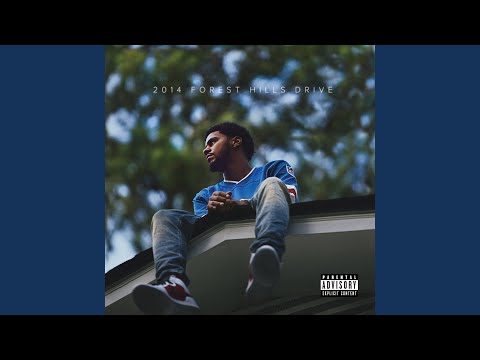



→ More from the 2010s File
View all 2010s hits →



Keep digging