The 2010s File Feature
4 Your Eyez Only
4 Your Eyez Only: J. Cole's Most Personal Album Track and Its Place in His Catalog "4 Your Eyez Only" is the title track from J. Cole's fourth studio album o…
01 The Story
4 Your Eyez Only: J. Cole's Most Personal Album Track and Its Place in His Catalog
"4 Your Eyez Only" is the title track from J. Cole's fourth studio album of the same name, released in December 2016 on Dreamville Records in partnership with Roc Nation and Interscope Records. The album arrived without traditional singles promotion, no lead single, no advance marketing campaign, no celebrity features, and no music videos for any of its tracks at the time of release. It was a deliberate departure from the commercial playbook that the music industry had come to expect from a rapper of J. Cole's commercial stature, and the title track functions as both the emotional and narrative climax of the album's central story.
The album as a whole is structured around two overlapping narratives: Cole's own reflections on mortality, fatherhood, and legacy, and a tribute to a childhood friend named James McMillan Jr., who had died in circumstances connected to street life and violence. The title track brings these two threads together in a direct and emotionally harrowing way. It is a long piece, running well beyond what radio programmers would consider viable for mainstream airplay, and its length is not accidental. Cole uses the extended runtime to build an emotional case that demands the listener's sustained attention rather than their casual engagement.
The production on the track was handled within Cole's own creative circle, consistent with his approach across the album. J. Cole has maintained one of the tightest production arrangements in mainstream hip-hop, producing the majority of his own albums himself, often working with a small team of close collaborators including Ron Gilmore and Ibrahim Hamad. This degree of creative control is unusual for an artist at his commercial level, and it gives the album, including its title track, a sonic coherence and intentionality that distinguishes it from records assembled through a more typical major-label A&R process.
The album debuted at number one on the Billboard 200 in its opening week, with significant sales and streaming numbers that demonstrated the depth and loyalty of Cole's fanbase despite the complete absence of conventional promotional singles. This was widely discussed in industry press as evidence that a particular kind of artist with a particular kind of audience could defy the conventional wisdom about needing radio hits and celebrity features to move units. The title track benefited from that album-level momentum, accumulating streams from listeners who consumed the project as a complete work rather than seeking out individual songs.
Critical reception for the album and its title track was broadly positive, with many reviewers noting that the project represented one of Cole's most emotionally ambitious undertakings. The willingness to dedicate an entire studio album to processing grief, legacy, and the brutal short lives of young Black men in America was recognized as a significant artistic statement. The title track in particular was cited as among the most powerful closing statements on any hip-hop album released that year, a song that rewards careful listening and punishes distracted consumption.
The album's release came during a period when J. Cole was quietly repositioning himself as one of hip-hop's most serious and least commercially compromised artists. His previous album 2014 Forest Hills Drive had similarly debuted at number one without features, but "4 Your Eyez Only" pushed that philosophy further, into more explicitly political and personal territory. The album was received in the context of the ongoing national conversation about police violence, racial inequality, and the lives of young Black men, a context that gave the title track's subject matter an additional layer of cultural resonance and urgency.
The song did not have a music video at release, which meant that its impact was almost entirely textual and sonic, relying on the listener's engagement with the words and the music rather than visual imagery. This was consistent with the album's overall rejection of conventional promotional tools and reinforced the sense that Cole was asking his audience to engage on his terms rather than accommodating the short-attention spans of social media promotion. For an audience that had grown up with J. Cole and trusted his creative vision, this was a reasonable ask and one that was largely honored.
The track's lasting significance in J. Cole's discography is substantial. It is frequently cited by fans and critics as one of his defining artistic statements, a work that captures his ambitions as a storyteller, his emotional range as a performer, and his commitment to using hip-hop as a vehicle for genuine human reckoning rather than entertainment spectacle. 4 Your Eyez Only as an album was certified platinum by the RIAA, confirming that artistic ambition and commercial viability are not always in opposition when an artist has built the right kind of audience loyalty over time.
02 Song Meaning
Legacy, Loss, and Fatherhood in J. Cole's "4 Your Eyez Only"
"4 Your Eyez Only" is a song about the transmission of a life's meaning across death, specifically the meaning of a life cut short by violence. J. Cole wrote the track as a tribute to his late friend James McMillan Jr., who died young, and the song takes the form of a message that McMillan never got to deliver: a father's letter to the daughter he would not get to raise. The conceit is devastating in its simplicity. Cole inhabits McMillan's voice and perspective, speaking directly to a child who will grow up without her father, attempting to give her what he cannot give in person: his understanding of the world, his love, his regret, and his warnings.
The emotional architecture of the song works on two levels simultaneously. On one level, it is a direct address to a specific child about her specific father. On another level, it is a meditation on the conditions that produce these situations repeatedly across Black communities in America: the pull of the street, the economics of poverty, the limited options that make dangerous choices feel rational, and the terrible cost paid by children who never chose any of it. Cole does not sentimentalize the man he is eulogizing or sanitize the choices that led to his death; instead, the song holds both the love and the tragedy in the same space, which is what makes it credible.
The title itself is important. The phrase "for your eyes only" implies private communication, a message meant to be received by one specific person, not broadcast to the world. The irony, which Cole seems fully aware of, is that this deeply private message is being shared with millions of listeners. But that tension is part of the song's meaning: the private grief of one family and the public grief of a community that loses young men like McMillan Jr. regularly are not separate things. They are the same wound experienced at different scales.
The song's positioning as the closing track and title track of the album gives it a particular weight within the project's architecture. Everything before it in the album has been building toward this reckoning. The autobiographical threads, the meditations on fame and authenticity, the reflections on mortality — all of it converges here, in a song that strips away everything except the essential question: what does a man leave behind when he dies young, and what is the obligation of those who survive him?
Cole's answer is a combination of moral instruction, emotional transparency, and what can only be called love expressed through storytelling. The song argues implicitly that one of the most important things a community can do for its most vulnerable members is to tell the truth about how they lived and why, without false heroes and without false condemnation. This commitment to unvarnished honesty about the lives of people who rarely get to speak for themselves in mainstream media is what elevates the track from tribute to artistic statement. It refuses to make McMillan Jr.'s death merely a backdrop for Cole's self-examination; it insists on his specific humanity, his fatherhood, his love, and his tragedy as the central subject.
For J. Cole's audience, the song represents a fulfillment of the implicit promise he had been making across his entire career: that hip-hop could be a vehicle for the kind of emotional truth-telling that serious literature undertakes. The song does not need a hook in the conventional commercial sense because it is structured around a different kind of compulsion, the compulsion to bear witness. That is its lasting meaning and its most significant contribution to the catalog of one of hip-hop's most deliberately serious artists.
→ More from J. Cole
View all J. Cole hits →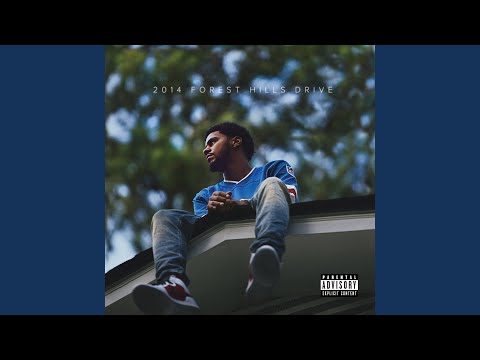


→ More from the 2010s File
View all 2010s hits →



Keep digging