The 2010s File Feature
Sally Walker
Sally Walker: Iggy Azalea's 2019 Chart Return Iggy Azalea in Early 2019 Few careers in contemporary pop music have followed as turbulent a trajectory as Iggy…
01 The Story
Sally Walker: Iggy Azalea's 2019 Chart Return
Iggy Azalea in Early 2019
Few careers in contemporary pop music have followed as turbulent a trajectory as Iggy Azalea's. The Australian-born rapper born Amethyst Amelia Kelly had experienced one of the most dramatic commercial ascents of the mid-2010s, placing four singles simultaneously in the top ten of the Billboard Hot 100 in 2014, a feat that had previously been achieved only by the Beatles. Fancy, her collaboration with Charli XCX, had reached number one and dominated the summer. Then, with equal drama, the commercial momentum collapsed under the weight of critical reassessment, public controversies, and a shifting hip-hop landscape that moved away from the polished pop-trap crossover that had been her strongest suit. By 2019, she was working to reestablish herself, and Sally Walker was the vehicle she chose for that attempt.
The Single and Its Sound
Sally Walker was released in March 2019, produced with the kind of stripped-back, bass-forward trap production that had become standard commercial currency in rap music by that point. The song's hook draws on a schoolyard rhyme, Humpty Dumpty-adjacent in its nursery-rhyme cadence, repurposed into a rhythmic vehicle for confident self-assertion. Iggy Azalea's approach on the track leaned into a harder, more aggressive posture than her most commercial mid-2010s work, an apparent attempt to address criticism that her earlier crossover material had prioritized pop accessibility over rap credibility. The combination of a memorable hook construction and this more assertive delivery gave the song a distinctive character.
Chart Entry
The song entered the Billboard Hot 100 on March 30, 2019, debuting at its peak position of number 62. That single-week chart appearance reflected the streaming dynamics of a release that generated significant immediate interest without sustaining the kind of prolonged radio or streaming engagement needed for an extended chart run. A debut at position 62 on the Hot 100 represented genuine reach, confirming that Azalea's audience remained substantial even if the sustained crossover dominance of 2014 had not been recovered. The song also charted on the rap charts, indicating that her attempt to reconnect with the genre's core audience achieved at least partial success.
The Music Video and Cultural Moment
The accompanying music video received considerable attention, featuring choreography that drew on Atlanta-rooted dance culture and a visual aesthetic that aligned the song with contemporary trap video production norms. Music videos remained an important promotional vehicle in 2019, with YouTube and streaming platforms providing distribution that television channels had previously monopolized. The visual component of Sally Walker gave the song additional circulation and extended its cultural footprint beyond what the chart position alone might suggest. Azalea's visual presentation on the clip demonstrated an awareness of the visual codes of contemporary hip-hop that her critics had sometimes questioned.
Significance in Her Catalog
Within the arc of Iggy Azalea's career, Sally Walker occupies an interesting position as a comeback attempt that achieved qualified success. It demonstrated that her commercial instincts remained functional and that a meaningful audience was willing to follow her into new territory, but it did not replicate the scale of her 2014 breakthrough. The year 2019 proved a transitional one for her more broadly, with subsequent releases exploring different directions as she continued to navigate the space between the pop mainstream and hip-hop's core. The history of rap music is full of artists who achieved enormous early success and then spent years working to find their footing in a genre that moves quickly and shows limited patience for stasis. Azalea's ongoing engagement with that challenge makes her career arc one of the more instructive case studies in contemporary pop.
Put it on and hear a rapper who refuses to disappear quietly from a genre she helped remake.
"Sally Walker" — Iggy Azalea's singular moment on the 2010s charts.
02 Song Meaning
Sally Walker: Self-Assertion, Identity, and the Demands of Hip-Hop Credibility
The Art of the Comeback Statement
In popular music, the comeback single carries a particular set of pressures and expectations. The artist must acknowledge, through the quality and character of the music, that they understand what the audience needs from them while also demonstrating growth or change sufficient to justify renewed attention. Sally Walker by Iggy Azalea is a comeback statement, and it carries the compressed energy that such moments often produce. The song presents Azalea in a posture of confident self-assertion, dismissing her detractors and announcing her continued presence with a hook memorable enough to travel through social media and streaming playlists without the support of an established hitmaking momentum.
Nursery Rhyme Structure and Its Purposes
The song's most distinctive structural feature is its hook, which draws on the cadence and repetitive logic of children's nursery rhymes. This is a venerable hip-hop technique: taking a form associated with childhood simplicity and redeploying it in an adult, often explicitly transgressive context creates a productive dissonance that lodges itself in the listener's memory. The contrast between the innocent framework and the assertive content amplifies both elements. Memorable hooks in rap music often work through this kind of contrast, pairing something immediately recognizable and easy to process with subject matter that would not otherwise find its way into such a singable package.
The Question of Hip-Hop Authenticity
Iggy Azalea's career has been shadowed by sustained debate about authenticity in hip-hop, specifically about the appropriateness of a white Australian woman adopting the cadences, slang, and cultural postures of Southern Black American rap. These conversations are serious and important, touching on questions of cultural ownership, appropriation, and the economics of who gets rewarded for what kind of music. Sally Walker engages with this context whether or not it explicitly addresses it, because every creative choice Azalea makes is read through the lens of these ongoing debates. The song's more aggressive posture can be understood partly as a response to the critique that her earlier work was too commercially oriented to be taken seriously as rap.
Self-Confidence as Theme and Performance
Beyond the biographical and cultural context, Sally Walker is a song about the pleasures and necessity of self-confidence. The narrator describes herself with consistent confidence, deflecting criticism and asserting her right to her chosen identity and place in the musical landscape. This kind of declaratory self-assertion is a central theme in hip-hop, rooted in the genre's origins in communities where self-presentation was one of the few resources fully available regardless of economic circumstances. Braggadocio in rap is not simply ego; it is a convention with its own history and its own social functions, and Sally Walker participates in that convention fully.
What the Song Reveals About the Pop-Rap Crossover
The moment that produced Sally Walker was one in which the boundary between hip-hop and mainstream pop had essentially dissolved, at least at the commercial level. Trap production aesthetics had become the dominant sound across pop radio regardless of genre label, and the question of whether a given track was "real" rap or "pop rap" had become less commercially relevant than it had been even five years earlier. Azalea's positioning in this landscape reflects the opportunities and tensions that come with that dissolution: the mainstream has absorbed hip-hop's surface sounds, but questions about cultural authority and community membership remain very much alive beneath the commercial surface. Sally Walker exists in that space, confidently occupying territory whose borders are still being contested.
"Sally Walker" — Iggy Azalea's singular moment on the 2010s charts.
→ More from Iggy Azalea
View all Iggy Azalea hits →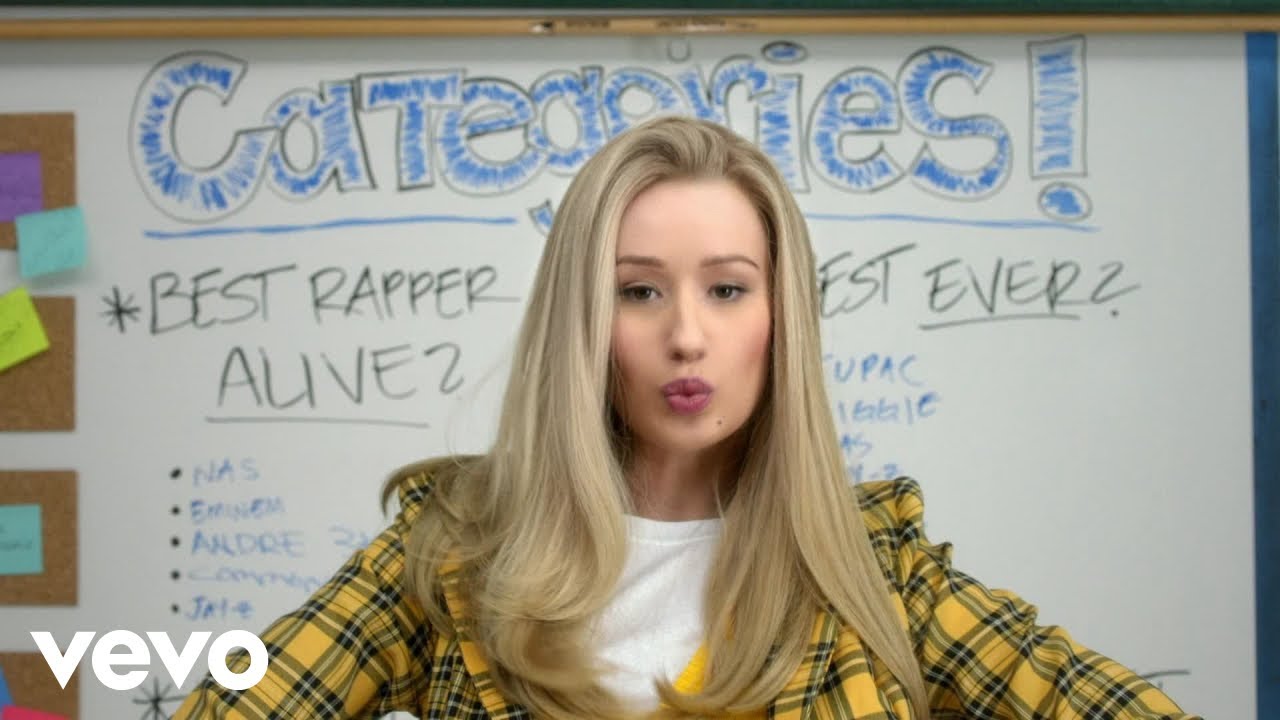




→ More from the 2010s File
View all 2010s hits →



Keep digging