The 2010s File Feature
I Gotta Get To You
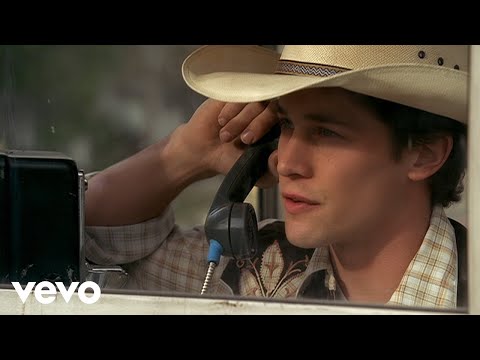
"I Gotta Get To You" — George Strait and the Timeless Pull of Country Radio The King Endures Spring 2010, and country radio was in the middle of a generation…
01 The Story
"I Gotta Get To You" — George Strait and the Timeless Pull of Country Radio
The King Endures
Spring 2010, and country radio was in the middle of a generational shift. Young bro-country acts were beginning to position themselves for a takeover that would define much of the decade to come. Against that backdrop, a 58-year-old man from Poteet, Texas, walked into the chart with quiet authority. George Strait had already accumulated more number-one country singles than any other artist in history, and rather than coasting on that legacy, he kept releasing new music that connected with the genre's core audience on its own terms.
"I Gotta Get To You" debuted on the Billboard Hot 100 on April 3, 2010 at position 100. Over the following weeks it climbed steadily, reaching its peak of number 70 during the week of June 5, 2010, with the full chart run stretching across 13 weeks. The track's performance on the Hot 100 was secondary to its presence on country-specific charts, where Strait remained a commanding force.
Where This Sat in His Career
By 2010, Strait's biography read like a ledger of American music history. He had essentially invented the neo-traditional country movement of the early 1980s, single-handedly redirecting the genre back toward its Western swing and honky-tonk roots at a moment when countrypolitan crossover production had pushed it far from its origins. Decades later, his voice carried the same unhurried authority that had made "Unwound" turn heads in 1981.
"I Gotta Get To You" appeared on his album Twang, released in 2009. The album title itself telegraphed his intentions clearly enough: no apologies for traditional sounds, no concessions to the shifting pop-country landscape. The project performed strongly, debuting at number one on the Billboard country albums chart and earning wide praise from the genre's traditional wing.
The Sound of the Track
The production on "I Gotta Get To You" sits in the sweet spot of what Strait had always done best: clean, uncluttered instrumentation built around steel guitar and fiddle, with space left for his voice to carry the emotional weight. The track avoids the over-produced sheen that had crept into mainstream country by the late 2000s, instead trusting the inherent power of well-crafted song structure and a vocalist who never overstates anything.
The arrangement breathes in the way that classic country records breathe, letting silence do work and keeping the rhythm section in service of the melody rather than competing with it. For longtime fans, the familiar sonic signature was both a comfort and a statement of artistic identity.
Chart Run and Reception
Thirteen weeks on the Hot 100 represented solid crossover visibility for a traditional country act in 2010, a year when the chart was dominated by pop, hip-hop, and the early stirrings of country-pop hybrid acts. The track's steady climb from position 100 to a peak of 70 reflected the gradual word-of-mouth and radio airplay pattern that had characterized Strait's career for three decades: no overnight explosions, just consistent build.
On country-specific airplay charts, the song performed as expected for an artist of his stature, providing further evidence that his core audience remained loyal and engaged well into the new decade. Radio programmers who had grown up playing his records continued to give him the support that sustained his chart presence through multiple generations of country music.
The Legacy of "Twang" and This Track's Place in It
Looking back at the Twang era, "I Gotta Get To You" stands as one of several tracks that demonstrated Strait's ability to write and record music that felt neither nostalgic nor dated but simply timeless in the way that the best traditional country always is. His willingness to keep working at the highest level of craft in his late career, rather than retreating to greatest-hits tours alone, earned him respect across the genre's factions.
The song rewards listening at the same volume and attention you would give it in a quiet car on a Texas highway at dusk.
"I Gotta Get To You" — George Strait's singular moment on the 2010s charts.
02 Song Meaning
The Meaning Behind "I Gotta Get To You" — Urgency, Devotion, and the Open Road
The Simple Power of Longing
Country music has always known that the most durable songs are built on uncomplicated emotions rendered with specificity and honesty. "I Gotta Get To You" operates on exactly this principle. The track is organized around the basic, undeniable urgency of wanting to be with someone, the feeling that distance is an obstacle that must be overcome rather than accepted. It is a love song in the oldest and most direct sense of the term.
George Strait's vocal delivery treats the subject with the same matter-of-fact sincerity he had brought to similar themes throughout his career. There is no melodrama here, no baroque emotional performance. The feeling is real, and the straightforwardness of the expression is the point.
Devotion Without Complication
What the song captures is a specific emotional clarity: the moment when everything else recedes and a single person becomes the entire focus of attention and desire. This kind of uncomplicated devotion was a cornerstone of traditional country songwriting, and Strait had built his legacy partly by championing it at a time when many of his contemporaries were chasing more complex or ironic emotional registers.
The lyrics do not explore ambiguity or conflict. There is no second-guessing, no self-analysis. The narrator knows what he wants and the entire song is the expression of that certainty. In a cultural moment that often valorized emotional complexity and ironic detachment, this directness carried its own counter-cultural charge.
The Cultural Context of 2010
Country music in 2009 and 2010 was navigating competing pressures. On one side, the pop crossover success of artists like Taylor Swift and Lady Antebellum was drawing the genre toward broader mainstream appeal. On the other, a traditionalist audience remained loyal to the acoustic, fiddle-and-steel sound that had defined the genre's identity for generations. Strait planted his flag firmly in the traditionalist camp with Twang and with tracks like "I Gotta Get To You."
For listeners of a certain age, the song served as a reminder of what they had loved about country music before it began its long drift toward pop production values. For younger listeners encountering Strait for the first time, it introduced them to a sound and a vocal style that the genre's commercial mainstream had largely moved away from.
Why It Resonated Across Generations
The universality of the song's central emotion meant that it required no insider knowledge to access. Anyone who had ever felt the pull of someone they needed to reach could find themselves in it. Strait's gift was always his ability to render universal feelings in specific, unaffected language, and "I Gotta Get To You" exemplifies that quality at a point in his career when lesser artists would have been coasting on formula.
The song endures in the Strait catalog as evidence that the simplest emotional truths, delivered by the right voice at the right tempo, do not age in the way that trend-chasing productions inevitably do.
"I Gotta Get To You" — George Strait's singular moment on the 2010s charts.
→ More from George Strait
View all George Strait hits →

→ More from the 2010s File
View all 2010s hits →



Keep digging