The 2010s File Feature
Hell On The Heart
Hell On The Heart: Eric Church's Breakthrough on Country Radio in 2010 Eric Church arrived at the commercial mainstream of country music through an unconvent…
01 The Story
Hell On The Heart: Eric Church's Breakthrough on Country Radio in 2010
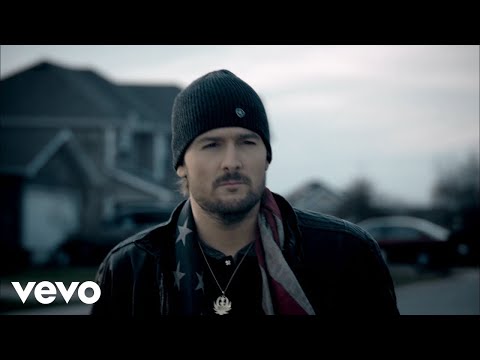
Eric Church arrived at the commercial mainstream of country music through an unconventional path. His debut album "Sinners Like Me" in 2006 had established him as a credible honky-tonk voice with genuine songwriting instincts, but his profile remained that of a respected album artist rather than a chart-dominating singles act. That balance began to shift materially with the release of his second album, "Carolina," in 2009, and it completed its shift when "Hell On The Heart" emerged as a genuine country radio hit in 2010, providing Church with one of the most meaningful chart moments of his early career.
"Hell On The Heart" was written by Eric Church alongside Casey Beathard and Chris DuBois, a collaborative arrangement that drew on Nashville's deep well of professional songwriting talent while keeping Church's own voice central to the creative process. Beathard had been a productive Nashville writer for years, while DuBois had worked extensively with Brad Paisley, giving the session a combination of craft experience and commercial instinct that shaped the final recording. The production, handled by Jay Joyce, who would become one of Church's most important creative partners across multiple albums, applied a muscular, guitar-forward sound that distinguished the track from the more polished production that dominated country radio in 2010.
"Hell On The Heart" reached number 2 on the Billboard Hot Country Songs chart, making it the highest-charting single of Church's career up to that point. The achievement was significant both commercially and narratively. It confirmed that Church's blend of traditional country values and hard-edged rock influence could generate real radio success, not merely critical respect from listeners who preferred their country music rougher and less polished than the mainstream norm.
The single was released through Capitol Nashville, which had signed Church after his initial run at independent-adjacent distribution. Capitol's promotional machinery was able to push "Hell On The Heart" into heavy rotation at country radio stations across the United States, where the track's combination of relatable domestic storytelling and vigorous production made it a strong fit for the morning and afternoon dayparts that drive country airplay metrics. The album "Carolina" was certified platinum by the RIAA, with "Hell On The Heart" serving as one of its primary commercial engines.
The timing of the single's success was important in the broader context of Church's career trajectory. He had built a reputation for authenticity and a willingness to challenge the more formulaic aspects of Nashville pop-country production, and "Hell On The Heart" demonstrated that holding to those values did not preclude achieving serious commercial results. This gave him the leverage to pursue even more adventurous work on his subsequent album "Chief," released in 2011, which would become one of the landmark country albums of the decade.
Jay Joyce's production on the track deserves particular attention. Joyce had been working in Nashville as a producer and session musician since the 1990s, but his partnership with Eric Church gave him an opportunity to apply a more aggressive sonic palette than was typical in mainstream country production. The guitars on "Hell On The Heart" have a weight and presence that nods toward Southern rock without crossing fully into that genre, maintaining the song's identity as a country record while broadening its potential appeal.
Radio promotion for the single was sustained and methodical, which reflected Capitol Nashville's confidence in the track's staying power. It spent multiple weeks climbing the country singles chart before reaching its peak, a trajectory that indicated genuine organic momentum rather than a spike driven purely by promotional spend. The song charted for over thirty weeks on the country airplay charts, which underscored its durability as a radio record and its ability to maintain listener engagement over an extended period.
Live performance played a significant role in cementing the song's connection with Church's growing audience. His concert shows during 2010 and 2011 were building in scale and intensity, and "Hell On The Heart" became a reliable set piece that resonated powerfully with crowds who had connected with its themes of love, loss, and resilience. Church's stage presence, always more physically urgent than the average Nashville act, gave the song an additional dimension in performance that the studio recording could only partially capture.
Among country fans and music journalists covering the format in 2010, "Hell On The Heart" was received as proof that Church's artistic approach was commercially viable at scale. It helped establish a template, a kind of rugged, emotionally direct country rock hybrid, that would influence how Nashville producers and label executives thought about the market space Church occupied. Its success made the subsequent ambition of "Chief" possible and helped define the direction country music's more rock-influenced wing would take through the early part of the decade.
02 Song Meaning
The Meaning Behind Hell On The Heart: Love, Damage, and Country Realism
"Hell On The Heart" occupies a specific emotional territory that country music has always mapped with particular care: the aftermath of a love gone wrong, examined from a perspective that is honest about pain without collapsing into pure self-pity. The song's central argument is that love, even when it ends badly, is worth the damage it does. This is a classically country sentiment, one that treats emotional cost not as a reason to avoid connection but as evidence that the connection mattered.
The narrator of the song describes a relationship that has left him marked in ways that are simultaneously painful and privately cherished. The physical and emotional toll of love gone wrong is acknowledged directly, but the acknowledgment is not accompanied by regret. The song positions suffering as the price of authentic feeling, a philosophical stance that has deep roots in both country tradition and the broader American folk and blues idiom from which country draws so much of its emotional vocabulary.
Eric Church's vocal performance is essential to the song's meaning. His delivery carries a roughness that implies lived experience rather than theatrical performance. When he describes emotional damage, the voice communicates something that feels personal even when the listener understands intellectually that the song was written collaboratively and reflects a constructed persona. This is the fundamental skill of the great country vocalist, and Church demonstrates it consistently throughout the recording. The credibility of his performance is inseparable from the song's emotional argument.
The domestic specificity that runs through the song's imagery is characteristic of the Nashville songwriting tradition at its best. Rather than relying on vague abstractions about love and loss, the writers anchor the emotional content in concrete details that allow listeners to map their own experiences onto the narrative. This specificity is part of what made the song resonate with a wide country radio audience, since the more precisely a song describes a recognizable human situation, the more broadly it tends to connect.
Within Church's catalog, "Hell On The Heart" serves as an early statement of the themes he would explore more ambitiously on subsequent albums. The willingness to sit with pain rather than resolve it too quickly, the preference for emotional complexity over easy catharsis, these qualities mark the song as a precursor to the more adventurous material on "Chief" and "The Outsiders." The song established Church's artistic identity as a writer and performer who takes the emotional lives of his characters seriously, refusing to let them off the hook with cheap consolation.
The song also participates in a tradition of country music that is specifically resistant to the genre's more romanticized self-presentation. Rather than celebrating love as triumphant or uncomplicated, it insists that love is costly and that the cost is real. This honesty is both a commercial asset and an artistic virtue. It respects the intelligence of the audience while delivering the emotional content that makes country music a consolation for people navigating genuine difficulty. In that sense, "Hell On The Heart" is a small but genuine contribution to the long tradition of country songs that tell the truth about what it means to love and lose.
→ More from Eric Church
View all Eric Church hits →



→ More from the 2010s File
View all 2010s hits →



Keep digging