The 2010s File Feature
Desperate Man
"Desperate Man" by Eric Church Country's Outsider at the Center of the Mainstream There is something deliberately paradoxical about Eric Church's position in…
01 The Story
"Desperate Man" by Eric Church
Country's Outsider at the Center of the Mainstream
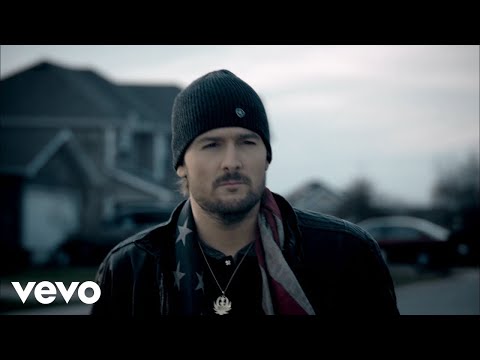
There is something deliberately paradoxical about Eric Church's position in country music. He has spent his career cultivating the identity of a rebel, an artist who does things his own way regardless of Nashville convention, and yet that stance has made him one of the most commercially successful acts in the format. By 2018, when Desperate Man arrived as the title track of his seventh studio album, Church had navigated that paradox long enough to make it look easy. He was filling arenas, generating significant critical attention, and doing it all while maintaining the sense that he operated on his own terms. The album was recorded in a single week, a production approach that suited the lean, honest sound Church has always favored over elaborate studio construction.
The summer and fall of 2018 was a particular moment in country's ongoing identity negotiations. Questions about what constituted authentic country music were generating more public debate than at any point in recent memory, driven partly by the genre's increasing absorption of hip-hop and pop production elements and partly by a renewed interest in the more traditional sounds of the 1970s and 1980s. Church was often cited in that conversation as an artist who maintained authentic connection to country's roots while refusing to be bound by its orthodoxies.
Recording the Album in a Week
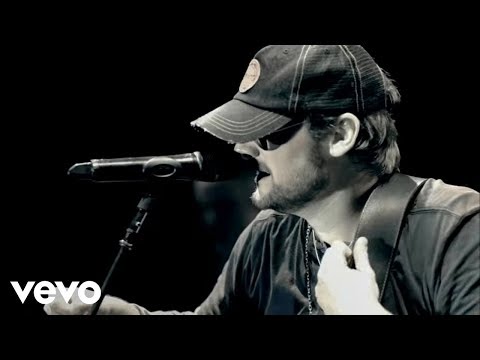
The story behind the Desperate Man album is itself a statement about artistic values. Eric Church and his band recorded the entire album in seven days, working with a spontaneity and immediacy that showed in the finished recordings. The approach produced music that sounds played rather than constructed, where the energy of the performances is preserved rather than smoothed away in post-production. This was a deliberate rejection of the highly polished Nashville mainstream production aesthetic, and it gave the album a character that distinguished it from the bulk of contemporary country releases.
The title track exemplified this approach. The song moves with a directness that suits both the lyrical content and the recording context, built on Church's strong vocals and a band performance that prioritizes feel over technical perfection. The result is a track that sounds like people who know how to play together doing exactly that, with confidence and economy.
The Billboard Journey
The song debuted on the Billboard Hot 100 on July 28, 2018, entering at number 71. Its chart journey was not linear; the track moved up and down through the summer and fall months, reflecting the pattern of country crossover hits that depend on accumulated radio play rather than streaming spikes. It reached its peak of number 68 on October 20, 2018, having spent fifteen weeks on the chart by that point. That sustained chart presence through the summer and into the autumn confirmed the song's performance as a slow-building radio success.
On the country-specific charts, where Church had long been a dominant figure, the song performed considerably stronger, as was consistent with his established pattern of generating crossover interest while maintaining deep roots in the country format. The Hot 100 appearance reflected the country-to-mainstream crossover that his most successful material consistently achieved.
Church as a Country Auteur
What distinguishes Eric Church from many of his commercial peers is his consistency of artistic vision. Album after album has pursued the same core values: honest songwriting, muscular production that prioritizes live performance energy, and lyrical engagement with the full complexity of human experience rather than its most commercially palatable surface. That consistency has built a fanbase of unusual loyalty and depth, the kind that fills arenas and buys albums rather than merely streaming individual singles.
The Desperate Man album and its title track fit this pattern precisely. The week-long recording session was not a gimmick but a reflection of genuine artistic conviction, a commitment to capturing something real rather than manufacturing something perfect.
The Desperate Man as American Archetype
The title character Church invokes has deep roots in American music, from the blues tradition through country, rock and roll, and beyond. The figure of a man pushed to extremes by circumstance or passion, operating outside the comfortable norms of respectable behavior, is one that American music has returned to across genres and generations. Church inhabits that archetype with conviction, giving it a contemporary sound without losing the connection to the traditions that give it meaning. The song earns its title because Church sings it like someone who has genuinely thought about what desperation feels like and what it costs. Turn it up and let that conviction carry.
"Desperate Man" — Eric Church's singular moment on the 2010s charts.
02 Song Meaning
"Desperate Man" — Need, Extremity, and the American Outlaw Tradition
What Desperation Means
The word desperate carries several overlapping meanings: a state of extreme need, a willingness to take risks that calm calculation would avoid, a quality of intensity that pushes beyond ordinary social boundaries. Eric Church's song engages with all of these registers, building a portrait of someone operating at the outer edge of their emotional or material resources, where the normal rules of measured behavior no longer quite apply. That situation is one of great artistic richness, and country music has always known it.
The desperate man of American song tradition is a cousin to the outlaw, the wanderer, and the loser; he is a figure defined by the gap between what he needs and what the world is willing to provide. Church inhabits this tradition with obvious affection, situating his song within the long lineage of American music that has found its deepest expression in extremity rather than comfort.
Country Music and Masculine Emotional Honesty
One of country music's enduring cultural functions has been providing space for the expression of male emotional vulnerability within a form that did not require that vulnerability to be softened or aestheticized. The genre's conventions around loss, longing, and desperation have historically allowed male performers and listeners to engage with difficult emotional states through the safer distance of song. Church's approach to this tradition is direct without being sentimental, acknowledging the extremity of the emotional state without romanticizing it or making it seem more attractive than it actually is.
The 2018 context had its own stakes for this kind of material. Conversations about masculinity and emotional expression were prominent in American public life, and country music's traditional emotional repertoire was being examined with fresh eyes. Church's straight engagement with desperate need felt both timely and timeless simultaneously.
The Album Week and Artistic Authenticity
The fact that Desperate Man the album was recorded in a single week is thematically consistent with the emotional content of its title track. Desperation implies urgency; it is not a state that tolerates extended, careful deliberation. The compressed recording timeline gives the track's emotional context additional resonance, as if the week-long session embodied something of the same quality that the song describes: responding to necessity with direct, immediate action rather than elaborate preparation.
That kind of formal and thematic coherence, where the production process reflects the emotional content, is characteristic of artistic intelligence. Church had made enough albums by 2018 to understand how production choices communicate meaning independently of lyrical content.
The Legacy of This Stripe of Country
Eric Church represents a specific and valuable tradition within mainstream country: the artist who maintains genuine creative independence while achieving significant commercial success, demonstrating that those two things are not inherently in conflict. Songs like "Desperate Man" make that argument through example, succeeding on the Hot 100 and country radio while sounding nothing like music manufactured primarily for those markets. That combination speaks to the continued vitality of country music as an art form capable of accommodating both mass appeal and genuine artistic vision, and it explains why Church's work continues to draw listeners who care about both qualities.
"Desperate Man" — Eric Church's singular moment on the 2010s charts.
→ More from Eric Church
View all Eric Church hits →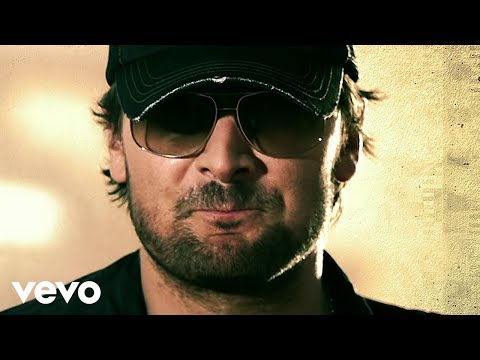


→ More from the 2010s File
View all 2010s hits →



Keep digging