The 2010s File Feature
Different For Girls
Different For Girls — Dierks Bentley Featuring Elle King (2016) "Different For Girls" was a calculated creative departure for Dierks Bentley, a Nashville vet…
01 The Story
Different For Girls — Dierks Bentley Featuring Elle King (2016)
"Different For Girls" was a calculated creative departure for Dierks Bentley, a Nashville veteran who had built his reputation on traditional country sounds before spending the mid-2010s exploring a broader sonic palette. Released in June 2016 as a single from his album "The Mountain" era campaign, the song featured Elle King, the Ohio-born singer whose own career had recently accelerated dramatically on the strength of her crossover hit "Ex's and Oh's." The pairing was producer Ross Copperman's concept, and it resulted in one of the more structurally interesting entries in mainstream country's conversation about gender during that decade.
The song was written by Nicolle Galyon, Jim Beavers, and Shane McAnally, three of Nashville's most accomplished commercial songwriters of the period. McAnally in particular had established himself as a significant creative force across country and pop, with credits spanning Kenny Chesney, Sam Hunt, and Kacey Musgraves. The songwriting team constructed a lyric built on a deliberate structural contrast: Bentley's verses describe the things men do when they go through heartbreak, while King's verses describe the entirely different ways women experience the same emotional territory. The song's argument is embedded in its form as much as its words.
Production by Ross Copperman and Derek Wells gave the track a sound that leaned into the "bro country" sonic textures that had dominated mainstream country for several years while simultaneously using those textures to deliver a message that critiqued the emotional assumptions embedded in that genre's culture. The contrast between the polished radio-ready production and the song's gender commentary was part of what made it a talking point beyond the country audience.
Elle King's participation was commercially significant. Her visibility following "Ex's and Oh's," which had peaked at number ten on the Billboard Hot 100 in 2016 and performed even more strongly on adult alternative charts, brought her a crossover audience that Bentley's team recognized as an opportunity to expand the single's reach beyond core country listenership. King's distinctive raspy voice, which carried blues and Americana inflections, blended with Bentley's more traditional country delivery in a way that felt organic rather than forced.
"Different For Girls" reached number one on the Billboard Country Airplay chart in the autumn of 2016, a peak that validated the creative gamble. The path to that position was not unusually fast by Nashville standards, as the song spent many months working its way up the chart through the slow-burn radio promotion cycle that governed country singles during this period. Its ascent was steady, a sign of strong listener response that kept the song viable through the long promotional window.
The record was nominated for Grammy Award for Best Country Duo/Group Performance at the 2017 Grammy Awards, an acknowledgment from the Recording Academy that the song had distinguished itself not merely commercially but artistically within its genre. Country industry awards bodies also recognized the song, with the Country Music Association and Academy of Country Music both considering it in their respective vocal duo or collaboration categories during the 2016 and 2017 award cycles.
Dierks Bentley's commercial trajectory by this point had him firmly established as a consistent presence on country radio, with multiple number-one singles across his career since his debut in the early 2000s. "Different For Girls" was notable within that career as one of his more explicitly thematic records, a song with an identifiable argument rather than simply an emotional scenario. That quality set it apart from much of the surrounding landscape on country radio in 2016 and gave it longevity in critical retrospectives of the period.
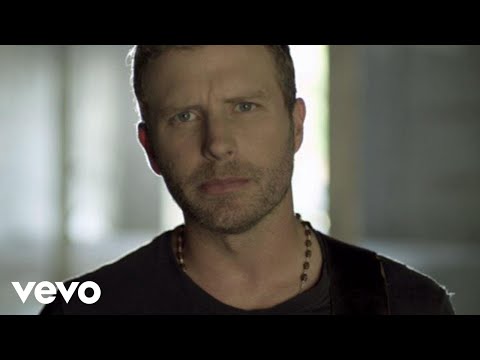
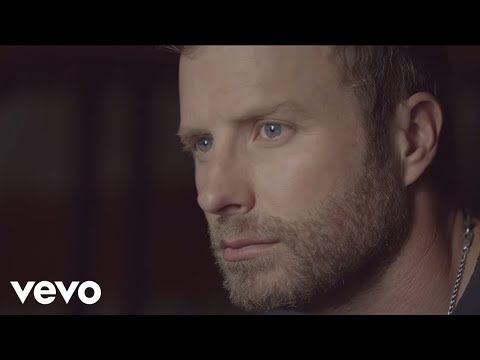
The song's music video, which visualized the song's structural contrast through parallel storytelling showing male and female responses to breakup, reinforced the lyric's central argument and performed strongly on country music video channels and platforms. The visual component helped clarify the song's concept for listeners who might have encountered it first on radio, where the back-and-forth structure could be initially disorienting. Overall, "Different For Girls" served as a commercial and critical high point in Bentley's mid-career, demonstrating his capacity to take creative risks within the commercial mainstream.
02 Song Meaning
The Meaning Behind "Different For Girls" — Gender, Grief, and the Emotional Double Standard
"Different For Girls" builds its argument directly into its architecture. The song operates as a point-counterpoint exchange between two voices, one male and one female, each describing how the same event, the end of a relationship, unfolds differently depending on which side of a gendered divide you occupy. That structural choice is not merely a clever gimmick; it makes the song's central claim impossible to miss while also making it difficult to dismiss. The comparison is right there in the form.
Dierks Bentley's verses lay out a familiar set of post-breakup behaviors associated with men in country music culture: drinking with friends, acting out, engaging in the social rituals of masculine grief performance. These behaviors are presented not with celebration but with a kind of gently ironic acceptance, an acknowledgment that this is what men do, or at least what men are expected to do according to the cultural scripts available to them. The portrait is recognizable precisely because it draws from a long tradition of country songs that have depicted exactly these behaviors without examining them.
Elle King's verses reframe everything. The emotional experience she describes is more internal, more prolonged, more isolating. The song proposes that women experience heartbreak in ways that are not just different in style but different in kind, carrying the pain more privately, feeling it more acutely, and recovering through processes that are less publicly legible. That contrast, between the performative externalizing of male grief and the quieter, more interior suffering of female grief, is the song's central argument.
What makes the lyric more sophisticated than a straightforward gender-studies exercise is its evident sympathy for both positions. The song does not condemn men for their coping mechanisms, nor does it render women as passive victims. Instead, it observes that the social scripts available to each group shape experience in ways that are real and consequential. Men have permission to perform their pain loudly in public; women often do not. That asymmetry has costs on both sides.
The song arrived at a moment when mainstream country was beginning to have more visible conversations about gender representation, driven partly by artists like Kacey Musgraves and partly by critics and fans who had grown vocal about the genre's historical tendency to give male perspectives more space and commercial support than female ones. "Different For Girls" participated in that conversation from a position that was genuinely inside the mainstream, spoken by a male artist with significant radio capital, which gave it a credibility and reach that a song making the same argument by a female artist alone might not have achieved.
For Dierks Bentley, the song represented a willingness to use his platform to examine assumptions that much of his genre took for granted. That choice carried creative and commercial risk, and its success demonstrated that country audiences were ready to engage with more complex emotional and social territory than the genre's critics sometimes credited. The song's chart performance was evidence of genuine listener investment rather than a token gesture that radio ignored.
Elle King's voice as a featured artist was also thematically appropriate in ways that extended beyond her commercial crossover appeal. Her blues-inflected rasp carried associations with a tradition of female vocal expression that was emotionally direct and unadorned, qualities that suited the song's refusal to sentimentalize its subject. Her presence as a woman with a distinctly non-commercial sonic identity within a mainstream country frame underscored the song's own negotiation between convention and critique.
In the years following its release, "Different For Girls" has retained its reputation as one of the more thoughtful mainstream country singles of the mid-2010s, a record that managed to be commercially successful while also saying something worth saying, a combination that is always rarer than it should be in any genre.
→ More from Dierks Bentley Featuring Elle King
View all Dierks Bentley Featuring Elle King hits →


→ More from the 2010s File
View all 2010s hits →



Keep digging