The 2010s File Feature
Loving You No More
Loving You No More: Diddy Dirty Money's 2010 Collaboration with Drake Diddy's musical evolution across the 2000s was a study in reinvention, as one of the mo…
01 The Story
Loving You No More: Diddy Dirty Money's 2010 Collaboration with Drake
Diddy's musical evolution across the 2000s was a study in reinvention, as one of the most powerful figures in hip-hop and entertainment attempted to maintain artistic relevance while simultaneously managing a business empire of extraordinary scope. By 2010, he had assembled a new artistic project under the name Diddy Dirty Money, a collaborative vehicle that paired him with singers Dawn Richard and Kalenna Harper and allowed him to engage with the musical landscape of the moment, including the moody, atmospheric R&B-rap hybrid that artists like Drake were pioneering. "Loving You No More" was among the most commercially significant tracks from the Last Train to Paris album that Diddy Dirty Money released at the end of 2010.
"Loving You No More" featured Drake, who by 2010 was the most commercially important new voice in hip-hop. His debut major label album Thank Me Later had debuted at number one on the Billboard 200 in June 2010 with over 447,000 copies sold in its first week, establishing him as one of the most successful new artists of the year. His presence on "Loving You No More" was a statement about the track's commercial ambitions and about Diddy's understanding of where hip-hop and R&B's center of gravity had shifted in the years since his own peak commercial moment with Bad Boy Records in the late 1990s.
The song was produced within the sonic framework of Last Train to Paris, an album that Diddy had described as a concept project themed around love, loss, and travel. The production aesthetic drew heavily on the atmospheric, synthesizer-driven sound that had emerged from electronic dance music's growing influence on pop and hip-hop production during the late 2000s and early 2010s. "Loving You No More" incorporated these influences while maintaining enough melodic and vocal richness to be accessible to R&B radio audiences who were not primarily electronic music consumers.
Last Train to Paris was released in December 2010 on Interscope Records, the major label home that Diddy had moved to after the extended decline of Bad Boy Records as a commercially dominant imprint. The album received mixed critical reception, with some reviewers appreciating its conceptual ambitions while others felt that its emotional content was less convincing than its production values. "Loving You No More" was generally identified as one of the album's stronger tracks, partly because Drake's contribution gave it a level of emotional authenticity and commercial appeal that the more purely Diddy-fronted material on the project struggled to match.
Drake's verse and his presence throughout the track reflected the new emotional vocabulary that he had been developing in his pre-major-label mixtapes and his debut album: a willingness to engage with romantic failure and emotional vulnerability from a first-person perspective that was unusual for a commercially dominant male rapper. This quality made him an ideal collaborator for a song about the end of a relationship, because he could bring genuine emotional conviction to material that might have felt performative in the hands of a rapper with a different public identity.
The song entered the Billboard charts through the combined commercial momentum of Diddy's established fanbase and Drake's enormous new audience, generating airplay on urban radio stations that served both the older listeners who remembered Diddy's Bad Boy era and the younger listeners who had discovered him through his association with current stars. This cross-generational appeal was a deliberate feature of the Last Train to Paris project, and "Loving You No More" exemplified how the Drake collaboration made that strategy work most effectively.
Dawn Richard's vocal contributions to the track and to the Diddy Dirty Money project as a whole were recognized by R&B enthusiasts even when mainstream press coverage focused more heavily on Diddy and his celebrity collaborators. Her voice gave the project a richness that pure rapper-fronted R&B would have lacked, and "Loving You No More" benefited from the combination of her melodic contributions with Drake's lyrical presence and Diddy's production vision.
The song received radio airplay across urban and rhythmic formats in the United States and in international markets where both Diddy and Drake had established audiences. The UK market in particular responded strongly to the electronic-influenced production that characterized Last Train to Paris, reflecting the greater integration of dance music influence into mainstream pop and hip-hop in British radio. This international dimension gave the album and its singles a commercial life beyond the domestic US market that was not always available to hip-hop and R&B releases from American artists during this period.
Looking back from the vantage of subsequent years, "Loving You No More" stands as a document of a specific transitional moment in Diddy's career and in hip-hop more broadly, the moment when Drake's emotionally vulnerable approach to romantic and personal content was reshaping what was commercially and critically viable in the genre, and when established figures were learning to incorporate those changes into their own work.
02 Song Meaning
The Meaning of "Loving You No More": Romantic Exhaustion and the End of Emotional Investment
"Loving You No More" addresses one of the most emotionally complex situations in romantic experience: the moment when the decision to stop loving someone has already been reached, not through anger or sudden revelation but through a gradual exhaustion of emotional investment. The song does not dramatize the end of a relationship; instead, it occupies the quieter, more complicated territory of having already arrived at that end and attempting to articulate what that arrival feels like from the inside.
Diddy Dirty Money's framing of this emotional content situates it within the electronic-influenced atmospheric production of Last Train to Paris, giving the themes of loss and disengagement a sonic environment that feels appropriately spacious and melancholy. The production does not underscore the emotional content with the swelling melodic strings or the dramatic dynamic shifts that might characterize a more conventionally operatic breakup song. Instead, the track maintains a measured, almost cinematic detachment that mirrors the emotional state being described.
Drake's contribution to the track is essential to its emotional credibility. His capacity for articulating the specific texture of romantic disappointment from a male perspective, using detailed, first-person emotional vocabulary that was unusual in mainstream hip-hop at the time, gives the song an intimacy and specificity that broader declarations of loss would not have generated. His verse communicates not just the fact of romantic failure but the accumulated small moments and decisions that led to the point of no return.
The phrase "loving you no more" is constructed as both a description of a current state and an announcement of a decision, and this ambiguity is part of what makes the song emotionally interesting. Is the narrator reporting that the love has simply dissipated, or actively deciding to withhold it? The song holds both possibilities simultaneously, suggesting that the distinction between these two experiences may not always be as clear as romantic narrative convention implies. This emotional complexity is more honest about the experience of ending relationships than either purely passive accounts of love fading or purely active accounts of deliberate emotional withdrawal.
The song also engages with themes of personal dignity and self-preservation in the aftermath of romantic failure. There is a quality of reclaimed agency in the song's central declaration, a sense that not loving someone anymore, far from being a passive experience of loss, can be an active assertion of self-worth. The decision to redirect emotional energy away from a relationship that is no longer sustaining is presented as a form of courage rather than defeat, a reframing that was particularly significant in the context of Diddy's public persona, which had been associated throughout his career with aggressive assertion rather than romantic vulnerability.
Dawn Richard's vocal presence throughout the track adds a dimension of shared experience to the song's emotional content, suggesting that the process of disengaging from a love that no longer serves one is not purely solitary but can be witnessed, understood, and validated by others who have navigated similar experiences. This communal quality, present in much of the best R&B, gives the song a warmth that prevents it from retreating entirely into individual introspection. Together, the three principal voices on the track create a portrait of romantic loss that is multidimensional, honest, and ultimately more sustaining than either pure lament or pure resignation would have allowed.
→ More from Diddy - Dirty Money Featuring Drake
View all Diddy - Dirty Money Featuring Drake hits →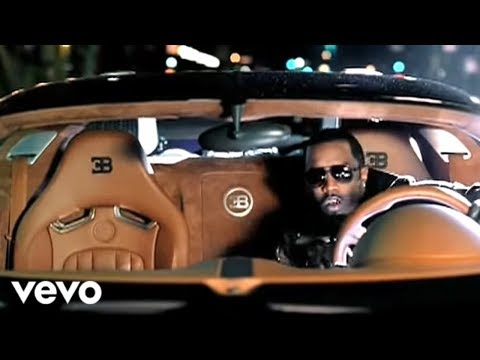

→ More from the 2010s File
View all 2010s hits →



Keep digging