The 2010s File Feature
Christmas (Baby Please Come Home)
Christmas (Baby Please Come Home): From Darlene Love's 1963 Classic to a 2018 Billboard Phenomenon Few holiday recordings have demonstrated the kind of susta…
01 The Story
Christmas (Baby Please Come Home): From Darlene Love's 1963 Classic to a 2018 Billboard Phenomenon
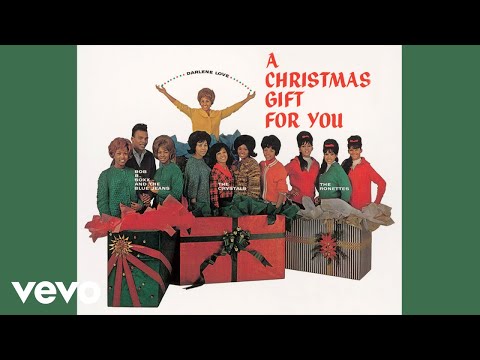
Few holiday recordings have demonstrated the kind of sustained commercial vitality that Darlene Love's "Christmas (Baby Please Come Home)" has shown across more than six decades. Originally recorded in 1963 and released on the landmark album A Christmas Gift for You from Philles Records, produced by Phil Spector, the track has periodically re-entered the charts as streaming platforms and changing music industry practices have made classic recordings newly accessible to mainstream chart measurement. Its appearance on the Billboard Hot 100 in 2018 represented one of the most striking examples of this catalog-charting phenomenon.
The original recording was made at Gold Star Studios in Los Angeles during the summer of 1963, a fact that gave the sessions an almost surreal quality since the musicians and singers were performing winter-themed holiday material in the California heat. Phil Spector assembled what has since become known as the Wrecking Crew, a collective of elite session musicians including bassist Carol Kaye, drummer Hal Blaine, and guitarist Tommy Tedesco, to create the dense, orchestrated sound that characterized the Wall of Sound production technique he had developed and refined.
Darlene Love's vocal performance on the track was immediately recognized as exceptional. Her gospel-trained voice had a power and emotional range that pushed through even the enormous sonic density of Spector's production, which was unusual in itself since many vocalists were somewhat buried in the Wall of Sound mix. Love's ability to project urgency and longing over a full orchestral and choral arrangement gave the track an emotional intensity that set it apart from more conventional holiday recordings of the era.
The original album was scheduled for release in November 1963 but was pulled by Spector following the assassination of President John F. Kennedy, which made commercial promotion inappropriate. This delay meant that the album received minimal distribution in its first year, depriving "Christmas (Baby Please Come Home)" of the immediate chart impact it might otherwise have achieved. When the album was eventually more widely distributed, it found the audience it deserved, but the initial disruption meant that the track's commercial life was a slow build rather than an immediate breakthrough.
The song's revival and sustained cultural presence owe much to its annual featured placement on NBC's Late Night with David Letterman and subsequently Late Show with David Letterman, where Darlene Love performed it live every year from 1986 through 2014. These performances, broadcast to millions of viewers during the holiday season each year, kept the song in the cultural consciousness of multiple generations and provided a kind of annual certification of its status as a holiday classic. Each performance was an event, with Love's sustained vocal power becoming a yearly testament to her extraordinary abilities as a singer.
When the Billboard methodology changed to include streaming data alongside traditional airplay and sales figures, catalog recordings that generated significant seasonal streaming activity became eligible for chart re-entry in ways that had not been possible under earlier measurement systems. "Christmas (Baby Please Come Home)" benefited enormously from this shift. In 2018, the song entered the Billboard Hot 100, an achievement that confirmed what the streaming data had been showing, namely that contemporary listeners were actively seeking out and engaging with the recording in very large numbers during the holiday season.
The 2018 chart entry carried particular symbolic weight because it represented a form of commercial recognition that the song had been denied in its original release year. Darlene Love, who had spent years fighting for proper songwriting and recording credits and royalties from Philles Records releases, finally had a chart entry that was fully attributable to her name and her performance. The irony was not lost on observers that the recognition came more than fifty years after the original recording, driven by streaming technology that Spector and Love could not have imagined when they cut the track in 1963.
The song's production quality, particularly its Wall of Sound arrangement featuring multiple overdubbed percussion tracks, layered strings, and the combined vocal power of the Blossoms and other background vocalists, holds up exceptionally well on modern playback systems. High-fidelity streaming reproduction actually allows listeners to hear details in the mix that earlier playback technologies obscured, and this has contributed to the track's contemporary appeal among audiophiles and casual listeners alike.
Darlene Love's recognition as one of the great voices in American popular music has grown substantially in recent decades, aided in part by her induction into the Rock and Roll Hall of Fame in 2011 and by the documentary film that brought her story to wider attention. "Christmas (Baby Please Come Home)" stands at the center of that recognition, as both the recording that first demonstrated her full capabilities and the track that has carried her name across six decades of changing musical fashions.
02 Song Meaning
The Meaning of "Christmas (Baby Please Come Home)": Longing, Loss, and the Holiday Paradox
"Christmas (Baby Please Come Home)" occupies a distinctive emotional territory within the holiday song canon. While the genre tends toward warmth, celebration, and togetherness, this particular recording is fundamentally about their absence. The song describes a holiday experienced as loss rather than joy, a moment when the universal cultural pressure to feel festive and connected serves only to amplify the speaker's awareness of what is missing. The beloved is not present, and the holiday's insistence on celebration makes that absence more painful, not less.
This emotional honesty distinguishes the song from most of its holiday contemporaries. The landscape the lyrics describe is fully furnished with the visual and sonic cues of Christmas, snow, bells, and lights, but none of these symbols bring comfort to the speaker because they are all associated with someone who is not there to share them. The decorations and sounds of the season become a form of torment rather than consolation, each festive detail a reminder of what is missing.
Darlene Love's vocal performance is inseparable from the song's meaning. Her ability to project genuine urgency and emotional need over Phil Spector's dense orchestral production transforms what might otherwise be a conventional winter-themed pop song into something that feels like a real emotional event. When she calls out the title phrase, the need in her voice is palpable, and it is this quality of lived emotion that has kept the song alive across decades of repeated listening and holiday-season broadcast.
The song also engages, implicitly, with the specific social meaning of absence during Christmas in the early 1960s context. The most common reasons for a loved one's absence in that period, military service, economic displacement, geographic separation in a country where long-distance travel was expensive and time-consuming, gave the song's plea a very specific social resonance. Listeners in 1963 would have understood the landscape of absence that the song describes from personal experience or from the experiences of people close to them.
At a deeper level, the song is about the gap between the promise of a holiday and its emotional reality. Christmas, as a cultural institution, makes certain promises about warmth, togetherness, and renewal. These promises are powerful precisely because they are collective and repeated annually. When individual circumstances make those promises unreachable, the gap between what the season is supposed to feel like and what it actually feels like can be devastating. The song gives voice to that experience with complete clarity.
The Wall of Sound production contributes to the meaning in ways that go beyond mere sonic backdrop. The overwhelming density of the arrangement, all those layered orchestral elements pressing against one another, creates a sonic analog for the overwhelming pressure of the holiday season itself. The speaker is not merely sad in a quiet corner; she is sad in the middle of an enormous, unavoidable cultural event, and the production captures that quality of emotional intensity surrounded by external noise and festivity.
The song's longevity also relates to its emotional universality. The specific details of the lyrical scenario are rooted in a particular era, but the core experience of missing someone acutely during a time of obligatory celebration is timeless. Whether the absent beloved is far away due to circumstance, estrangement, death, or any other cause, the emotional logic of the song applies. This universality of experience, rather than the specificity of historical context, is what has allowed the track to remain emotionally relevant to listeners across more than six decades.
Within Darlene Love's catalog, the song represents her most complete artistic statement and her most enduring contribution to American popular music. Her annual television performances of the track became a kind of cultural ritual that reinforced its meaning each year, with each performance adding another layer of history and personal significance to a recording that already carried enormous weight. By the time the song charted in 2018, it was not merely a holiday single but a document of an entire career devoted to singing with absolute emotional commitment, and its streaming popularity reflected how many listeners had come to understand it in exactly those terms.
→ More from Darlene Love
View all Darlene Love hits →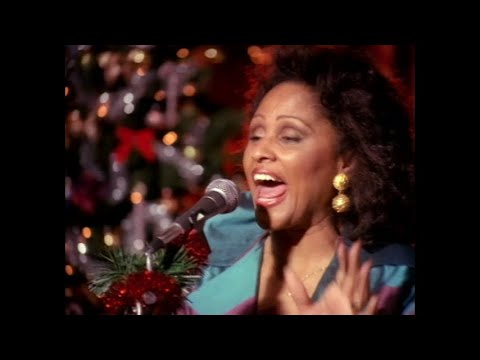



→ More from the 2010s File
View all 2010s hits →



Keep digging