The 2010s File Feature
Nobody To Blame
Nobody To Blame: Chris Stapleton's Country Breakthrough Chris Stapleton had spent well over a decade as one of Nashville's most respected behind-the-scenes f…
01 The Story
Nobody To Blame: Chris Stapleton's Country Breakthrough
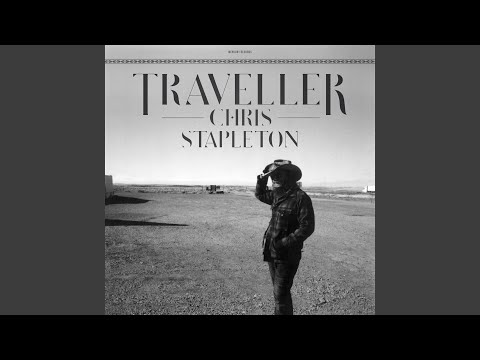
Chris Stapleton had spent well over a decade as one of Nashville's most respected behind-the-scenes figures before "Nobody To Blame" helped introduce him to the mainstream country audience. By the time the song charted, Stapleton had already written or co-written hits for dozens of other artists, accumulating a catalogue of work that earned him deep admiration within the industry even as his own recording career remained largely in the shadows. The release of his debut solo album, Traveller, in May 2015 changed that situation dramatically.
The album emerged from a relatively straightforward creative process rooted in honest songwriting and live-band recording. Stapleton worked with producer Dave Cobb, whose reputation for capturing raw, unvarnished performances at RCA Studio A in Nashville made him an ideal collaborator. Cobb had already distinguished himself with projects for Jason Isbell and Sturgill Simpson, and the sessions with Stapleton followed the same philosophy: record live, embrace imperfection, and let the performances breathe. The result was an album that felt genuinely different from the polished, production-heavy country dominating radio at the time.
"Nobody To Blame" was among the tracks that crystallized the album's aesthetic. The song, written by Stapleton, Chris DuBois, and Barry Dean, is built around a dry, self-lacerating wit. It captures a man cataloguing the wreckage of his marriage while acknowledging that his own behavior was the cause. The arrangement is spare, anchored by Stapleton's guitar work and the kind of rhythm section playing that owes as much to Southern soul and blues as to mainstream country. Stapleton's voice, one of the most powerful in American popular music, carries enormous emotional weight throughout.
The visibility boost that transformed Stapleton's commercial prospects came from an unexpected source. At the 2015 CMA Awards in November, Justin Timberlake joined Stapleton for a medley that became one of the most-talked-about televised musical moments in country music that year. The performance drew enormous attention, driving massive spikes in streaming and downloads for Traveller overnight. The album, which had performed respectably since its spring release, suddenly became a cultural phenomenon. "Nobody To Blame" was the song Stapleton chose to release as a single to capitalize on that surge in interest.
The single was released through Mercury Nashville, and its chart performance reflected the groundswell of genuine audience enthusiasm. "Nobody To Blame" climbed to number one on the Billboard Hot Country Songs chart, making it Stapleton's first number-one single as a lead artist. It also performed on the Billboard Country Airplay chart, though Stapleton's music found its strongest footing on the sales and streaming side rather than traditional radio, which was slower to embrace his old-school sound.
The song's success arrived alongside a remarkable awards season for Stapleton. At the 2015 CMA Awards, he won New Artist of the Year, Male Vocalist of the Year, and Album of the Year for Traveller, a sweep that was remarkable for a debut album and signaled just how strongly the industry had rallied behind him. The following year, the Grammy Awards added further recognition: "Nobody To Blame" won Best Country Solo Performance and Best Country Song at the 2016 Grammy ceremony, and Traveller took Best Country Album.
The broader cultural significance of the song's success was considerable. Country music's mainstream in the mid-2010s had drifted heavily toward what critics called "bro-country," a sound characterized by thumping production, party themes, and a narrow range of emotional registers. Stapleton's rise, carried partly by "Nobody To Blame," was widely cited as evidence that an audience existed for more traditional, vocally demanding, lyrically substantive country music. Music journalists noted the contrast repeatedly, and the conversation around Stapleton became intertwined with a broader discussion about country music's direction.
Stapleton performed the song widely during his touring cycle for Traveller, and live versions circulated extensively among fans who noted how the song's loosely swinging arrangement gave the band room to stretch out. The recording itself has been streamed hundreds of millions of times across platforms in the years since its release, and it retains a place in any survey of important country songs from the decade. For Stapleton, "Nobody To Blame" was not merely a commercial milestone but the precise moment when a career spent in service of other artists finally pivoted to a story entirely his own.
02 Song Meaning
The Bitter Humor of Self-Blame in "Nobody To Blame"
"Nobody To Blame" operates in a tradition of country music self-deprecation, but Chris Stapleton delivers it with such vocal conviction that the song transcends the comedic framing its title implies. The central situation is a marital breakdown, viewed entirely from the perspective of the man who caused it. Rather than deflecting or dramatizing his victimhood, the narrator methodically acknowledges his own failures as the source of everything that has gone wrong. This posture of thorough self-indictment gives the song an unusual moral clarity for a breakup narrative.
The lyrical construction is built around a kind of dark inventory-taking. The narrator lists the consequences of his choices, one by one, observing that he has been left by his wife, is living alone, and is facing a future shaped entirely by his own actions. The genius of the approach is that the refrain, affirming there is nobody to blame but himself, lands differently each time it appears. What begins as apparent self-awareness gradually accumulates into something that feels almost like perverse pride. The man knows what he did, catalogs it honestly, and yet seems incapable of changing.
This emotional ambiguity is what lifts the song above simple novelty. Stapleton does not play it purely for laughs, though the song has a dry wit embedded in its structure. He does not play it for melodrama either. The delivery sits somewhere in the middle, which is precisely where the most interesting country music lives. The narrator is resigned rather than devastated, self-knowing rather than oblivious, and that combination creates a character who is recognizable in an uncomfortable way. Many listeners have heard similar rationalization in real life, whether from others or from themselves.
The song's emotional register also reflects Stapleton's deep immersion in Southern blues and soul traditions. The phrasing is flexible and conversational, the kind of singing that does not force emotion but allows it to emerge from the natural shape of a sentence. Stapleton's voice is physically extraordinary, capable of enormous power, but on this recording he pulls back deliberately, letting the weariness in the lyrics guide his dynamics. The effect is that of a man who has said these things to himself many times before and has worn the confession smooth through repetition.
Within Stapleton's catalogue, the song represents one pole of a creative personality that also encompasses genuine heartbreak, spiritual searching, and straightforward joy. The willingness to approach a difficult subject with humor and plainness, without either sentimentality or cruelty, is characteristic of his best writing. He has described his songwriting philosophy in interviews as rooted in honesty and economy, and "Nobody To Blame" exemplifies both qualities. Every word earns its place; nothing is there for decoration.
The song also resonated so widely because it touched something authentic about accountability and regret that country audiences recognized. In a genre with a long history of both blame-shifting and performative self-pity, a narrator who genuinely owns his failures and observes them with detached clarity feels almost startling. The song found its way into the playlists of listeners who did not otherwise follow country music, partly because its emotional core is universal and partly because Stapleton's performance is simply too powerful to ignore regardless of genre preference.
For the broader conversation about what country music could be in the 2010s, "Nobody To Blame" served as a quiet argument for craft, honesty, and the kind of singing that demands to be heard on its own terms rather than as a backdrop to other activities. Its meaning extended beyond the personal story it tells, suggesting that audiences were ready for music that trusted them to sit with complexity rather than offering easy resolution.
→ More from Chris Stapleton
View all Chris Stapleton hits →



→ More from the 2010s File
View all 2010s hits →



Keep digging