The 2010s File Feature
Party
Party: Chris Brown, Usher, and Gucci Mane's Summer Anthem "Party" by Chris Brown featuring Usher and Gucci Mane was released on May 27, 2017, as one of the l…
01 The Story
Party: Chris Brown, Usher, and Gucci Mane's Summer Anthem
"Party" by Chris Brown featuring Usher and Gucci Mane was released on May 27, 2017, as one of the lead promotional singles from Chris Brown's ninth studio album Heartbreak on a Full Moon. The track represented a strategic pairing of three of the most commercially significant figures in contemporary R&B and trap music, bringing together Brown's established mainstream pop and R&B appeal, Usher's veteran status as one of the defining figures of 2000s R&B, and Gucci Mane's resurgent commercial momentum following his release from federal prison in 2016. The song was written by Chris Brown, Usher Raymond IV, Radric Davis (Gucci Mane), Christopher Dotson, and Elvin Smith, with production crafted to deliver a celebratory summer party atmosphere.
On the Billboard Hot 100, "Party" reached number twenty-six, a solid performance for a promotional single from an album that was not yet released at the time of the single's issue. The track performed more strongly on the Hot R&B/Hip-Hop Songs chart, where it reached the top ten, reflecting the song's specific appeal to Brown's core R&B audience. The song also received substantial urban radio airplay, benefiting from the promotional power of all three artists' established relationships with radio programmers and music directors across the country. Chris Brown's label affiliation with RCA Records provided additional promotional infrastructure for the single's release and radio campaign.
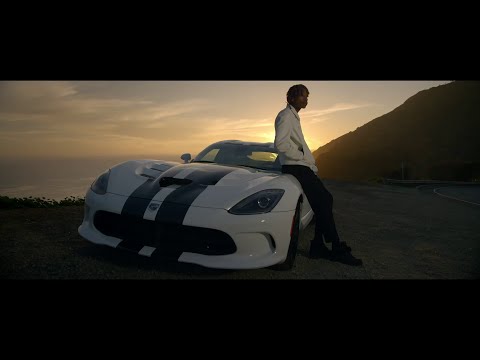
The music video for "Party" presented a visual celebration consistent with the track's lyrical content, featuring Brown, Usher, and Gucci Mane in a high-energy party setting that emphasized the collaborative energy between the three artists. The video's visual aesthetic drew on the conventions of R&B summer party imagery that had been a staple of the genre since the 1990s, updated with contemporary production design choices that reflected current trends in visual content creation for music video platforms. The video's YouTube performance contributed meaningfully to the track's streaming numbers during the period when YouTube streams were being counted with increasing weight in Hot 100 chart methodology.
Usher's participation in "Party" was particularly noteworthy given his standing as one of the artists who had most directly influenced Chris Brown's career development. Brown had frequently cited Usher as an inspiration and a benchmark for the kind of multi-hyphenate R&B performer he aspired to be, making the collaboration not merely commercially strategic but personally significant. Usher's verse on the track demonstrated that despite his relative absence from the singles chart in the years preceding the collaboration, he retained the vocal and performance qualities that had made him one of the dominant R&B forces of the early 2000s. His presence on the track lent it a quality of genre continuity, connecting the contemporary R&B of Brown's 2017 moment to the earlier tradition Usher represented.
Gucci Mane's feature on "Party" came at a moment when his commercial and cultural profile was at an unusually high point. Released from federal prison in May 2016 after serving approximately two years, Gucci Mane had returned to the music industry with remarkable velocity, signing with Atlantic Records and releasing multiple projects in rapid succession. His appearance on "Party" reflected both his personal resurgence and the broader cultural rehabilitation of his public image, as the music industry, media, and fans had responded positively to his post-incarceration output and public persona.
Heartbreak on a Full Moon, the album from which "Party" was a promotional single, was released on October 27, 2017, and became one of the longest studio albums in music history at that point, containing 45 tracks across its complete edition. The album's sheer volume of material was simultaneously a statement of creative ambition and a commercial strategy designed to maximize streaming contributions to chart performance at a time when streaming numbers were being counted with full weight in Billboard methodology. The album debuted at number three on the Billboard 200, an impressive performance that demonstrated Brown's continued commercial relevance despite the personal controversies that had characterized much of the preceding decade of his career.
Chris Brown's commercial trajectory had been complicated by the 2009 domestic violence incident involving Rihanna, which had significant and lasting effects on his radio airplay, critical reception, and mainstream cultural standing. His continued commercial success despite these circumstances reflected the complex and contested dynamics of popular music consumption and the relationship between artists' personal conduct and their commercial viability. "Party" arrived within this complicated context, functioning as a mainstream commercial single in an industry that had not fully resolved its own contradictions regarding how to respond to Brown's ongoing presence as a major commercial force.
The production of "Party" reflected the mid-2010s R&B sound that Brown had been central to developing across multiple albums, blending trap-influenced rhythmic elements with melodic pop hooks and the kind of smooth vocal delivery that had characterized Brown's best commercial work. The track's arrangement gave each featured artist sufficient space to contribute meaningfully to the collaborative whole while maintaining the sonic coherence necessary for effective radio programming. The track's production balance between Brown's melodic pop approach and Gucci Mane's trap-influenced cadences represented a sophisticated piece of genre synthesis that reflected the state of R&B production in 2017.
The song's cultural footprint extended through summer 2017, appearing in rotation at radio stations and entertainment venues throughout the peak summer entertainment season. Its placement within the broader marketing campaign for Heartbreak on a Full Moon gave it sustained promotional support over an unusually long period, as Brown's label continued to release additional singles from the sprawling album throughout the fall and winter of 2017. Within the context of Chris Brown's discography, "Party" stands as one of the more commercially successful collaborative singles of his later career, demonstrating his ability to attract major feature artists and create tracks that function effectively as mainstream pop and R&B entertainment.
02 Song Meaning
The Meaning of Party: Celebration, Escape, and the R&B Summer Tradition
"Party" participates in one of popular music's most durable and straightforward traditions: the summer party song, a subgenre with roots that run through decades of R&B, funk, and soul music. These songs serve a recognizable cultural function, providing a soundtrack for the specific kind of pleasure associated with warm weather, shared spaces, and the temporary suspension of ordinary life's constraints. Understanding "Party" requires situating it within this tradition while also recognizing how Chris Brown, Usher, and Gucci Mane bring their specific identities and musical histories to bear on a form that might otherwise seem purely formulaic.
The party as a cultural setting carries a particular significance in African American musical traditions, where it has frequently served as both literal celebration and symbolic statement. The tradition of party and celebration music in Black American culture has always operated on multiple levels simultaneously, serving as genuine entertainment while also functioning as an assertion of communal joy and vitality in the face of social conditions that work to diminish both. The summer party song, in this light, is not merely hedonistic escapism but a meaningful cultural practice with genuine social dimensions.
The collaboration between Brown and Usher carries specific meaning given the mentorship dynamic that has historically existed between them. Usher's influence on Brown's development as an R&B performer has been extensively documented, and hearing the two artists share a song is therefore not simply a celebrity pairing but a kind of musical dialogue across generations of R&B production. The presence of Usher on the track connects "Party" to an earlier tradition of R&B summer anthems that Usher helped define with tracks like "Yeah!" and "My Boo," creating a sense of genre continuity that gives the song additional meaning for listeners familiar with that history.
Gucci Mane's participation introduces a different kind of meaning, one connected to his specific biography and the cultural resonance of his post-incarceration resurgence. His appearance on "Party" alongside artists of Brown's and Usher's mainstream commercial stature represented a kind of symbolic reintegration, a celebration not just of the occasion the song describes but of his own return to the industry and to something like normalcy after a significant period of absence. The party metaphor takes on additional personal resonance when heard with this context in mind.
The song's production, which blends contemporary trap rhythms with the melodic accessibility of mainstream R&B, reflects the musical landscape of 2017 and the specific moment in the ongoing conversation between R&B and hip-hop that characterized that period. Trap's rhythmic frameworks had become so thoroughly integrated into mainstream R&B production by this point that their presence in a summer party song felt natural rather than novel. The production's rhythmic urgency creates a physical compulsion to move that suits the song's purpose as party music, connecting the track's meaning to its function in a direct and satisfying way.
At a more abstract level, "Party" is about permission: permission to enjoy oneself without reservation or apology, permission to experience pleasure as a legitimate end in itself rather than as a reward contingent on earned virtue. This permission to party, to celebrate, to simply be present in one's own pleasure, is not as trivial a cultural statement as it might appear. In a cultural context that often loads leisure and pleasure with guilt or conditions them on productivity and achievement, the summer party song's unapologetic celebration of joy for its own sake represents a genuine and recurring assertion of human value against the logic of perpetual instrumental striving.
The song's meaning is also inseparable from its commercial context, which requires some honesty to acknowledge. It is a product designed for summer entertainment consumption, crafted with considerable professional skill to maximize engagement across streaming platforms and radio formats. This does not negate the cultural meanings described above, but it situates them within a commercial framework that shapes how they are expressed. The best party music manages to be simultaneously commercially effective and genuinely meaningful, and "Party" achieves this balance with the practiced ease of artists who have spent careers learning exactly how to do it.
→ More from the 2010s File
View all 2010s hits →



Keep digging