The 2010s File Feature
One Man Can Change The World
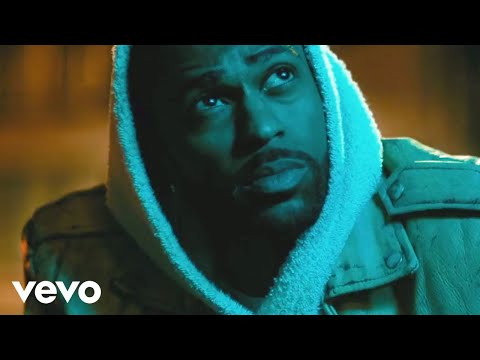
One Man Can Change The World — Big Sean Featuring Kanye West and John Legend A Tribute Built From Grief and Purpose Some songs arrive with immediate commerci…
01 The Story
One Man Can Change The World — Big Sean Featuring Kanye West and John Legend
A Tribute Built From Grief and Purpose
Some songs arrive with immediate commercial calculation behind them, engineered for radio consumption with every element calibrated to maximize chart performance. Others arrive because they had to, because the emotional and biographical circumstances that produced them demanded expression. One Man Can Change The World belongs firmly in the second category. Big Sean wrote the song as a tribute to his late grandmother, Helen Dozier, who passed away and whose influence on his life and values had been foundational. The song is an act of memorial as much as it is a musical statement, and that sincerity of purpose gives it a different weight than most hip-hop collaborations.
By 2015, Big Sean had established himself as a major figure in contemporary hip-hop, having signed to Kanye West's GOOD Music label and released two albums that demonstrated his technical skill as a rapper and his ability to connect with mainstream audiences. His third album, Dark Sky Paradise, released in February 2015, was his most commercially successful to that point, debuting at number one on the Billboard 200. The album contained both the hard-edged material that his core audience expected and moments of genuine emotional vulnerability, and One Man Can Change The World represented the album's most openly inspirational statement.
The Collaboration: Three Perspectives on Purpose
The choice of collaborators for this tribute was not arbitrary. Kanye West, who had mentored Big Sean from early in his career and signed him to GOOD Music, contributed a verse that brought his own reflections on purpose, legacy, and ambition. West's verse, recorded during a period when his public persona was generating considerable controversy, showed a different dimension: thoughtful, emotionally present, and aligned with the inspirational register of the track without the performative grandiosity that could sometimes characterize his public statements.
John Legend, whose own career had been built on a particular combination of soulful vocal craft and socially engaged artistry, provided the song's emotional anchor. His contribution to the chorus gave the track the gospel-adjacent warmth that the inspirational content demanded. The combination of hip-hop verses from two of the genre's more distinctive voices and a R&B chorus delivered by one of the era's most acclaimed vocalists created a sound that crossed the usual genre boundaries and addressed listeners who might not ordinarily seek out a Big Sean project.
The Chart Journey: A Long and Scattered Run
The Billboard Hot 100 story of One Man Can Change The World is unusual. The song first appeared on the chart on March 14, 2015, debuting at number 97, then cycled off before returning in late July 2015 and spending several more weeks in the chart's lower reaches. The peak position of number 82 was reached on September 19, 2015, after the song had accumulated 10 total weeks on the Hot 100 across its scattered chart appearances.
This kind of chart trajectory, returning to the Hot 100 months after its initial appearance, reflects the particular dynamics of streaming-era measurement. The song was not a radio-driven hit in the traditional sense; it found its audience through streaming platforms and through the organic spread of a track that resonated with listeners in ways that operated on a different timeline than the old weekly radio-programming cycle. The song's ability to return to the chart after apparently exiting it speaks to the depth of listener connection it had generated.
Inspiration in the Hip-Hop Context
The explicitly inspirational register of the track was not unprecedented in Big Sean's catalog, but it represented a particular concentration of that tendency. Hip-hop's relationship with inspirational content has always been complex; the genre's foundational authenticity demands that artists engage with the real conditions of their lives and communities, which often means confronting difficulty and injustice rather than celebrating resilience. The most effective inspirational hip-hop finds a way to hold both of those truths at once: acknowledging what is hard while insisting that individual agency and collective effort can change it.
One Man Can Change The World operated in exactly that space, drawing its claim that individuals can make a difference not from naive optimism but from the specific biography of the grandmother being honored. Her influence on her grandson's life was concrete evidence for the proposition the song was advancing. The personal made the inspirational credible.
Legacy and the Song's Enduring Resonance
The track has maintained a presence in popular culture beyond its original chart run, finding a second life in contexts that require music with genuine emotional weight and an affirmative message. John Legend's vocal performance in particular has given the song durability, his voice carrying the kind of authority on this material that makes it suitable for use in ceremonies, celebrations, and moments of collective affirmation.
For listeners interested in the emotional range of which contemporary hip-hop is capable, this collaboration between Big Sean, Kanye West, and John Legend stands as a reminder that the genre has never been limited to a single register. Press play and let the chorus do what it was designed to do.
"One Man Can Change The World" — Big Sean Featuring Kanye West and John Legend's singular moment on the 2010s charts.
02 Song Meaning
One Man Can Change The World — Big Sean Featuring Kanye West and John Legend
The Personal as the Universal
The most persuasive inspirational art is almost never abstract. When it works, it works because it is grounded in the specific, because the general claim is being advanced by someone with personal evidence for it. One Man Can Change The World derives its emotional authority from exactly this dynamic: the proposition in the title is not a platitude delivered from a distance but a claim that Big Sean can make from the particular experience of knowing his grandmother. The song's meaning begins in grief and moves outward into something broader and more applicable, but the grief at its root is what gives the larger claim its credibility.
This movement from the personal to the universal is one of the oldest rhetorical structures available to songwriters, and it remains effective when it is executed with honesty. The listener understands that the "one man" in the title refers initially to a real person, to Big Sean's grandmother and the influence she had on his life and trajectory. The expansion of that proposition to include the listener, to suggest that the same capacity for world-changing influence exists in any individual, happens naturally because the specific case has been made convincing.
Legacy and the Meaning We Leave Behind
The song's central thematic engagement is with the question of what a human life leaves behind. Big Sean's grandmother is presented not in terms of titles or public achievements but in terms of impact: the way she shaped the person the narrator became, the values she instilled, the perspective she provided. This is a specifically Black American tradition of honoring matriarchs, of recognizing the elders who held families and communities together through conditions that made that work necessary and often unacknowledged.
The cultural weight of that tradition gives the song resonance beyond any individual listener's particular family history. Many people have in their lives someone who played a similar role, whose influence operated quietly and persistently and whose significance only becomes fully legible after they are gone. The song gives that experience a formal expression, a place to put the feelings of gratitude and loss that can otherwise remain inarticulate.
Three Voices, One Argument
The collaboration structure of the track itself makes an implicit argument about the song's themes. Three artists from different generational and stylistic positions within contemporary Black music, gathered together to make a single statement about purpose and individual impact, enact the communal and generational transmission of values that the song describes. Kanye West's verse, John Legend's chorus, and Big Sean's narrative do not simply coexist; they reinforce one another in ways that demonstrate the kind of collaborative, cross-generational influence the song is celebrating.
That structural alignment between form and content is one of the things that separates a well-considered piece of music from a well-produced one. The track is both.
Inspiration in an Era of Cynicism
The mid-2010s were not an obviously hospitable moment for straightforward inspirational content in hip-hop. The genre's most critically acclaimed work of the era, including Kendrick Lamar's To Pimp a Butterfly, which arrived in the same month as Big Sean's album, was engaged in a more complex and interrogative relationship with its own optimism. Against that backdrop, a song that advanced its affirmative argument with relative directness ran the risk of seeming naive.
The biographical grounding of One Man Can Change The World prevented that. Sincerity is the most effective counter to cynicism when the sincerity is earned rather than performed, and the specific circumstances of the song's creation made its sincerity immediately legible. Listeners understood that Big Sean was not making a generic motivational statement; he was working through real grief and finding real meaning in it. That distinction mattered, and it still does.
→ More from Big Sean Featuring Kanye West & John Legend
View all Big Sean Featuring Kanye West & John Legend hits →
→ More from the 2010s File
View all 2010s hits →



Keep digging