The 2010s File Feature
Mood Swings
Mood Swings — A Boogie Wit da Hoodie The Bronx's Melodic Standard-Bearer By the autumn of 2019, the Bronx had reasserted itself as a generative force in Amer…
01 The Story
Mood Swings — A Boogie Wit da Hoodie
The Bronx's Melodic Standard-Bearer
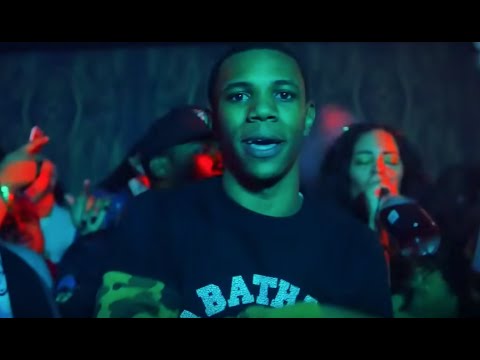
By the autumn of 2019, the Bronx had reasserted itself as a generative force in American rap, producing a wave of artists who combined the borough's traditional lyrical intensity with a new emphasis on melody and emotional range. A Boogie Wit da Hoodie, born Artist Julius Dubose in Highbridge in the South Bronx, was at the forefront of that movement. His approach to rap treated melody not as decoration but as primary structure, and his fanbase had grown rapidly on the strength of records that felt simultaneously street-rooted and emotionally open in a way that resonated across demographic lines.
"Mood Swings" appeared on A Boogie's album Artist 2.0, released October 4, 2019, through Atlantic Records and Highbridge the Label, the imprint he had established as both a commercial vehicle and a vehicle for community loyalty. The album debuted at number one on the Billboard 200, a significant commercial milestone for an artist who had built his audience primarily through streaming and social media rather than conventional radio promotion.
Sound and Sensibility
The production aesthetic of "Mood Swings" is characteristic of A Boogie's preferred sonic environment: melodic, somewhat melancholy, built on synthesizer-driven production that emphasises atmosphere over percussion aggression. The track occupied the intersection of contemporary R&B and rap that had become A Boogie's signature territory, creating a sound that owed something to the Bronx drill scene but leaned more heavily toward the introspective and the emotionally accessible than toward purely rhythmic impact.
A Boogie's vocal delivery on the track demonstrated the melodic precision that distinguished his best work, moving between rap cadence and sung melody with the ease of a performer for whom the distinction had become irrelevant. This fluidity between modes was one of the defining characteristics of the late-2010s generation of Bronx and Brooklyn rappers who had grown up listening to both hip-hop and R&B as a unified sonic landscape rather than separate genres.
Charting in the Streaming Age
"Mood Swings" entered the Billboard Hot 100 at number 76 on September 28, 2019, one week before the album's official release date, which indicated it was already generating significant streaming activity during the pre-release period. Its single chart week reflected the concentrated attention that major album releases generate in their immediate window and the rapid dispersal of that attention as the next release cycle begins.
The pattern was characteristic of 2019 hip-hop chart behaviour: an album's full tracklist arriving on streaming platforms simultaneously and generating enough aggregate listening to push multiple individual tracks onto the Hot 100 during the debut week, followed by a rapid normalisation as listeners moved on. For A Boogie, whose Artist 2.0 placed multiple tracks on the chart during that week, this represented a collective commercial success story even when individual track chart runs were brief.
A Boogie Wit da Hoodie's Rise
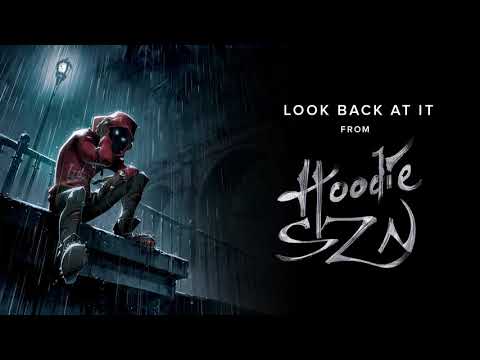
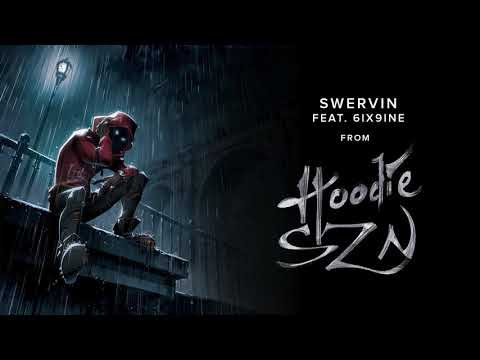
A Boogie's commercial trajectory between his 2016 debut mixtape and the 2019 album was among the steeper ascents in recent hip-hop history. He had achieved a number one album with Hoodie SZN in 2018, establishing himself as one of the most commercially significant artists of his generation despite receiving significantly less critical press attention than some of his peers. His popularity was built on genuine listener devotion, the kind of fanbase that streams an album repeatedly and attends concerts rather than simply registering as passive streaming data.
The Bronx community's embrace of A Boogie was particularly notable, reflecting the borough's pride in an artist who consistently referenced his origins and maintained his connections to the neighbourhood that produced him. That community loyalty fed directly into the streaming numbers that drove his chart success, demonstrating how authentic geographic and cultural rootedness can function as a commercial asset in the streaming era as surely as it did in the physical retail era.
The Emotional Geography of Highbridge
Much of A Boogie's music drew its emotional and lyrical content from the specific textures of life in Highbridge, one of the Bronx's most historically significant and economically challenged neighbourhoods. "Mood Swings," consistent with his broader catalogue, approached the emotional instability implied in its title through a lens shaped by that environment: the psychological costs of navigating uncertainty, the way precarious circumstances affect relationships and self-perception, the mood volatility that comes from living in conditions of chronic stress. With approximately 12 million YouTube views, the track has found a sustained audience among listeners who recognise those emotional textures from their own experience. Press play for a precise snapshot of the Bronx's melodic rap moment at its commercial apex.
"Mood Swings" — A Boogie Wit da Hoodie's singular moment on the 2010s charts.
02 Song Meaning
Mood Swings — Emotional Volatility, Identity, and Urban Authenticity
The Emotional Vocabulary of the Title
Mood swings as a concept carry psychological specificity that most pop song titles carefully avoid. The phrase suggests instability, unpredictability, the kind of emotional volatility that is often stigmatised in everyday life and rarely celebrated in popular culture. Choosing it as a track title was a statement of authenticity: here is someone willing to name an experience that many people have and few admit to openly. For A Boogie's fanbase, which skewed toward a generation of young men who had grown up in environments where emotional honesty was often discouraged, that directness was part of the track's appeal.
The lyrics engaged with emotional inconsistency in relationships, exploring the way that stress, suspicion, and precarious circumstances create patterns of behaviour in romantic contexts that are difficult to break or even fully understand from the inside. This kind of emotional self-examination, offered without neat resolution, was characteristic of A Boogie's lyrical voice at its most effective.
Bronx Hip-Hop's Emotional Evolution
The Bronx is where hip-hop was born in the 1970s, and the borough has maintained its own distinct relationship to the art form across five decades of stylistic evolution. The late 2010s wave of Bronx artists, including A Boogie Wit da Hoodie, Lil Tjay, and Pop Smoke, represented a specific generational development: a willingness to treat emotional vulnerability as compatible with street authenticity rather than antithetical to it. This shift had been building across a decade of musical development in New York, influenced partly by the melodic approaches coming out of Chicago and Atlanta but shaped by the Bronx's own cultural traditions.
"Mood Swings" exemplified this development with considerable directness. The track's willingness to describe emotional instability from the inside, without dressing it up as strength or rationalising it as strategy, marked a meaningful departure from older models of hip-hop masculinity.
Precarity and Psychological Impact
Reading A Boogie's music as simply personal confession misses the extent to which it is also social documentation. The emotional volatility described in "Mood Swings" is not random or individual; it has roots in the material conditions of the environments A Boogie describes. Chronic stress, economic uncertainty, the proximity of violence, the absence of reliable institutional support: these are psychological inputs that produce emotional outputs. Pop music rarely makes this connection explicitly, but it is present in A Boogie's work for listeners who bring the social context to the listening experience.
Understanding "Mood Swings" as a song about both personal emotional experience and the environmental conditions that produce such experience gives it considerably more depth than a surface reading might suggest.
The Streaming-Era Fanbase as Community
A Boogie's commercial success was built on a form of listener loyalty that the streaming era enabled with unusual directness. His fans did not merely stream his music; they organised around it, created content with it, shared it through social networks as a form of identity expression and community signal. This kind of parasocial community built around a specific artist's output had become one of the primary mechanisms through which contemporary musicians built sustainable careers, and A Boogie demonstrated how an artist from a specific, historically underserved community could leverage it effectively.
"Mood Swings" was one of the data points in that story: a track that accumulated its 12 million YouTube views one listener at a time, through genuine emotional connection rather than algorithmic promotion, sustained by a community of listeners who recognised something true in what they were hearing.
→ More from A Boogie Wit da Hoodie
View all A Boogie Wit da Hoodie hits →

→ More from the 2010s File
View all 2010s hits →



Keep digging