The 2010s File Feature
Red Opps
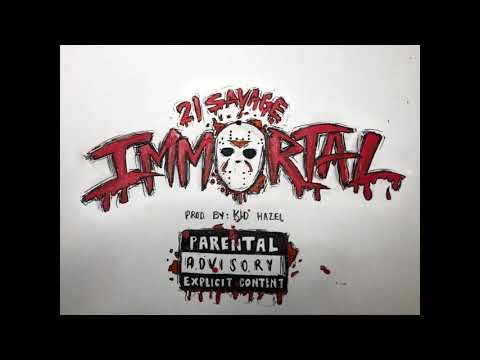
"Red Opps" — 21 Savage's Early Hot 100 Footprint in 2017 Atlanta's Cold Voice Arrives The opening weeks of 2017 felt like a changing of the guard in Atlanta …
01 The Story
"Red Opps" — 21 Savage's Early Hot 100 Footprint in 2017
Atlanta's Cold Voice Arrives
The opening weeks of 2017 felt like a changing of the guard in Atlanta hip-hop. Trap music had been commercially dominant for years, but the particular flavor that 21 Savage represented was something colder and more deliberately stripped-down than what had come before, a style that prioritized a specific kind of menacing minimalism over the more melodically elaborated trap productions that had been fueling the mainstream. "Red Opps" arrived in this context as one of several tracks that established 21 Savage as a distinctive and commercially significant voice in a very crowded field.
Shéyaa Bin Abraham-Joseph, who records as 21 Savage, had been releasing material through Atlanta's rap underground for several years before his commercial breakthrough. His collaboration with Metro Boomin on the 2016 joint EP "Savage Mode" had generated significant critical and commercial attention, establishing him as one of the more interesting new presences in Atlanta rap. By the time "Red Opps" entered the Hot 100 in January 2017, he was an artist with real momentum and an aesthetic that was instantly recognizable.
The Sound of Deliberate Restraint
What made 21 Savage's approach distinctive was what he chose not to do. At a moment when many Atlanta rappers were experimenting with melodic elements, drawing from the influence of artists like Young Thug and Future, 21 Savage maintained a spare, almost affectless delivery that made his verses function more like testimony than performance. The emotional flatness was not a limitation but a technique, a way of making violent content land with the weight of flat statement rather than dramatized entertainment.
"Red Opps" fit within this aesthetic framework. The production provided a spare, ominous backdrop while 21 Savage's vocals sat on top with the low-key authority that had become his signature. The track was organized around the street vernacular of his Atlanta upbringing, and its specificity of experience was part of what gave it credibility in an era when authenticity was one of the primary currencies of hip-hop commercial appeal.
Chart Performance and Context
The song debuted on the Billboard Hot 100 on January 7, 2017, entering at position 92. It climbed over the following weeks, reaching 75 and holding there before peaking at number 74 on January 28, 2017. The track spent five weeks on the Hot 100, a solid showing for a track from an artist who was still establishing his mainstream commercial footprint.
The chart run reflected the mechanics of how artists like 21 Savage were building their audiences in 2017. Streaming had become the dominant commercial metric, and artists who generated intense engagement from a dedicated core fanbase could accumulate streaming numbers that translated into chart positions without requiring the kind of broad demographic reach that radio-driven hits had historically needed. His streaming numbers were driven by a younger demographic that had adopted him as a genuine favorite rather than a casual listen.
21 Savage in the Atlanta Tradition
To understand "Red Opps" and its place in the culture requires situating it within the long history of Atlanta's influence on American popular music. The city had been producing commercially dominant hip-hop since at least the early 1990s, generating artists from Outkast to Ludacris to Lil Jon to Gucci Mane to T.I. to Young Jeezy, each representing a specific evolutionary moment in the Atlanta sound. 21 Savage belonged to the generation that inherited this tradition and pushed it toward colder, harder-edged territory.
The "Red Opps" title and thematic content drew from the street-conflict narratives that had been a fixture of Atlanta rap since its commercial emergence, but the particular way 21 Savage engaged those themes had its own inflection. His biography, including a violent incident that occurred on his 21st birthday in which he was shot six times, gave the content a biographical weight that separated him from artists who engaged similar subject matter from a greater emotional distance.
The Foundation of Something Larger
The early 2017 period represented the early phase of what would become a sustained commercial run for 21 Savage. His subsequent albums, including Issa Album and I Am Greater Than I Was, built on the foundation that tracks like "Red Opps" helped establish, and his collaborations with artists including Post Malone and Drake extended his audience considerably beyond the core Atlanta rap demographic.
Put on "Red Opps" and hear the spare efficiency of an artist who had figured out exactly who he was.
"Red Opps" — 21 Savage's singular moment on the 2010s charts.
02 Song Meaning
"Red Opps" — Minimalism, Street Testimony, and the Aesthetic of Restraint
When Less Becomes More Disturbing
The artistic power of 21 Savage's early work rested on an apparent paradox: the less emotional intensity he projected in his delivery, the more unsettling the content became. "Red Opps" exemplified this approach, deploying flat affect over production that was itself spare and cold, creating a listening experience in which the apparent emotional distance of the narrator made the subject matter register more heavily rather than less. This was a deliberate aesthetic choice with genuine artistic intelligence behind it, a mode of delivery that understood how understatement could amplify impact.
The technique has roots in literary traditions much older than hip-hop, in the flat reportorial prose of writers like Ernest Hemingway, who understood that withholding emotional commentary from violent or disturbing content could force the reader to supply that response themselves, making the impact more personal and more profound than any amount of authorial editorializing could achieve. Whether or not 21 Savage was consciously drawing on these literary parallels, the effect in "Red Opps" was similar.
Street Narratives and Authenticity
Hip-hop has always contained a documentary impulse, a drive to record and transmit the realities of specific environments and communities that mainstream culture either ignored or mythologized beyond recognition. The "Red Opps" thematic content belonged to this tradition, offering a perspective on street conflict from inside the experience rather than observing it from a comfortable external position. 21 Savage's biography gave his street narratives a credibility that was immediately legible to audiences who understood that the experiences being described were not hypothetical.
This is a complicated territory for popular music. The same content that carries authentic weight when rooted in real experience can function as entertainment or even glorification when encountered by listeners who have no personal framework for the realities being described. The ethical questions around street-content rap are not simple, and serious critics have engaged them at length. What can be said without that debate is that "Red Opps" was received as authentic by the audience that made it chart, and that authenticity was central to its commercial and cultural function.
Atlanta's Continuing Influence
The track was a product of a specific creative ecosystem, the Atlanta hip-hop community of the mid-2010s, that had been generating commercially dominant music for decades. The trap production aesthetic that underpinned "Red Opps" had evolved through years of sonic experimentation in Atlanta studios, and by 2017 it had become so foundational to American popular music that its elements were identifiable even to listeners who had no particular relationship with hip-hop. The hi-hats, the 808 bass, the specific rhythmic vocabulary of trap were as much a part of the sonic language of 2010s pop as any synthesizer sound or guitar chord.
21 Savage's contribution to this tradition was a vocal approach and lyrical perspective that pushed the aesthetic in a colder, more stripped-down direction. Where earlier trap artists had sometimes leaned into melodrama or stylized flamboyance, he maintained a kind of deliberate restraint that made his particular version of the sound feel like a commentary on the excess of his peers as much as a continuation of their work.
Five Weeks and a Legacy
The track's five-week Hot 100 run with a peak at number 74 represented one piece of an early commercial mosaic that 21 Savage was assembling in the opening months of 2017. Its meaning lies not only in what it communicated thematically but in what it contributed to establishing his commercial viability, demonstrating to the industry and to a broader public that his particular aesthetic had real mainstream appeal despite, or perhaps because of, its refusal to soften its edges for casual listeners.
The music that resonates most durably is often the music that commits most completely to its own aesthetic logic, that refuses to hedge or reach for broader appeal by compromising what makes it specific. "Red Opps" was that kind of track, and its specificity was inseparable from whatever power it carried.
"Red Opps" — 21 Savage's singular moment on the 2010s charts.
→ More from 21 Savage
View all 21 Savage hits →
→ More from the 2010s File
View all 2010s hits →
Keep digging