The 2010s File Feature
Whip
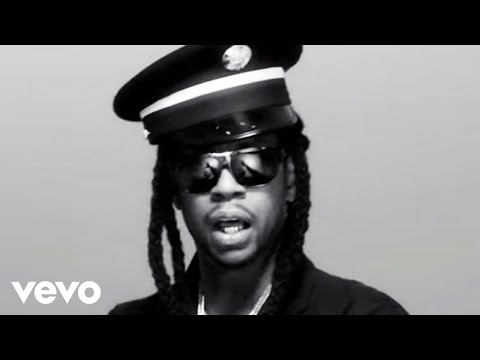
Whip — 2 Chainz Featuring Travis Scott and the Trap Luxury Aesthetic Two Voices at the Top of Their Commercial Game By March 2019, both 2 Chainz and Travis S…
01 The Story
Whip — 2 Chainz Featuring Travis Scott and the Trap Luxury Aesthetic
Two Voices at the Top of Their Commercial Game
By March 2019, both 2 Chainz and Travis Scott occupied positions of considerable influence in American hip-hop. 2 Chainz, the Atlanta-born rapper born Tauheed Epps, had spent the better part of a decade as one of the genre's most consistently entertaining personalities, known for an irreverent wit, an ear for production, and a commercial instinct that had produced a string of successful albums and features. Travis Scott, born Jacques Webster II and based out of Houston by way of Missouri, had ascended even more rapidly, with his 2018 album Astroworld making him one of the biggest names in music and producing "Sicko Mode," one of the defining hip-hop tracks of that year.
The collaboration on "Whip" brought these two presences together on what was, by the standards of their respective commercial trajectories, a relatively compact single release. The track debuted on the Billboard Hot 100 on March 16, 2019, entering at its peak position of number 75 and spending one week on the chart. That brief chart appearance placed it in the category of charting moments defined more by the artists' profiles than by the track's own sustained commercial momentum.
The Atlanta Trap Production Context
The production landscape for "Whip" was rooted firmly in the Atlanta trap aesthetic that had been reshaping hip-hop since the early 2010s. Trap production in this period was characterized by 808 bass, rapid hi-hat patterns, layered synthesizer textures, and a production architecture designed to feel simultaneously sparse and heavy. The sonic environment created by this approach suited lyrical content about luxury, status, and the pleasures of material success, which is the territory that "Whip" inhabits.
The title itself operates on multiple registers in hip-hop slang: "whip" refers to an automobile, specifically the kind of high-end vehicle that functions as a primary signifier of success in the Atlanta trap tradition. The car as status object, as both literal transportation and symbolic achievement, has been central to hip-hop's aesthetic vocabulary since at least the early 1990s, and trap music built elaborate systems of automotive reference that "Whip" participates in directly.
2 Chainz and the Trap Luxury Brand
2 Chainz had built much of his artistic identity around the intersection of luxury consumption and trap sensibility. His albums from this period, including Pretty Girls Like Trap Music (2017) and Rap or Go to the League (2019), the latter of which "Whip" appeared on, developed a consistent aesthetic that treated trap music as a luxury good in its own right, something to be consumed with the same pleasure and pride as the designer goods and high-end automobiles that populated the lyrics. This coherent brand positioning gave 2 Chainz a distinctive niche in a crowded market.
Rap or Go to the League was produced with LeBron James's SpringHill Entertainment and featured an extraordinary guest list alongside Travis Scott, including Kendrick Lamar, Chance the Rapper, Young Thug, and Lil Wayne. The album's ambition was evident, and its commercial performance reflected both the quality of its collaborations and the accumulated weight of 2 Chainz's fanbase by early 2019.
Travis Scott's Guest Presence and 2019 Context
Travis Scott's appearance on "Whip" arrived at a moment when his commercial value as a featured artist was essentially at its maximum. The Astroworld era had established him as a reliable commercial catalyst for any project he touched, and his distinctive vocal style, a melodic, distortion-heavy approach that influenced a generation of subsequent trap artists, added a textural dimension to the collaboration that 2 Chainz's more direct delivery alone would not have provided. The contrast between the two vocal approaches gave the track the dynamic variety that contemporary trap productions typically sought in their guest features.
The hip-hop landscape in March 2019 was dense with competition for chart space. The genre had expanded its streaming-era commercial reach to the point where even a brief chart appearance required both name recognition and streaming volume that would have been inconceivable a decade earlier. The Hot 100's methodology had incorporated streaming data in ways that made short, high-volume chart appearances by established artists newly possible.
The Track's Place in Both Artists' Catalogs
"Whip" functions in retrospect as a representative artifact of the 2019 hip-hop mainstream: expensive-sounding production, luxury lyrical themes, high-profile collaborations, streaming-driven chart mechanics. Its week on the Hot 100 was less a story of sustained commercial momentum than a register of the immediate impact that the combination of two major artists and their fanbases could produce in the streaming era. Both artists went on to continued success after the track's release, and "Whip" occupies a modest but documented place in both of their commercial records.
For listeners exploring the trap luxury aesthetic of late 2010s hip-hop, the track offers a compact, characteristic example of what the genre was producing at a particular commercial peak.
"Whip" — 2 Chainz Featuring Travis Scott's singular moment on the 2010s charts.
02 Song Meaning
Whip — Luxury, Mobility, and the Symbolic Grammar of Trap Aesthetics
The Automobile in Hip-Hop's Symbolic World
The car has functioned as one of hip-hop's primary symbolic objects since the genre's earliest commercial era, carrying meanings that extend well beyond simple transportation. In the trap tradition specifically, the automobile represents the compressed summary of material achievement: a highly visible, mobile status marker that communicates success in public space in ways that require no verbal elaboration. The "whip" of the title is not simply a vehicle; it is a declaration, an argument about where an artist has arrived and how far they have traveled from more difficult origins.
This symbolic system has deep roots in American culture more broadly. The car as freedom, as identity, as social mobility made literal, runs through blues, soul, country, and rock and roll long before hip-hop organized it into its current form. What trap music did was update and densify that symbolism, making it more specific, more brand-conscious, and more directly connected to the aesthetics of economic aspiration.
Luxury Consumption as Artistic Theme
2 Chainz's artistic project through the mid-to-late 2010s involved a sustained exploration of luxury consumption as both theme and aesthetic mode. The songs, the visuals, the partnerships, and the public persona all cohered around a consistent argument: that success in hip-hop entitles and obligates a particular kind of conspicuous celebration. The luxury rap tradition that 2 Chainz inhabited and helped shape took its pleasures seriously as artistic subject matter, refusing the apologetic register that sometimes accompanies discussions of material success.
This position carries its own cultural complexity. Luxury consumption as artistic theme in Black American music exists in tension with a long history of economic exclusion, with the reality that the brands and objects being celebrated were often historically unavailable or actively hostile to the communities from which the music emerged. The celebration in tracks like "Whip" is therefore never entirely straightforward; it carries a history even when it does not explicitly reference one.
Travis Scott and the Melodic Trap Aesthetic
Travis Scott's contribution to the sonic meaning of a track like "Whip" is inseparable from the production style he helped popularize. The distorted, pitched vocal approach and the psychedelic production textures that characterized Scott's work during the Astroworld era represented a significant evolution within trap music, softening its hardest edges without abandoning its rhythmic foundation. This approach opened trap's sound to a broader audience while maintaining its generic identity.
As a featured artist, Scott functions to broaden the emotional and textural palette of any track he joins. His presence on "Whip" connected the song to a set of sonic associations, with the Houston rap tradition, with the psychedelic ambition of Astroworld, with a particular brand of atmospheric luxury, that extended the track's meaning beyond what 2 Chainz's voice alone would have suggested.
The Streaming Era and What Chart Position Means
A single week on the Billboard Hot 100, entering and peaking at number 75, marks a kind of chart success that the streaming era made newly common. Pre-streaming, a one-week chart appearance at number 75 would have been nearly invisible; in the streaming-integrated methodology that Billboard adopted in 2012 and expanded in subsequent years, it registered the concentrated streaming activity that a high-profile release generates at launch before audience attention moves to the next release.
This chart behavior reflects something real about how music consumption changed in the 2010s. Songs no longer needed weeks of radio airplay to build momentum; they could register their full commercial impact in days, through streaming platforms that aggregated listening data in real time. "Whip's" chart history is therefore as much a document of that changed commercial landscape as it is of the track's own qualities. Understanding one illuminates the other.
"Whip" — 2 Chainz Featuring Travis Scott's singular moment on the 2010s charts.
→ More from 2 Chainz Featuring Travis Scott
View all 2 Chainz Featuring Travis Scott hits →



→ More from the 2010s File
View all 2010s hits →



Keep digging