The 2000s File Feature
Maneater
The Making and Chart History of "Maneater" by Nelly Furtado "Maneater" was the second major single released from Nelly Furtado's third studio album Loose, fo…
01 The Story
The Making and Chart History of "Maneater" by Nelly Furtado
"Maneater" was the second major single released from Nelly Furtado's third studio album Loose, following the global phenomenon of "Promiscuous" and confirming that the album was not a one-single commercial event but rather a sustained commercial force. The song was written and produced by Timbaland and Danja, the production duo whose work on Loose represented one of the most celebrated producer-artist collaborations in pop music during the mid-2000s. Timbaland's distinctive rhythmic sensibility and Danja's studio contributions gave "Maneater" its tightly wound, percussive character.
Nelly Furtado, born Nelly Kim Furtado on December 2, 1978, in Victoria, British Columbia, Canada, had first achieved commercial success in 2000 with the folk-influenced pop single "I'm Like a Bird," which had won a Grammy Award for Best Female Pop Vocal Performance. Her subsequent albums had charted respectably but had not matched the commercial ceiling of her debut. The decision to collaborate with Timbaland for Loose represented a significant artistic and commercial pivot, moving her sound decisively away from its folk and indie-pop roots toward a harder-edged, bass-driven R&B and hip-hop influenced style. This repositioning proved extraordinarily successful.
"Maneater" was recorded at Timbaland's studios, primarily in Virginia, during the sessions that produced Loose throughout 2005 and 2006. The track's production features a syncopated drum pattern, prominent use of digital sound processing on Furtado's vocals, and a distinctive horn sample that gives the track an aggressive, tension-filled character. The song title and thematic content drew some listeners to associate it with Hall and Oates' 1982 hit of the same name, though the two recordings share no musical material and represent entirely different sonic approaches. Furtado's "Maneater" was entirely original in its compositional elements.
Loose was released in June 2006 through Geffen Records in North America, and "Maneater" was released as a single shortly afterward. The track debuted on the Billboard Hot 100 at number 62 during the chart dated September 30, 2006, and began climbing steadily in the weeks that followed. The week-by-week progression showed the song moving from 62 to 37 in its second chart week, then to 30, 19, and reaching its peak of number 16 during the chart dated October 28, 2006. The song spent a total of twenty weeks on the Hot 100, demonstrating the sustained commercial viability that characterized the most successful singles from Loose.
The peak position of number 16 on the Hot 100 represented a meaningful commercial showing, though the song significantly outperformed this position on several format-specific charts. On the Hot Dance/Club Play chart, "Maneater" performed extremely strongly, reaching number one and spending multiple weeks in the top positions, confirming its status as a dance floor staple rather than purely a pop radio hit. The song also charted very highly in international markets, reaching number one in countries including Canada, Ireland, and New Zealand, and reaching the top five in the United Kingdom and Australia.
Internationally, "Maneater" may have been more commercially dominant than its United States Hot 100 position suggested. In Canada, Furtado's home country, the track was one of the biggest hits of the fall 2006 season. In the United Kingdom, where Timbaland-produced R&B crossover pop was particularly well received at the time, the single charted very high on the UK Singles Chart and received extensive radio promotion.
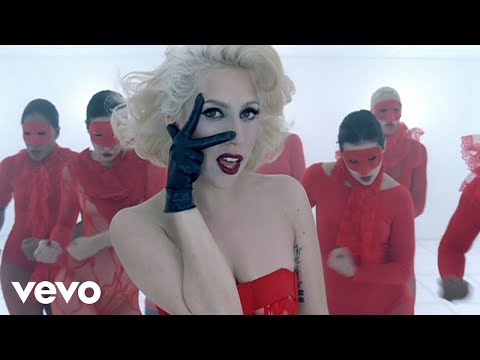
The music video for "Maneater" was directed by Francis Lawrence and featured stylized imagery of Furtado in a dark, high-fashion environment that reinforced the song's predatory themes. The video received significant airplay on music video channels internationally and helped sustain the song's visibility through the end of 2006.
"Maneater" was part of one of the most commercially successful album cycles in Furtado's career. Loose sold more than twelve million copies worldwide, driven largely by the twin successes of "Promiscuous" and "Maneater." The song was certified gold or platinum in multiple international markets, reflecting download and sales figures that confirmed its status as a genuine commercial hit beyond chart positions alone. The collaboration with Timbaland and Danja on the album as a whole, and on "Maneater" specifically, is widely cited as a landmark example of a producer-artist collaboration successfully reshaping an established artist's commercial identity.
02 Song Meaning
Themes and Meaning of "Maneater" by Nelly Furtado
"Maneater" is organized around the archetype of a femme fatale: a woman of overwhelming appeal and confidence who draws men into her orbit and whose effect on those who encounter her is described in near-destructive terms. The title noun, a compound word denoting someone who consumes or dominates in romantic contexts, establishes the song's central figure as someone operating from a position of extreme power in her interactions. The tone throughout is unapologetic, presenting this dominance not as a flaw or a source of guilt but as a simple fact of the narrator's social and romantic existence.
The song's lyrical content describes the narrator's awareness of her own effect on others and her comfort with that effect. She acknowledges watching people become captivated by her, noting the predictability of the response she provokes without apparent concern or regret. This posture of knowing indifference is central to the femme fatale archetype as it appears across multiple cultural traditions, and Furtado's delivery commits fully to the cold confidence that the role requires.
There is a degree of social critique embedded in the song's premise, even if it is delivered with a light touch. The narrator's behavior could be read as a mirror held up to a culture that rewards physical attraction and social performance above other qualities, suggesting that the "maneater" is in some sense a product of the environment she inhabits rather than an aberration. This reading positions the song within a tradition of pop music that uses the figure of the powerful woman to comment obliquely on gender dynamics and social expectations, though the track does not foreground this interpretation explicitly.
The production choices complement the thematic content effectively. The tightly coiled, slightly menacing quality of Timbaland and Danja's arrangement creates an atmosphere of tension and controlled aggression that mirrors the narrator's emotional stance. The heavy digital processing on Furtado's vocals gives her voice a harder, more detached quality than was evident on her earlier recordings, sonically reinforcing the persona being constructed by the lyrics.
Cultural reception of "Maneater" was broadly positive, with critics noting the coherence between Furtado's vocal performance, the production aesthetic, and the lyrical content. The song was understood as a fully realized artistic statement rather than simply a commercial exercise, in part because the persona Furtado adopted was so dramatically different from her earlier public image. The contrast between the folk-influenced, nature-metaphor-rich romanticism of "I'm Like a Bird" and the predatory urban confidence of "Maneater" was noted by many reviewers as evidence of an impressive artistic evolution.
The track's lasting cultural presence reflects its success in distilling a particular mode of female confidence and power into a highly portable, memorable pop format. It became associated with the broader cultural moment of mid-2000s female pop artists asserting control over their own narratives and presentations, fitting into a lineage that included work by artists such as Beyonce and Ciara during the same period. The song remains recognizable as both a product of its specific historical moment and as an expression of themes with considerably longer cultural roots.
→ More from the 2000s File
View all 2000s hits →



Keep digging