The 2000s File Feature
Poker Face
Poker Face: Creation, Recording, and Chart History Lady Gaga released "Poker Face" on September 26, 2008, as the second single from her debut studio album Th…
01 The Story
Poker Face: Creation, Recording, and Chart History
Lady Gaga released "Poker Face" on September 26, 2008, as the second single from her debut studio album The Fame. The song followed the success of "Just Dance," which had already established Gaga as a significant new presence in pop music, and built upon that momentum to deliver what would become one of the most commercially successful singles of the late 2000s and one of the defining hits of the decade. "Poker Face" cemented Lady Gaga's transition from an emerging act to a genuine global superstar and became the song most associated with her early commercial breakthrough.
The song was written by Stefani Joanne Angelina Germanotta, Lady Gaga's given name, in collaboration with producer RedOne, whose full name is Nadir Khayat. RedOne had previously worked with a range of artists in the European pop market before his partnership with Gaga, which would prove to be among the most commercially fruitful production collaborations of the era. The pair had already worked together on "Just Dance," and "Poker Face" represented a deepening and refinement of the sonic approach they had begun to develop together. The song was recorded primarily in New York, where Gaga was based, with production elements assembled and finalized during the album's completion phase.
The production of "Poker Face" drew on late 1970s and early 1980s disco and synth-pop influences, incorporating a four-on-the-floor kick drum pattern, synthesizer hook, and a melodic structure that moved efficiently between verse, pre-chorus, and chorus sections. RedOne's production was designed to function simultaneously in club environments and on mainstream pop radio, a dual format optimization that was relatively unusual for pop productions of the period and reflected a strategic vision for Gaga's commercial positioning across multiple listening contexts. The synthesizer hook became one of the most recognizable musical phrases of 2009.
On the Billboard Hot 100, "Poker Face" debuted at number 92 on January 3, 2009, reflecting the song's initial impact primarily in dance club charts before crossing over to mainstream radio. Its chart trajectory over the following weeks showed steady, consistent growth: 81, 83, 72, 48, through January, before accelerating significantly in February and March. The song reached number one on the Hot 100 on the chart dated April 11, 2009, where it remained for one week. It spent a total of 40 weeks on the Hot 100, a remarkable display of sustained commercial performance that reflected both dedicated fan engagement and continued mainstream radio support.
The song's performance in international markets was equally impressive. In the United Kingdom it reached number one and spent multiple weeks in the top ten. It topped charts in Australia, Canada, Germany, Austria, Switzerland, and the Netherlands. The global commercial footprint of "Poker Face" was extraordinary for a record at this stage of an artist's career, typically the period when international chart success remains more modest. This global reach was partly a function of the song's appeal to electronic dance music listeners in European markets where that genre commanded larger mainstream commercial space than in the United States.
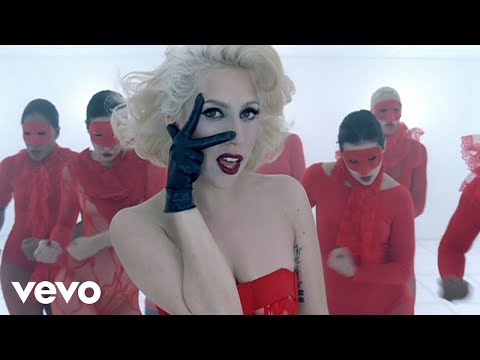
The music video, directed by Ray Kay, depicted Gaga in a poolside setting surrounded by imagery that played on the song's themes of masking and strategic self-presentation. The video's visual aesthetic incorporated elements of the theatricality and self-conscious artifice that would become central to Gaga's artistic identity throughout her career. It accumulated hundreds of millions of views and was among the most-watched videos on YouTube in the first years of the platform's operation at significant commercial scale.
Grammy recognition arrived at the 52nd Grammy Awards in 2010, where "Poker Face" won Best Dance Recording, and at the same ceremony the album The Fame was nominated for Album of the Year. The Grammy recognition contributed to the song's already extraordinary commercial longevity, extending its promotional life and introducing it to listeners who engaged primarily with the awards cycle rather than following pop chart activity in real time.
The song was certified diamond by the Recording Industry Association of America, indicating sales and streaming equivalents of over ten million units in the United States alone. This certification placed it among a small group of recordings to achieve that distinction and underlined its status as one of the genuine commercial landmarks of twenty-first century popular music. "Poker Face" remained a central reference point in discussions of Lady Gaga's artistic and commercial significance for more than a decade after its release.
02 Song Meaning
Poker Face: Meaning and Themes
"Poker Face" by Lady Gaga employs the extended metaphor of poker and gambling to explore themes of desire, concealment, and emotional self-protection within romantic and sexual contexts. The song's central metaphor presents romantic interaction as a game in which both participants attempt to read each other's intentions while concealing their own, with the narrator describing her deliberate practice of maintaining an unreadable exterior, a "poker face," in order to manage how her partner perceives her internal state. This framing is rich enough to support multiple interpretive layers, which is one reason the song generated significant critical commentary alongside its commercial success.
The most straightforward reading of the song positions it as a portrait of strategic romantic behavior, specifically the conscious decision to withhold emotional transparency in order to maintain power within a relationship dynamic. The narrator acknowledges that she is deliberately obscuring her true feelings and intentions, using the language of bluffing and concealment drawn from card playing to describe behavior that in relationship terms would be associated with emotional guardedness or calculated romantic gamesmanship. This theme had significant resonance in the pop cultural landscape of 2008 and 2009, a period when discussions of dating strategy, game-playing, and emotional intelligence were prominent in mainstream media.
Lady Gaga has discussed the song's thematic content in several interviews, noting that it also addresses the experience of being in a heterosexual relationship while having same-sex desires that the narrator is not fully disclosing to her partner. This autobiographical dimension adds another layer of meaning to the poker face metaphor: the concealment described is not merely strategic flirtation but the more complex and personally significant act of hiding a fundamental aspect of one's identity within the context of an intimate relationship. This reading gives the song a depth that situates it within broader conversations about identity, authenticity, and the difficulties of full self-disclosure.
The production's dance floor energy creates an interesting tension with the lyrical content. The song's sonic presentation is celebratory and euphoric, yet its lyrical subject matter concerns concealment, strategy, and emotional complexity that are anything but simple or joyful. This tension between form and content was a deliberate artistic choice that reflected Gaga's broader approach to pop music as a medium capable of addressing complex themes without abandoning commercial accessibility. The song works as a straightforward dance record even for listeners who engage only superficially with its lyrics, while rewarding closer attention with a more nuanced thematic experience.
The song was also received as a statement about performance and artifice more broadly, themes that ran throughout Gaga's early artistic identity. The persona of Lady Gaga was itself a kind of mask or poker face, a theatrical construct that placed distance between the artist as private person and the artist as public spectacle. "Poker Face" could therefore be read as a meta-commentary on celebrity persona construction, with the narrator describing the same kind of carefully managed self-presentation that Gaga herself was deploying through her public performances, costumes, and media appearances. Critics who engaged with this reading saw the song as more conceptually sophisticated than its immediate commercial presentation suggested.
Culturally, "Poker Face" was among the earliest major pop hits to generate the kind of academic and journalistic analysis typically reserved for more deliberately art-oriented music, a testament to the density of its thematic content and the intelligence with which Gaga had embedded her artistic concerns within a commercial format. Its influence on subsequent pop artists who sought to combine mainstream accessibility with thematic complexity and layered self-referential content has been widely noted by music critics and cultural commentators in retrospective assessments of its significance. The song's lasting streaming presence reflects both nostalgia for its era and continued discovery by listeners engaging with early Lady Gaga material for the first time.
→ More from the 2000s File
View all 2000s hits →



Keep digging