The 2000s File Feature
Gallery
History of "Gallery" by Mario Vazquez Mario Vazquez entered the public consciousness in an unusual way: as a contestant on the fourth season of American Idol…
01 The Story
History of "Gallery" by Mario Vazquez
Mario Vazquez entered the public consciousness in an unusual way: as a contestant on the fourth season of American Idol in 2005, he withdrew from the competition before the final rounds despite being considered a strong contender, citing personal and professional reasons. His voluntary departure from the show during its most popular era was itself a news event, generating significant media attention and public curiosity about his future plans. This distinctive entry into the popular consciousness gave his subsequent recording career a narrative dimension that most debut artists do not possess.
Following his departure from American Idol, Vazquez signed with Epic Records, a major label whose parent company Sony BMG gave him access to considerable promotional resources for his recording debut. The signing itself was a significant vote of confidence, as major labels rarely invested in artists who had not completed a high-profile talent competition with the kind of finish that guaranteed commercial momentum. His signing indicated that industry professionals believed in his talent independently of the competition framework from which he had withdrawn.
"Gallery" was released as Vazquez's debut single in the summer of 2006, approximately a year after his American Idol departure. The song was co-written by a team of professional songwriters and produced with a contemporary R&B and pop production aesthetic that showcased Vazquez's smooth, melodic tenor. The production drew on the sonic vocabulary of mid-2000s R&B, featuring layered synthesizer textures, programmed rhythms, and a polished mix that positioned the song comfortably within current radio formats. The production approach was professional and radio-ready, designed to compete immediately with established acts on contemporary hit radio and urban adult contemporary stations.
The lyrical conceit of "Gallery," which used the metaphor of a visual art gallery to describe the speaker's accumulation of memories of a romantic partner, gave the song a distinctive hook that helped it stand out in a crowded pop landscape. This kind of conceptual originality in a commercial pop song was a meaningful differentiator, as it gave radio programmers and listeners something to discuss beyond purely sonic qualities.
On the Billboard Hot 100, "Gallery" debuted on July 29, 2006, at position 99. The song climbed steadily, reaching 89, then 82, 70, and 57 over successive chart weeks. Its ascent continued through the autumn of 2006, ultimately reaching its peak of number 35 during the week of November 11, 2006. The song spent a total of 20 weeks on the Hot 100, a run that confirmed Vazquez as a genuine commercial force rather than simply a curiosity deriving from his unusual television history.
The song also performed strongly on the Hot R&B/Hip-Hop Songs chart, where its sophisticated production and Vazquez's vocal style resonated with R&B radio formats. Adult contemporary and urban adult contemporary stations provided the airplay foundation that drove the single's sustained chart presence, and the song became a recognizable entry in the 2006 R&B landscape.
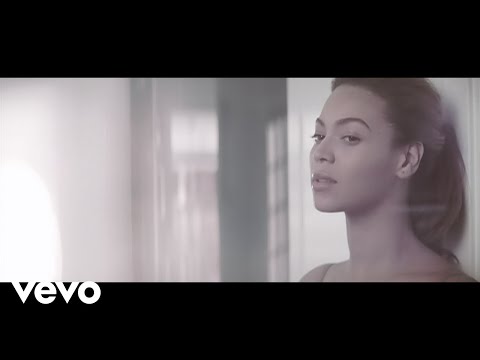
The music video for "Gallery" was produced with a high-concept visual treatment that developed the gallery metaphor established by the song's lyrics. The video featured Vazquez in a gallery setting, with images and memories displayed as artworks, creating a visual correlative for the song's central idea. The video received rotation on BET, VH1, and related channels, helping to maintain the single's visibility during its extended promotional window.
Mario Vazquez received significant media coverage during the "Gallery" promotional period, with interviews on major television programs and in music publications. His personal story, combining genuine vocal talent with an unusual path to commercial release, gave journalists a compelling angle for profiles that extended the song's public visibility beyond purely musical promotion. His vocal performances on television programs during this period were consistently praised by critics who noted the quality of his instrument and his ability to deliver commercial material with genuine feeling.
Despite the commercial success of "Gallery," Vazquez's recording career did not generate a substantial sustained follow-up. His debut album was released but did not match the commercial performance of the debut single, a pattern not unusual for artists whose initial single overperforms relative to subsequent output. The single itself, however, remains a significant artifact of mid-2000s pop R&B, notable both for its own qualities and for the unusual circumstances of its creation and release.
The YouTube presence of "Gallery," accumulating approximately 49 million views, reflects both the song's original commercial performance and the continuing interest of listeners who encountered it during its original chart run and those discovering it through retrospective engagement with the pop music of the 2000s. The song's distinctive central metaphor and Vazquez's vocal performance ensure that it continues to attract listeners across time.
02 Song Meaning
Meaning of "Gallery" by Mario Vazquez
"Gallery" by Mario Vazquez organizes itself around a sustained visual metaphor in which the speaker's romantic memories are figured as artworks displayed in a gallery. This central conceit gives the song both its title and its emotional architecture, transforming the abstract experience of memory and longing into concrete spatial and visual terms. The gallery becomes a symbolic space for the preservation and display of significant moments from a romantic relationship, treating those moments with the reverence and deliberateness that the display of valued art implies.
The thematic territory of the song is romantic memory and idealization. The speaker has internalized images of a romantic partner and organized them into a collection that can be revisited, examined, and cherished. Each memory is a composition in itself, a captured moment that carries emotional significance and that has been preserved because of the feeling it represents. The gallery metaphor implies that these memories are not merely stored randomly but have been curated, selected, and arranged with care and intention.
This idea of memory as curation carries interesting implications. The act of curating a gallery involves judgment about what is worth preserving and how to display it to best advantage. The speaker's gallery of romantic memories therefore reveals something about his values and his emotional response to the relationship: he has preserved what he found beautiful, meaningful, or moving, and he has organized those materials into a personal narrative of the connection he experienced. The gallery is not a neutral archive but an interpretive act, shaped by the speaker's emotional response to what he has lived.
The song engages with the ways in which romantic love transforms perception, causing particular people and moments to take on a heightened quality that elevates them above the ordinary flow of experience. This perceptual transformation is one of the consistent themes of romantic popular music across generations, but the gallery metaphor gives it a distinctive and memorable frame that separates "Gallery" from more conventional treatments of the same underlying experience.
Reception of the song reflected appreciation for both its conceptual originality and the quality of Mario Vazquez's vocal delivery. His ability to invest the metaphor with genuine emotional feeling, rather than allowing it to remain a clever but cold intellectual conceit, was central to the song's commercial appeal. Without the emotional engagement of his performance, the gallery metaphor might have seemed merely clever. With it, the song communicated something genuinely felt about the experience of romantic memory and the way significant relationships leave lasting impressions on those who experience them.
In the broader context of mid-2000s R&B, "Gallery" represents a moment when the genre was producing work that valued lyrical originality and conceptual ambition alongside the sonic and production values that had become increasingly sophisticated. The song's central metaphor placed it within a tradition of R&B compositions that used extended figurative language to explore romantic experience with greater specificity and imagination than simpler approaches would allow. This tradition, traceable through decades of soul and R&B songwriting, was enriched by "Gallery's" distinctive contribution, and the song remains a well-regarded example of what thoughtful pop songwriting can achieve when it brings genuine creative ambition to familiar emotional subject matter.
→ More from the 2000s File
View all 2000s hits →



Keep digging