The 2000s File Feature
Paparazzi
The Making and Chart History of "Paparazzi" by Lady Gaga "Paparazzi" is a pop song by Lady Gaga, born Stefani Joanne Angelina Germanotta, released as the fou…
01 The Story
The Making and Chart History of "Paparazzi" by Lady Gaga
"Paparazzi" is a pop song by Lady Gaga, born Stefani Joanne Angelina Germanotta, released as the fourth single from her debut studio album The Fame in 2009. The song was written by Lady Gaga and Rob Fusari, and its production was handled by RedOne, the Moroccan-Swedish producer who was central to the sonic identity of The Fame and who helped shape the dominant sound of Lady Gaga's early commercial period.
The album The Fame had been released in August 2008 and had already generated two major international hits in "Just Dance" and "Poker Face" before "Paparazzi" was selected as a single. By the time of its release, Gaga was already among the most discussed new artists in the world, and the promotional campaign for "Paparazzi" benefited from a level of public attention that her earlier singles had not initially enjoyed.
Rob Fusari, who had previously worked with Beyonce and Will Smith, co-wrote "Paparazzi" with Gaga during the creative sessions that generated much of The Fame. The collaboration between the two was significant in Gaga's early career, and "Paparazzi" represented one of their most commercially successful joint creations. The song's production by RedOne features the bright synthesizer textures, propulsive four-on-the-floor drum programming, and anthemic chorus construction that characterized the producer's contributions to the record.
"Paparazzi" debuted on the Billboard Hot 100 at number 74 in the chart week dated September 12, 2009. It climbed rapidly, moving from number 44 in its second chart week to number 18 in its third, then to number 7 by its fourth week. The single ultimately reached its peak position of number 6 on the chart dated October 17, 2009, where it spent two consecutive weeks. In total, "Paparazzi" spent 16 weeks on the Hot 100, contributing to a period of remarkable sustained chart dominance for Gaga, whose singles spent collectively extraordinary amounts of time on the chart throughout 2008 and 2009.
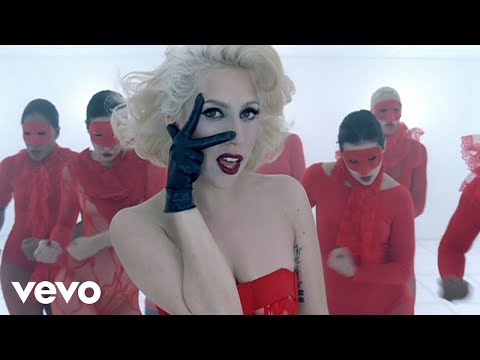
The music video for "Paparazzi," directed by Jonas Akerlund, was one of the most discussed music videos of 2009. Running significantly longer than a standard promotional clip, it told an extended narrative story that incorporated elements of celebrity culture, violence, and fashion spectacle. The video starred Gaga alongside Alexander Skarsgard and featured a cinematic production quality and visual storytelling ambition that set it apart from standard pop promotional content. It won the MTV Video Music Award for Best Special Effects at the 2009 MTV VMAs and was widely cited as a defining example of Lady Gaga's approach to music video as a serious artistic medium.
Lady Gaga's performance of "Paparazzi" at the 2009 MTV Video Music Awards became one of the most talked-about live music moments of that year. The performance was theatrical and disturbing in a way that extended and complicated the song's lyrical content, and it solidified Gaga's reputation as a performer who used every available platform to make conceptually ambitious statements about celebrity, image, and spectacle. The VMA performance contributed significantly to the song's second-week chart activity and to its overall cultural footprint.
The single performed well across multiple chart formats. On the Billboard Pop Songs chart, it ranked among the top entries of its tracking period, and it received heavy airplay on Top 40 stations throughout the fall of 2009. International performance was similarly strong, with the song reaching top ten positions in multiple European markets and reinforcing Gaga's status as a genuinely global commercial phenomenon.
Critical reception for "Paparazzi" was largely positive, with reviewers praising the song's construction and its thematic engagement with celebrity culture. The single was recognized as evidence that Gaga's commercial success was built on genuine songwriting and conceptual intelligence rather than merely on visual novelty or calculated shock value. The combination of a genuinely catchy pop melody with lyrics that interrogated the nature of fame gave the song a critical credibility that not all of her contemporaries' work enjoyed.
Legacy Within Lady Gaga's Catalog
"Paparazzi" is widely regarded as one of the defining songs of Lady Gaga's early career and one of the most significant pop singles of 2009. Its extended thematic engagement with the dynamics of fame, media, and celebrity set it apart from more straightforwardly celebratory pop music and contributed to the broader argument that Gaga was an artist using pop forms to explore substantive ideas. With over 350 million YouTube views, it remains one of her most-watched recordings and a touchstone for the study of her early period.
02 Song Meaning
Themes and Meaning of "Paparazzi" by Lady Gaga
"Paparazzi" is a conceptually layered song that operates on at least two distinct levels simultaneously. On the surface, it appears to be a song about obsessive romantic devotion, with the narrator declaring an intense, relentless attachment to a lover. At a deeper level, however, the song is a meditation on celebrity culture, media attention, and the ambiguous relationship between a public figure and the cameras that pursue them. The word "paparazzi" in the title imports the entire apparatus of celebrity surveillance into what might otherwise be read as a straightforward love song.
Lady Gaga and Rob Fusari wrote the song with this double meaning as a structural principle. The narrator's declarations of devotion can be read simultaneously as a fan addressing a celebrity and as a celebrity addressing fame itself. This ambiguity is not accidental; it reflects a sophisticated understanding of how celebrity functions in contemporary culture, where the boundary between the public figure and their audience is unstable and constantly renegotiated.
The paparazzi as a cultural figure represents a particular kind of relentless attention: obsessive, intrusive, and fundamentally commercial. When Gaga adopts this figure as a metaphor for her own emotional state, she is doing something more complex than simply writing a love song. She is suggesting that certain forms of intense human devotion share structural features with the most invasive forms of media attention, that the desire to see, to capture, and to possess the image of another person operates across contexts that are conventionally kept separate.
The theme of fame as seduction runs throughout the song. The celebrity life is presented as something pursued with the same intensity that the paparazzi pursue their subjects, something that draws the narrator with an irresistible force that she chooses not to resist. This is consistent with the broader thematic concerns of The Fame, the album on which "Paparazzi" appeared, which is preoccupied throughout with the nature of celebrity desire and the relationship between ambition and identity.
The song's extended music video, directed by Jonas Akerlund, developed its thematic content in striking ways that the audio recording alone could not fully contain. The video's narrative of a glamorous celebrity recovering from apparent abuse, taking revenge, and embracing the media spectacle of her own trial added dimensions of agency, violence, and spectacle to the song's meaning that pushed it firmly into the territory of cultural commentary. The visual text complicated any reading of the song as merely romantic, insisting on its engagement with questions of power, image, and public consumption of celebrity narrative.
Critics who engaged with "Paparazzi" as a cultural artifact generally praised its thematic sophistication and self-awareness. The song was seen as evidence of Gaga's understanding of the codes and mechanisms of the celebrity world she was entering, and of her intention to engage critically with those mechanisms rather than simply to participate in them uncritically. This positioning distinguished her from contemporaries whose work engaged with fame as an unambiguous aspiration rather than as a complex and potentially troubling condition.
The tension between the song's catchy, dance-floor-ready production and its more disturbing thematic content is itself part of the meaning. Pop music's capacity to deliver unsettling or complex ideas within a pleasurable sonic container is one of the genre's most powerful and underappreciated qualities, and "Paparazzi" is an example of that capacity used deliberately. Listeners dancing to the track are simultaneously being given material that, if they choose to attend to it, complicates the very celebrity culture their dancing celebrates.
In retrospect, "Paparazzi" is recognized as one of Lady Gaga's most fully realized early statements, a song that achieves its multiple aims with unusual precision and that rewards the kind of interpretive attention that popular music rarely explicitly solicits from its listeners.
→ More from the 2000s File
View all 2000s hits →


Keep digging