The 2000s File Feature
I Want You
I Want You: Janet Jackson's Resilient Return in 2004 The Context That Changed Everything Any honest account of Janet Jackson's 2004 must begin with the fact …
01 The Story
I Want You: Janet Jackson's Resilient Return in 2004
The Context That Changed Everything
Any honest account of Janet Jackson's 2004 must begin with the fact of February 1, 2004, when the Super Bowl XXXVIII halftime performance produced one of the most extensively discussed and consequential moments in the history of American broadcast television. The fallout from that event, the FCC fines, the radio blacklisting, the public controversy, created a commercial and reputational environment for Jackson that was genuinely unprecedented for an artist of her stature. Janet Jackson had spent more than two decades building one of the most impressive commercial and artistic careers in pop music, and within weeks of that broadcast, much of that infrastructure had been disrupted.
The release of I Want You and the album Damita Jo in March 2004 therefore took place under conditions that no amount of planning could have fully anticipated. A record that would otherwise have been received as the next chapter in the career of one of pop's most enduring stars arrived instead as a test case for whether the controversy had permanently damaged Jackson's commercial viability.
Damita Jo and the Album Context
Damita Jo was released on Virgin Records in March 2004, preceded by the single I Want You. The album was characterized by a more explicit and sensual tone than some of Jackson's earlier work, a creative decision that in retrospect proved poorly timed given the cultural climate the Super Bowl incident had intensified. The record was co-produced by Janet Jackson and Jimmy Jam and Terry Lewis, the production partnership that had been central to her commercial resurgence in the 1980s and had continued to define her sound across multiple successful albums.
The sonic profile of I Want You reflected the sophisticated R&B production aesthetics of the early 2000s: layered synthesizers, precise rhythmic programming, and a vocal performance that emphasized intimacy and vulnerability. The song's subject was unambiguous romantic desire, an emotional territory Jackson had explored throughout her career with considerable frankness.
Chart Performance in a Complicated Climate
The single debuted on the Billboard Hot 100 on April 3, 2004, entering at number 74. Its subsequent climb was steady rather than spectacular, the track moving through the sixties before reaching its commercial peak. I Want You peaked at number 57 on May 1, 2004, spending ten weeks total on the Hot 100. The performance was respectable given the circumstances, but it fell well short of the chart heights that Jackson had routinely achieved throughout the 1980s and 1990s.
Many radio stations that had historically been enthusiastic supporters of Jackson's music remained cool to the new material in the aftermath of the Super Bowl incident, and that diminished airplay had direct consequences for the single's chart trajectory. The album performed similarly: commercially present but notably below Jackson's established commercial level.
Resilience and the Long View of a Career
Jackson's response to the commercial difficulties of 2004 was to keep working. 20 Y.O. in 2006 and Discipline in 2008 continued her recording career, and her touring remained a major commercial enterprise. Her reputation as a live performer and as a creative force had not been fundamentally altered by the events of 2004, even if the commercial environment had been temporarily transformed.
The broader historical reassessment of the Super Bowl incident and its consequences has been extensive, with subsequent critical analysis emphasizing the asymmetric treatment of Jackson and her male collaborator by media and industry alike. In that context, I Want You and Damita Jo read differently than they did in their moment: as work produced by an extraordinary artist under circumstances of genuine unfairness, maintaining quality and commitment despite conditions designed to undermine both. Press play and hear the perseverance.
"I Want You" — Janet Jackson's singular moment on the 2000s charts.
02 Song Meaning
The Meaning of I Want You by Janet Jackson: Desire, Agency, and the Pop Star as Subject
Desire Stated Plainly
There is a particular kind of artistic courage in simplicity. "I want you" is three words, as direct as desire gets in the English language, and building a pop song around that directness requires confidence in the execution because the concept itself offers no cover. Janet Jackson had spent her career navigating the terrain between explicit expression and commercial palatability, beginning with Control in 1986 and continuing through a series of albums that treated female desire and female agency as legitimate pop subjects rather than discomfiting anomalies. I Want You extended that project into the early 2000s with the directness that had always characterized her best work.
The song's lyrical approach placed Jackson firmly as the desiring subject rather than the desired object, a distinction that matters more than it might initially seem. In the long tradition of pop love songs, women had more often been positioned as the ones being wanted, pursued, serenaded. Jackson's career had consistently inverted or complicated that dynamic, insisting on the legitimacy of female desire as a pop subject and on the pop star as an agent who wants rather than simply an object who is wanted.
The Sonic Language of 2004
The production aesthetic of I Want You was firmly rooted in the R&B sound that Jimmy Jam and Terry Lewis had helped define over two decades of work, updated for the early 2000s context. The track's arrangement reflected the layered, synthesizer-driven production that characterized contemporary R&B, with a rhythmic precision that suited Jackson's background as a dancer and performer as much as a vocalist.
The collaboration between Jackson and her longtime production partners had produced some of the most commercially and artistically successful R&B recordings of the previous two decades. That creative partnership brought a level of craft and mutual understanding to the work that could not be replicated through more transactional production arrangements. The sophistication of the sonic environment on I Want You reflected that accumulated knowledge.
2004 and the Complicated Politics of Female Sexuality in Pop
The cultural moment in which I Want You arrived was deeply fraught around questions of female sexuality in popular entertainment. The Super Bowl incident and its aftermath had made clear that the tolerance for explicit female sexual expression had very real limits, enforced not through any formal policy but through the practical mechanisms of radio avoidance and industry caution. A song as frank in its expression of desire as I Want You inevitably read within that context.
Jackson had always understood that her artistic project was not separate from those politics but deeply embedded in them. Her most significant albums, particularly Control and Rhythm Nation 1814, were explicitly engaged with questions of autonomy, identity, and social power. I Want You continued that engagement in a more intimate register, the personal as political not through grand statement but through the simple assertion of desire on the artist's own terms.
The Song in the Larger Jackson Story
Heard within the full arc of Janet Jackson's catalog, I Want You occupies an interesting position: a song of genuine artistic quality released at a moment when the commercial infrastructure that would normally have supported it was under considerable pressure. Its relative underperformance on the charts relative to her established commercial level reflected circumstances rather than artistic merit. The song's emotional honesty, its commitment to the direct expression of feeling without apology or evasion, remained entirely consistent with the values that had made Jackson one of the most important pop artists of her generation. That consistency, maintained across conditions that would have broken lesser artists, is itself part of the meaning.
→ More from Janet Jackson
View all Janet Jackson hits →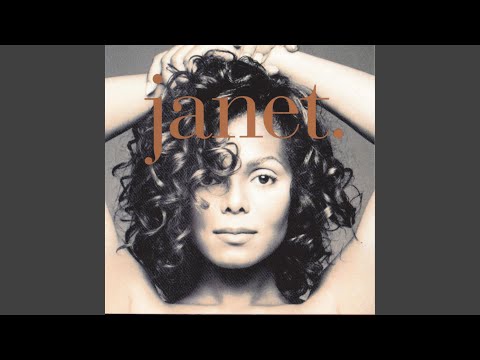

→ More from the 2000s File
View all 2000s hits →



Keep digging