The 2000s File Feature
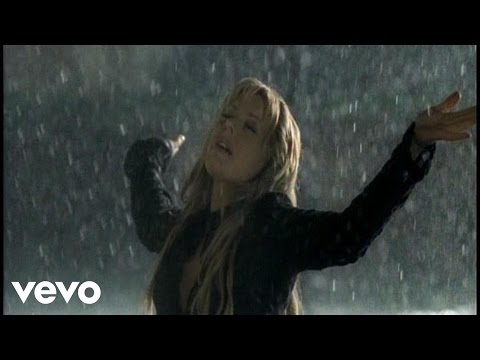
Trying To Find Atlantis
"Trying To Find Atlantis" — Jamie O'Neal A Voice That Had Already Proven Itself By February 2005, Jamie O'Neal had already earned her place in the country mu…
01 The Story
"Trying To Find Atlantis" — Jamie O'Neal
A Voice That Had Already Proven Itself
By February 2005, Jamie O'Neal had already earned her place in the country music establishment with a pair of number-one country hits that demonstrated her ability to carry emotionally demanding material with conviction. "There Is No Arizona" in 2000 and "When I Think About Angels" in 2001 had established her as a vocalist of genuine power and a commercial presence in Nashville's mainstream. "Trying To Find Atlantis" arrived in the context of that established career, a slower and more contemplative single from the album Brave that showed a different dimension of her artistry.
O'Neal's journey to Nashville stardom had been a long one. Born in Brisbane, Australia, and raised partly in Hawaii, she had spent years pursuing her recording ambitions before Mercury Nashville signed her and released the debut album that produced her first major hits. That background, geographically various and professionally hard-won, informed the emotional authenticity she brought to material about longing and the pursuit of something seemingly unreachable.
The Song and Its Production
"Trying To Find Atlantis" was a co-write, as is the norm in Nashville's professional songwriting culture, where the separation between performer and composer is less absolute than in many other music traditions. The production style reflects the mid-2000s Nashville mainstream approach: polished and radio-friendly, with enough sonic warmth to carry an adult audience while remaining accessible to younger listeners. The arrangement gives O'Neal's voice space to convey the song's emotional content without overwhelming it with production complexity.
The song's title invokes one of the most durable myths in Western culture, the lost city beneath the waves, as a metaphor for something pursued without certainty of its existence. That mythological reach was somewhat unusual for mainstream country radio, which typically preferred more direct and concrete imagery, but the emotional resonance of the Atlantis metaphor was accessible enough to communicate across audience segments.
A Brief Run on the Pop Chart
The single made a modest appearance on the Billboard Hot 100, entering on February 19, 2005 at position 98. Over its four-week chart run, it climbed to 95, then 88, before peaking at number 86 during the week of March 26, 2005. Those numbers reflect the track's primary market on the country charts, where it received the bulk of its airplay and audience, with the Hot 100 showing only the spillover into pop radio.
Country tracks of this period that crossed onto the Hot 100 at all were typically doing so through significant country radio momentum combined with some degree of adult contemporary crossover. O'Neal's established reputation in both formats meant that her recordings had a better chance of crossing over than those of newer artists with narrower format identity.
Nashville in 2005 and the Adult Country Market
The Nashville commercial country landscape of 2005 was in the midst of a significant period of consolidation and demographic tension. The rise of younger, image-oriented artists was creating commercial pressure on established acts who had built their careers on vocal strength rather than youth appeal. Artists like O'Neal, whose power lay primarily in the quality of her singing and her connection to emotionally mature material, were finding that the radio landscape was shifting in directions that did not always favor their strengths.
"Trying To Find Atlantis" was the kind of record that had always had a home on adult country radio, delivered with full professional command by one of the format's most capable voices. Its chart performance reflected the specific conditions of that mid-2000s moment: a genuine audience for this kind of material, but a radio landscape that was not always aligned with that audience's preferences.
The Legacy of a Committed Performer
Jamie O'Neal continued recording and performing into subsequent decades, maintaining a devoted fanbase that valued the emotional directness of her work. Her catalog from the early 2000s period, including "Trying To Find Atlantis," represents a strand of mainstream country that prioritized vocal performance and emotional substance over trend-chasing. That consistency of values has a kind of integrity that is worth acknowledging separately from any single track's commercial performance.
The song rewards a careful listen on headphones, with the balance turned toward her voice rather than the production surrounding it. That is where the record lives.
"Trying To Find Atlantis" — Jamie O'Neal's singular moment on the 2000s charts.
02 Song Meaning
"Trying To Find Atlantis" — The Myth of the Unreachable and the Courage of the Search
Atlantis as a State of Mind
The myth of Atlantis, the fabled civilization said to have sunk beneath the ocean, has served as a metaphor in Western culture for centuries precisely because it sits at a particular intersection: something that may have been real, that was lost before it could be fully known, and that may not exist at all. To be trying to find Atlantis is to be searching for something whose existence cannot be confirmed, whose location cannot be mapped, and whose discovery cannot be guaranteed. It is the search for something that might be dream rather than destination.
Jamie O'Neal's application of this metaphor to personal romantic or emotional experience captures something genuine about what it feels like to pursue a connection or a condition of happiness that seems always to recede as you approach it. The feeling of searching for something that may be unreachable is among the most common human experiences, and the song's use of such a resonant cultural symbol to name it gives the theme an emotional weight that more literal language might have failed to achieve.
Hope and Doubt in Equal Measure
One of the song's most interesting qualities is that it does not resolve the question of whether Atlantis can be found. The narrator is still trying, which means the outcome remains open. This suspended quality, the posture of ongoing search rather than achieved arrival or resigned abandonment, is emotionally honest in a way that more tidy lyrical resolutions often are not. Real emotional life rarely offers the clarity that pop songs traditionally provide, and a song willing to sit in uncertainty rather than tie its emotional content into a neat conclusion earns a degree of trust from listeners who recognize that uncertainty as their own.
Country music has always been drawn to themes of loss and longing, and "Trying To Find Atlantis" fits within that tradition. The particular quality it brings to that tradition is the mythological ambition of its central metaphor, which elevates a familiar emotional theme into something that feels larger and more resonant than a more conventional lyrical approach would have managed.
Courage and the Search Itself
The album from which the song came was titled Brave, and that title is relevant to understanding what "Trying To Find Atlantis" is ultimately arguing. The act of continuing to search for something that may not exist, or that may be permanently out of reach, requires a specific kind of courage. It would be easier, safer, and more comfortable to stop searching and accept whatever is near at hand. The song validates the more difficult choice, the commitment to keeping the search open even when its success cannot be guaranteed.
That validation is one of the things that country music does most effectively: it acknowledges that certain choices in life are genuinely hard, that the emotionally brave path carries real costs, and that the people who choose it deserve recognition for that choice. "Trying To Find Atlantis" fits squarely in that tradition of country music as a literature of emotional honesty.
O'Neal's Voice and the Song's Meaning
The way Jamie O'Neal sings this material is inseparable from what the song means in practice. A vocalist with a different relationship to the emotional content, one who approached the material from outside rather than through it, would produce a very different experience. O'Neal's reputation for emotional commitment in performance means that listeners bring a pre-existing trust to her readings of material like this, which amplifies the song's impact beyond what the words and music alone would produce.
The search for Atlantis, understood as the search for whatever form of lost or unrealized wholeness each listener carries, is both universal and personal. The song works because it respects that particularity, offering a metaphor large enough to hold many different specific searches without specifying any one of them.
"Trying To Find Atlantis" — Jamie O'Neal's singular moment on the 2000s charts.
→ More from Jamie O'Neal
View all Jamie O'Neal hits →

→ More from the 2000s File
View all 2000s hits →




Keep digging