The 2000s File Feature
Rich Girl
Rich Girl: Creation, Recording, and Chart History "Rich Girl" by Gwen Stefani featuring Eve was released in November 2004 as the lead single from Stefani's d…
01 The Story
Rich Girl: Creation, Recording, and Chart History
"Rich Girl" by Gwen Stefani featuring Eve was released in November 2004 as the lead single from Stefani's debut solo album Love. Angel. Music. Baby., commonly stylized as L.A.M.B. The track arrived at a pivotal moment in popular music, when the boundaries between pop, hip-hop, and ska were being actively redrawn by a new generation of crossover artists. Stefani, already a globally recognized figure as the frontwoman of No Doubt, used her first solo project to announce an entirely new creative identity rooted in unapologetic eclecticism.
The song was written by Gwen Stefani and Eve Jihan Jeffers, with production handled by Dr. Luke and Kara DioGuardi. Its sonic architecture is built on a prominent interpolation of the classic Fiddler on the Roof showstopper "If I Were a Rich Man," originally composed by Jerry Bock with lyrics by Sheldon Harnick. The interpolation was cleared with proper licensing, giving the track a theatrical, Broadway-inflected hook that contrasted sharply with its contemporary hip-hop rhythms and Stefani's new wave-adjacent vocal delivery. The result was a layered, genre-blurring production that stood apart from virtually everything else on pop radio in late 2004.
Recording sessions for L.A.M.B. took place across multiple studios and involved a wide roster of collaborators, including The Neptunes, Dallas Austin, and Jimmy Jam and Terry Lewis. The album reflected Stefani's long-held fascination with multiple musical eras and her interest in crafting a sound that was explicitly personal rather than a continuation of No Doubt's ska-rock template. Dr. Luke, who co-produced "Rich Girl," was at the time an emerging production talent who would go on to become one of the dominant forces in mainstream pop music throughout the following decade.
Eve's participation was a natural creative fit. The Philadelphia-born rapper had established herself as one of the most commercially successful female MCs of her era, having scored significant hits of her own and proven herself capable of anchoring collaborations alongside major pop artists. Her verse on "Rich Girl" is energetic and playful, amplifying the song's central fantasy without overwhelming Stefani's lead vocal. The chemistry between the two artists came across as relaxed and genuine, which gave the track a conversational warmth that resonated with listeners.
"Rich Girl" debuted on the Billboard Hot 100 on December 25, 2004, entering at number 74. Its ascent was steady rather than explosive: it climbed to number 67 the following week, then to 54, before settling briefly at 57 and then resuming its upward trajectory. By the first week of March 2005, the song had reached its peak position of number 7, representing a strong commercial showing for a debut solo single from an artist whose previous work had been closely associated with the alternative rock landscape.
The track spent 27 weeks on the Billboard Hot 100, an extended run that reflected both the song's broad demographic appeal and the sustained promotional campaign behind L.A.M.B. It also performed strongly on the Pop Songs airplay chart and received extensive rotation on radio stations that programmed across the pop and hip-hop formats. Internationally, the song charted in the United Kingdom, Australia, Canada, and several European markets, confirming Stefani's global name recognition and the crossover appeal of the musical premise.
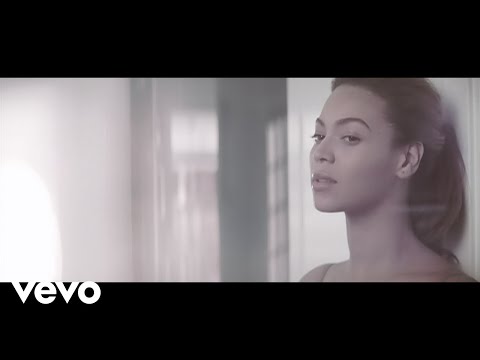
The accompanying music video, directed by Sophie Muller, became a staple of MTV and VH1 programming. It featured elaborate costuming, stylized set design, and choreography that drew from both hip-hop aesthetics and vintage theatrical traditions, visually echoing the song's musical blend of Broadway and contemporary urban pop. Stefani's fashion choices in the clip reinforced her status as a style icon, generating significant coverage in entertainment and fashion media beyond the music press.
"Rich Girl" helped launch L.A.M.B. into the upper tier of album releases that holiday season. The album debuted at number one on the Billboard 200 and eventually sold more than three million copies in the United States alone, with "Rich Girl" serving as the first proof of concept that Stefani could anchor a solo pop record without the structural support of her band. Critics praised the single for its inventive use of the Fiddler on the Roof source material and for the confidence with which Stefani inhabited the glossy pop persona that would define her solo career throughout the mid-2000s.
The song's legacy within the catalog of early 2000s pop remains considerable. It is regularly cited as an example of successful theatrical interpolation in mainstream radio pop and as a milestone in the commercial convergence of pop-rock crossover artists with hip-hop collaborative frameworks.
02 Song Meaning
Rich Girl: Themes, Meaning, and Cultural Reception
"Rich Girl" operates as a modern fantasy of material freedom, built around the universal wish-fulfillment premise of imagining what life would look like with unlimited financial resources. The song does not attempt to be morally complex or ironic in its central conceit. Instead, it embraces the daydream fully and presents affluence as an uncomplicated form of liberation from the mundane constraints of everyday life. This directness was part of its appeal: listeners were invited into an uncomplicated fantasy rather than asked to interrogate it.
The foundational reference, drawn from the Fiddler on the Roof number "If I Were a Rich Man," lends the song a theatrical dimension that complicates its apparent simplicity. The original theatrical context involves a poor dairyman imagining how his life would change if social circumstances were different, a meditation with roots in Yiddish literary tradition and a genuine undercurrent of longing. By transplanting that hook into a glossy 2004 pop production, Stefani stripped away the historical pathos while retaining the emotional immediacy of the wish. The result is a song that feels playful rather than melancholy, aspiration without apology.
Gwen Stefani's vocal performance reinforces this reading. Her delivery throughout the track is light, conversational, and confident, suggesting that the fantasy being described is not born of deprivation but of pleasure in imagining excess. There is no bitterness in the premise, no critique of wealth disparity, and no narrative of striving. The perspective is simply enjoyment of a daydream rendered in vivid, stylized pop terms.
Eve's rap verse adds a complementary dimension. Her contribution shifts the song's register slightly toward the language of hip-hop materialism, a genre tradition in which displays of wealth serve as markers of achievement and resilience. In Eve's section, the fantasy carries a slightly sharper edge, positioning financial success as something earned and deserved rather than simply wished for. This dynamic between the two artists gave the song a dual perspective, with Stefani's dreamy pop voice and Eve's more grounded MC delivery creating a productive contrast.
Culturally, "Rich Girl" arrived during a period of intense mainstream fascination with celebrity wealth and aspirational lifestyle imagery. Reality television programs focused on extreme affluence were proliferating, and the early 2000s pop landscape was saturated with imagery celebrating luxury goods, high fashion, and conspicuous consumption. The song tapped directly into this cultural moment without apparent self-consciousness, making it simultaneously a reflection of its era and an active participant in the values it described.
The song received generally positive critical reception, with reviewers noting the cleverness of the Fiddler on the Roof interpolation and the ease with which Stefani and Eve inhabited the premise. Some critics observed that the track's lack of ironic distance from its material was both its greatest commercial strength and its most artistically limiting quality. As a pop artifact, however, its enthusiasm was largely seen as a virtue, making it one of the more genuinely enjoyable songs in the aspirational pop subgenre.
Listeners and audiences responded enthusiastically to the song's combination of familiar theatrical melody, contemporary production, and star power. It became a fixture at parties, radio stations, and retail environments throughout early 2005, and its imagery of luxury and freedom proved highly memeable in the pre-social media sense, generating extensive word-of-mouth discussion. The song has retained a nostalgic appeal for listeners who came of age in the mid-2000s, and it continues to surface in retrospective playlists and discussions of the era's pop aesthetic.
In the broader context of Gwen Stefani's artistic identity, "Rich Girl" served as an effective introduction to the solo persona she would develop across L.A.M.B. and its successor albums: glamorous, fashion-forward, and unabashedly pop, but with enough musical eclecticism to sustain critical interest alongside commercial success.
→ More from the 2000s File
View all 2000s hits →



Keep digging