The 2000s File Feature
More Than Words
More Than Words — Frankie J Latin Pop's Soulful Craftsman The fall of 2005 found Frankie J at a particular moment of mainstream commercial visibility. The Sa…
01 The Story
More Than Words — Frankie J
Latin Pop's Soulful Craftsman
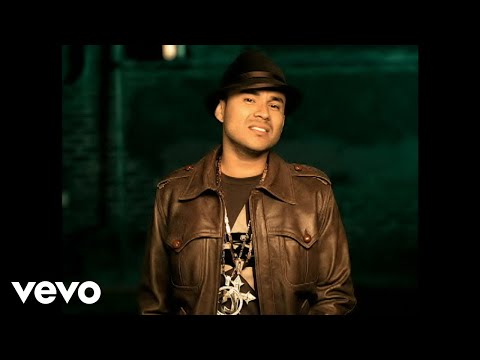
The fall of 2005 found Frankie J at a particular moment of mainstream commercial visibility. The San Diego-born singer, whose full name is Francisco Javier Bautista Jr., had spent several years building a career that bridged Latin pop, R&B, and the broader mainstream American pop market. His smooth, emotionally direct vocal style and his willingness to work across genre boundaries had earned him a genuine audience that didn't fit neatly into any single demographic category. By 2005, with his album The One generating strong airplay, Frankie J was positioned as one of the more commercially significant Latin-crossover voices of the mid-2000s.
"More Than Words" became the track that crystallized his mainstream breakthrough moment, drawing on an existing classic while reinterpreting it through a sensibility that was distinctly his own. The song's connection to the Extreme original gave it immediate recognizability for audiences who had grown up in the early 1990s, while Frankie J's reimagining offered something fresh enough to justify the cover's existence.
The Extreme Original and Its Legacy
"More Than Words" was originally recorded and released by the rock duo Extreme in 1991. Written by Nuno Bettencourt and Gary Cherone, the acoustic guitar-driven ballad had reached number 1 on the Billboard Hot 100, a remarkable achievement for a hard rock group better known for guitar heroics than for tender ballads. The song had become embedded in the cultural consciousness of a generation that came of age in the early 1990s, and its combination of a memorable acoustic guitar figure, close harmonies, and a direct emotional appeal gave it a durability that outlasted the peak of its commercial moment.
Frankie J's decision to record the song in 2005 was a creative choice that came with significant risk: covering a song this familiar invites constant comparison with the original, and any perceived shortfall in quality becomes an argument against the cover's existence. The decision paid off because Frankie J's vocal approach was different enough from the original to justify the reinterpretation rather than simply reminding listeners of a version they already knew.
The Production and the Reimagining
Frankie J's version brought an R&B and Latin pop sensibility to material that had been delivered as a rock ballad in its original form. The production choices reflected the mid-2000s mainstream pop aesthetic: clean, warm, with an emphasis on the vocal above all. The acoustic guitar element that had defined the Extreme original remained central to the sound, providing continuity with the familiar melody while the vocal production and arrangement shifted the track's emotional atmosphere in a new direction.
The reimagining worked in part because the song's lyrical content translated easily across genre contexts. The central plea of the lyric, a request to demonstrate love through action rather than words alone, is emotionally fundamental enough to be at home in any number of musical settings. Frankie J's emotional directness as a vocalist suited the material well; he sang it as if the plea were his own rather than borrowed material.
Seventeen Weeks and a Peak at Number Twenty-Five
The single entered the Billboard Hot 100 on September 17, 2005, debuting at number 94. The climb was steady and purposeful: 72, then 45, 34, 29, and onward toward its peak of number 25 on October 22, 2005. The chart run lasted 18 weeks, a significant commercial duration that spoke to the record's genuine radio appeal rather than a mere initial burst of recognition. Pop radio and Latin radio formats both embraced the track, giving it the crossover exposure that matched Frankie J's artistic positioning between those worlds.
The extended chart run was partly a function of how well the song suited the mainstream pop radio environment of 2005, a period when smooth, emotionally accessible ballads could build sustained airplay campaigns over many weeks as program directors responded to consistent audience research supporting the track.
Frankie J and the Latin Crossover Moment
The mid-2000s were a productive period for Latin-crossover pop in the American mainstream. Artists like Marc Anthony, Jennifer Lopez, and Ricky Martin had established over the previous decade that Latin pop could achieve genuine mainstream dominance, and a new generation of artists was building on that foundation with their own variants of the crossover approach. Frankie J occupied a specific niche within this landscape: less oriented toward dance or spectacle than some of his peers, more focused on the intimate emotional territory of the soul ballad.
"More Than Words" served his career well partly because it demonstrated range: an artist who could take a well-known song from a different genre context and make it his own had demonstrated the kind of versatility that sustains a career across changing market conditions. Press play and hear a vocalist working at full emotional commitment on material that rewarded exactly that quality.
"More Than Words" — Frankie J's singular moment on the 2000s charts.
02 Song Meaning
More Than Words — Themes and Legacy
The Limits of Language in Love
The central theme of "More Than Words" is a classic romantic complaint: the insufficiency of verbal expression as a demonstration of genuine feeling. The narrator argues that saying "I love you" is easy, almost meaningless in its easiness, and that what he needs from his partner is something that cannot be spoken, only enacted. Love must be demonstrated through presence and action, through physical and behavioral evidence, through the lived reality of the relationship rather than its verbal declaration. This is a theme with very deep roots in the history of love songs, poetry, and romantic literature, but the song's directness and its memorable melodic presentation gave it a freshness that its thematic familiarity might otherwise have precluded.
The original Extreme recording framed this theme in a guitar ballad context that emphasized vulnerability, two voices and acoustic instruments stripped of rock's usual sonic armor. Frankie J's reimagining brought a different texture to the same emotional argument, one more aligned with the R&B tradition of using vocal expressiveness itself as a form of the demonstration the lyric calls for.
The Cover Version as Reinterpretation
Frankie J's choice to record "More Than Words" raises interesting questions about what a cover version does and should do. The most defensible cover versions are those that find something in existing material that the original did not fully explore, that reveal a dimension of the song that the first recording, for whatever reason, could not access. Frankie J's vocal approach, warmer and more intimate than the original, found a different emotional register in the same material: where the Extreme version emphasized the intellectual argument of the lyric (the case being made by the narrator), Frankie J's version emphasized the emotional stakes (what it would mean if the case were accepted).
That shift in emphasis is a legitimate and valuable reinterpretation, not merely a re-recording. It justified the cover's existence on artistic grounds while also serving the commercial function of introducing the song to listeners who might not have connected with the original's rock context.
The Song Across Decades and Contexts
The persistence of "More Than Words" as a cultural reference across more than three decades reflects something genuine about the song's emotional architecture. The plea it makes, the argument that love requires more than verbal assurance, is perennial enough to resonate across generational lines and across the changing aesthetic fashions of popular music. The song has appeared in films, television series, and personal contexts continuously since its 1991 release, and each new recontextualization has introduced it to listeners for whom it became, in that specific moment of discovery, a song that named something they had been unable to articulate for themselves.
Frankie J's 2005 version extended this pattern into the Latin pop and R&B contexts that his own audience occupied, adding another layer to the song's cumulative cultural life. The cover did not replace the original in the way that some remakes aspire to do; instead, it added an alternative path to the same destination, giving listeners who might not have arrived there via the Extreme version another route to the song's emotional core.
Frankie J's Place in Mid-2000s Latin Pop
The commercial success of "More Than Words" situated Frankie J within the broader Latin crossover landscape of the mid-2000s as an artist capable of achieving genuine mainstream pop radio airplay alongside his Latin market presence. That crossover capacity was the defining achievement of the Latin pop artists who succeeded in the American market during this period: the ability to work simultaneously in multiple chart and radio contexts without being reducible to any single one of them.
The song remains the most widely recognized track in Frankie J's catalog, the point of entry for listeners who discovered him through radio or compilation and then explored further. As such, it functions as both an individual achievement and a representative document of where Latin crossover pop was in the fall of 2005, a moment of considerable commercial vitality for the genre's mainstream ambitions.
"More Than Words" — Frankie J's singular moment on the 2000s charts.
→ More from Frankie J
View all Frankie J hits →
→ More from the 2000s File
View all 2000s hits →
Keep digging