The 2000s File Feature
The Carpal Tunnel Of Love
The Carpal Tunnel Of Love: Fall Out Boy's Bridge Between Punk and Pop Stardom Fall Out Boy entered 2006 as one of the most talked-about bands in alternative …
01 The Story
The Carpal Tunnel Of Love: Fall Out Boy's Bridge Between Punk and Pop Stardom
Fall Out Boy entered 2006 as one of the most talked-about bands in alternative rock, riding the commercial and cultural momentum generated by their breakthrough major-label album From Under the Cork Tree, released in 2005. That record had transformed the Chicago four-piece from a beloved underground act into a genuine mainstream phenomenon, and the pressure to follow it with something equally striking was considerable. "The Carpal Tunnel of Love" emerged as the lead single from their next studio album, and it set the tone for a band in creative transition.
The song appeared on Infinity on High, released in February 2007 on Island Records. However, "The Carpal Tunnel of Love" was released as a single considerably earlier, in late 2006, giving the band a presence on radio and in the marketplace while the album was still being completed and prepared. This early release strategy helped build anticipation and kept the band visible during the gap between albums.
Production on the track was handled by Neal Avron, who had worked extensively with Fall Out Boy and had a strong grasp of how to translate their layered, densely arranged sound into something radio-ready without stripping away the energy that defined the band's identity. Avron's approach balanced compression and polish with the rawness that core fans expected, and "The Carpal Tunnel of Love" benefited from that sensibility. The track opens with an immediately arresting guitar passage and moves quickly into the anxious, propulsive verse pattern that the band had made their signature.
Bassist and primary lyricist Pete Wentz wrote the words, as was standard for Fall Out Boy, while vocalist Patrick Stump composed the melody and sang. This division of creative labor had been central to the band's creative process since their earliest recordings. Wentz's penchant for densely layered, metaphor-heavy lyrics that blended sardonic wit with genuine emotional anguish was on full display here. Guitarist Joe Trohman and drummer Andy Hurley completed the lineup and contributed the tight, technically accomplished performances that made the recording cohesive.
Commercially, "The Carpal Tunnel of Love" performed respectably on multiple charts. The song charted on the Billboard Hot 100 and demonstrated the band's growing crossover appeal, reaching audiences beyond the alternative and rock demographics that had initially embraced them. On the Pop 100, which measured popularity across mainstream radio formats, the track also registered, confirming that Fall Out Boy had genuinely penetrated the pop mainstream rather than remaining a niche phenomenon.
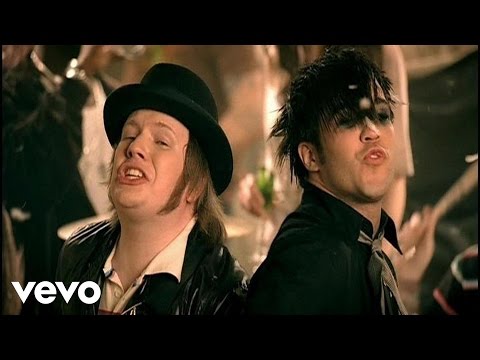
The accompanying music video was a significant component of the song's reception. The video leaned into an overwrought, melodramatic visual style that both embodied and gently parodied the emotional intensity of the lyrics. Visual storytelling had become increasingly important to Fall Out Boy's brand, and their videos consistently ranked among the most watched on music video channels and early online platforms during this period. The "Carpal Tunnel of Love" clip received heavy rotation and reinforced the band's image as a group capable of self-awareness alongside sincerity.
Critical reception was generally positive within the context of the alternative and pop-punk press. Reviewers noted that the track served as a strong harbinger of the direction Fall Out Boy would take on Infinity on High, which proved to be a more eclectic and ambitious record than its predecessor. The album debuted at number one on the Billboard 200 when it was released in early 2007, an achievement that underscored just how thoroughly the band had crossed over into mainstream pop territory. "The Carpal Tunnel of Love" had played a meaningful role in sustaining fan attention during the months before that release.
The song's cultural footprint extended beyond sales and chart positions. Its title, riffing on the repetitive-stress injury associated with keyboard and mouse overuse, connected the song's emotional themes to the then-emerging digital culture in a way that felt genuinely contemporary for 2006. Fall Out Boy were among the most Internet-savvy bands of their generation, and Pete Wentz in particular cultivated an enormous presence on early social media platforms. The song's release coincided with a period when the band's online following was expanding rapidly and helping drive physical and digital sales in ways that traditional radio alone could not.
Island Records and Fueled by Ramen, the indie imprint that had released the band's earlier work, both had stakes in the band's commercial success, and the marketing apparatus around this single release was considerable. Promotional appearances, radio sessions, and television performances all contributed to keeping the track in public consciousness during the final months of 2006.
Looking back at Fall Out Boy's discography, "The Carpal Tunnel of Love" occupies a specific transitional moment. It represents the band beginning to stretch beyond the boundaries of pop-punk and emo into a more expansive pop sound, a process that would accelerate with Infinity on High and reach its fullest expression on subsequent releases. The song's success demonstrated that their audience would follow them through stylistic evolution, a crucial validation at a moment when many genre bands lost fans by reaching for wider appeal. The track remains a notable entry in the Fall Out Boy catalog precisely because of its position at that hinge point, capturing a band on the cusp of becoming something larger than the genre that had spawned them.
02 Song Meaning
Emotional Overload and Romantic Desperation in "The Carpal Tunnel of Love"
The title of this Fall Out Boy song operates on multiple levels simultaneously, a quality characteristic of Pete Wentz's approach to lyric writing throughout the band's peak creative period. On its surface, carpal tunnel syndrome is a medical condition caused by repetitive physical strain, most commonly associated in the mid-2000s with the overuse of computers and keyboards. By transplanting this clinical term into the domain of love and romantic suffering, Wentz fashioned a metaphor for a relationship that has become painful precisely because of its repetition, its cyclical nature, and the inability of either party to stop engaging in the behavior causing damage.
The emotional register of the song is one of acute distress wrapped in a veneer of knowing irony. Fall Out Boy built their identity on this combination: lyrics that confessed genuine vulnerability and pain while simultaneously acknowledging the almost absurd theatricality of those emotions. The carpal tunnel metaphor itself encodes this duality. Carpal tunnel is a condition suffered by people who cannot stop doing what is hurting them, because the activity in question is bound up with their livelihood or compulsion. In this sense the metaphor maps precisely onto the psychological state the song describes, a person who recognizes that a relationship is inflicting damage but finds themselves constitutionally unable to disengage.
The song explores the exhaustion that comes from sustained emotional intensity. There is a sense throughout the lyrical content that both parties in the relationship are performing roles they have rehearsed too many times, going through emotional motions that have become mechanical and painful through sheer repetition. This is a distinctly contemporary anxiety, connecting personal relationships to the broader cultural condition of overuse and overstimulation that characterized digital life in the mid-2000s.
Patrick Stump's vocal performance is central to the song's emotional effect. His voice carries the weight of the lyrical content with a directness that cuts through the dense instrumentation. Stump had one of the most distinctive voices in the pop-punk and alternative space, capable of conveying genuine anguish within a melodic framework designed for commercial appeal. On this track, his delivery walks the line between vulnerability and determination, mirroring the lyrical subject's simultaneous desire to escape the painful dynamic and inability to do so.
Within Fall Out Boy's broader catalog, "The Carpal Tunnel of Love" sits at an interesting thematic juncture. The band's earlier work on From Under the Cork Tree had established a template of densely metaphorical lyrical content describing romantic dysfunction, social alienation, and the particular anxieties of young adulthood in the mid-2000s. This song extends that template while also beginning to gesture toward the more expansive emotional territory that would characterize Infinity on High. The themes are consistent, but the execution shows a band becoming more comfortable with scale and ambition.
The song also participates in a broader cultural conversation about authenticity and performance in emotional life. For a generation of listeners who had grown up navigating relationships through digital interfaces, the idea of emotional repetitive strain injury resonated in ways that went beyond the literal. The constant availability enabled by cell phones and early social media platforms meant that relationships could become genuinely exhausting in new ways, and Fall Out Boy were perceptive enough to locate their lyrical content at exactly that intersection of emotional and technological overload.
Pete Wentz's lyrical approach throughout this period was notable for its willingness to embrace contradiction and ambivalence rather than resolving emotional complexity into neat narrative conclusions. "The Carpal Tunnel of Love" does not offer a clear resolution or a lesson learned. Instead it presents a snapshot of an emotional state, capturing the particular texture of pain that comes from knowing a situation is damaging while remaining entangled in it. This refusal of easy resolution was one of the qualities that made Fall Out Boy's songwriting feel honest to their audience, even when the delivery was theatrical and the production was immaculately polished.
→ More from Fall Out Boy
View all Fall Out Boy hits →



→ More from the 2000s File
View all 2000s hits →
Keep digging