The 2000s File Feature
Bad Day
"Bad Day" — Alvin And The Chipmunks and the Christmas Movie Machine Cartoon Characters in the Digital Download Era January 2008 presented an unusual sight on…
01 The Story
"Bad Day" — Alvin And The Chipmunks and the Christmas Movie Machine
Cartoon Characters in the Digital Download Era
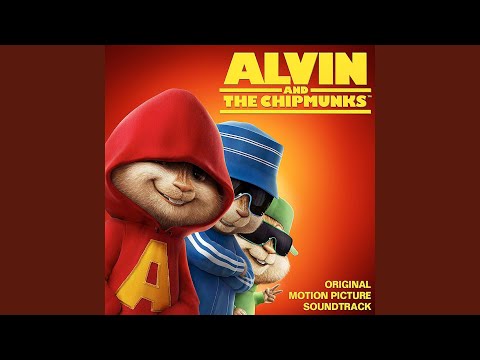
January 2008 presented an unusual sight on the Billboard Hot 100: a recording credited to Alvin And The Chipmunks, those fictional animated rodents whose connection to American popular music dated back to 1958 when Ross Bagdasarian Sr. used recording technology to create their characteristic sped-up vocal effect. The 2007 CGI film Alvin and the Chipmunks had been a substantial commercial success, grossing more than $350 million at the global box office, and its soundtrack generated real chart activity. The Chipmunks were, once again, a commercial force in the American music market.
"Bad Day" was a cover of the Daniel Powter song that had been a massive hit in 2005 and 2006, reaching number one on the Billboard Hot 100 and becoming one of the year's most pervasive radio presences. The Chipmunks' version appeared on the Alvin and the Chipmunks film soundtrack and entered the Hot 100 in January 2008, debuting at number 67, peaking in the same week it debuted, and spending two weeks on the chart in total. The track peaked at number 67 on January 12, 2008, before dropping to number 79 the following week and exiting.
The Chipmunks' Complicated Music History
Understanding the Alvin And The Chipmunks version of "Bad Day" requires some context about the franchise's place in American popular music history. Ross Bagdasarian Sr. created the original Chipmunk records in 1958 by recording vocals at half speed and then playing them back at normal speed, a technique that was novel enough at the time to generate genuine chart success: "The Chipmunk Song (Christmas Don't Be Late)" reached number one on the Hot 100 in 1958 and won three Grammy Awards.
The franchise was revived in the 1980s through a Saturday morning cartoon series and associated recordings, and the 2007 CGI film represented the most commercially ambitious iteration yet of the property. The film's success was rooted in both nostalgia, appealing to parents who had grown up with the cartoons, and novelty, offering a new generation of children a visually sophisticated update of the premise. The soundtrack was designed to serve both audiences simultaneously.
Why This Version of "Bad Day" Worked
Covering Daniel Powter's "Bad Day" was a logical choice for the Alvin and the Chipmunks soundtrack. The original song had been ubiquitous in 2005 and 2006, and its message about recovering from a difficult day had a universality that translated naturally to a children's entertainment context without requiring any modification of the lyric's core sentiment. The Chipmunks' accelerated vocal treatment, a direct descendant of the technique Bagdasarian Sr. had used in 1958, transformed the song's emotional register from adult melancholy to something more buoyant and accessible to younger listeners.
The production choices for the film's soundtrack reflected a clear understanding of who the audience was and what they wanted: familiar-feeling contemporary pop material rendered in the franchise's distinctive sonic style, creating enough novelty to justify a purchase while maintaining enough familiarity to avoid alienating listeners. The "Bad Day" cover hits this target cleanly.
Two Weeks, Number 67, and What It Means
A two-week chart run peaking at number 67 is a modest commercial performance by any measure. The track's presence on the Hot 100 was driven primarily by digital download sales from parents and children who had enjoyed the film, and the chart exit after two weeks reflected the rapid depletion of that initial purchase impulse once the theatrical window had passed. This is the typical lifecycle of a soundtrack single attached to a children's film: a burst of interest during and immediately after the theatrical release, followed by rapid fade as attention moved on.
The Hot 100 entry is nonetheless significant as documentation of the franchise's commercial reach in the digital download era. A peak of 67 in January 2008 required a meaningful number of paid download transactions, and that number reflected the scale of the film's audience and their engagement with its music. For a decades-old cartoon property finding a new generation of fans through a CGI reboot, this chart performance was a confirmation of commercial vitality.
The Chipmunks as Pop Culture Weathervane
The Alvin And The Chipmunks franchise's recurring pop chart presence across 1958, the 1980s, and 2008 makes it an unusual kind of pop culture artifact: a property whose commercial life has extended across multiple generations by repeatedly finding ways to connect with the current market while maintaining the core elements of its identity. The digitally accelerated vocal effect is the same in 2008 as it was in 1958; what changed was the film technology around it and the digital distribution infrastructure beneath it.
Play it and let those familiar voices do their impossible-to-ignore thing one more time.
"Bad Day" — Alvin And The Chipmunks' singular moment on the 2000s charts.
02 Song Meaning
"Bad Day" — Meaning, Resilience, and the Children's Entertainment Complex
Universal Comfort in a Simple Theme
Daniel Powter's original "Bad Day" succeeded on the strength of a theme so universal that virtually every listener could claim it as their own: the feeling of a day that has gone comprehensively wrong, and the tentative hope that tomorrow might be better. The Chipmunks' version of this theme preserves the core emotional content while reframing it within a sonic context optimized for younger listeners. What the original delivered with adult melancholy, the cover version delivers with a kind of cheerful resilience that the accelerated vocal treatment makes almost mandatory.
The therapeutic function of the theme transfers cleanly across the generational reframing. Children encounter bad days with the same frequency and with often greater emotional intensity than adults, since they have fewer resources for processing difficult experiences and less temporal perspective from which to view temporary setbacks. A song that tells a child their bad day will pass, rendered in the voice of beloved characters from a film they just saw, carries genuine comfort value.
The Nostalgia Economy and Children's Media
The 2007 Alvin and the Chipmunks film was a product of the nostalgia economy that Hollywood had been running successfully for several decades. Properties beloved by a previous generation of children are revived for a new generation, allowing studios to capture both the nostalgic engagement of adult audience members who remember the originals and the fresh engagement of children encountering the characters for the first time. This double audience is more commercially valuable than either component alone.
The soundtrack served this dual audience with equal intention. Parents who had grown up with the Chipmunks in the 1980s recognized the franchise's musical identity; children who were meeting the characters for the first time in 2007 simply heard music from a movie they enjoyed. The "Bad Day" cover occupied both registers simultaneously, familiar in its source material to older listeners and novel in its execution to younger ones.
Cover Versions and Cultural Memory
The Chipmunks' version of "Bad Day" participates in a long tradition of cover recording in which a well-known song is reperformed by an artist with a particular audience in mind, transforming the song's cultural function rather than its lyrical content. In this instance, the reperformance accomplished something specific: it made a song associated with adult radio in 2005 and 2006 available to children who had been too young to encounter it in its original context.
This kind of generational transmission of songs through cover recordings has a history that extends well back into the twentieth century, and it serves a genuine cultural function: it allows melodies and themes to persist across time by finding new audiences in new contexts. The Chipmunks' version ensured that the "Bad Day" melody reached an audience that might otherwise never encounter it, encoding a version of the song's emotional content into the childhood memories of a cohort of young listeners in 2008.
The Franchise as Vehicle
What the Alvin And The Chipmunks franchise offers, viewed analytically, is a perpetual-motion vehicle for delivering contemporary pop music to children. The vocal processing technique provides an instantly recognizable brand identity; the franchise's narrative flexibility allows it to incorporate virtually any musical content within that identity; and the generational renewal mechanism of CGI films and animated series periodically refreshes the audience without requiring fundamental changes to the product.
The Hot 100 chart appearance of "Bad Day" in January 2008 is evidence of this machine operating efficiently. The film drove digital downloads; the downloads generated chart activity; the chart activity confirmed commercial success; the commercial success justified further franchise development. Each step in this chain functioned as intended, producing a two-week chart presence that, however brief, documented the entire mechanism working.
For the children who downloaded this track in early 2008, the song carries a specific set of memories and associations that the original Powter version cannot replicate. That is the particular meaning the Chipmunks' version holds: not its commercial significance, but its place in the personal archives of a generation of listeners who heard it first through these particular voices.
→ More from Alvin And The Chipmunks
View all Alvin And The Chipmunks hits →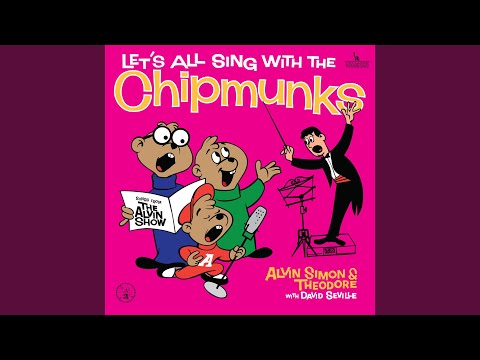
→ More from the 2000s File
View all 2000s hits →



Keep digging