The 1990s File Feature
All That Glitters Isn't Gold
The Story Behind All That Glitters Isn t Gold by The Cover Girls Spring of 1990 belonged to the freestyle sound, that irresistible blend of Latin percussion,…
01 The Story
The Story Behind "All That Glitters Isn't Gold" by The Cover Girls
Spring of 1990 belonged to the freestyle sound, that irresistible blend of Latin percussion, synthesizer stabs, and heartbroken teenage vocals that had taken over roller rinks and radio dials from New York to Miami. Few groups embodied the genre more completely than The Cover Girls, a trio whose journey from Queens talent shows to freestyle royalty had already produced a string of club and radio hits. By the time "All That Glitters Isn't Gold" arrived, the group was riding the momentum of a genre at its commercial peak, one that dominated urban contemporary and dance radio in equal measure.
Freestyle's Reigning Queens
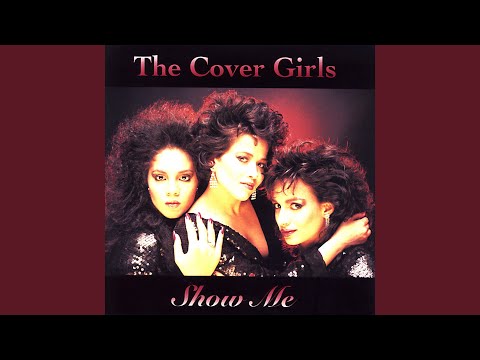
The Cover Girls, led at various points by members including Sunshine Wright, had already scored hits like "Show Me" and "Because of You," establishing them as one of freestyle's defining acts alongside contemporaries like Exposé and Lisa Lisa and Cult Jam. By 1990 they were seasoned hitmakers navigating a genre that thrived on emotional urgency, up-tempo beats built for the club, but lyrics steeped in romantic betrayal and disillusionment. "All That Glitters Isn't Gold" slotted perfectly into that formula, pairing a shimmering, danceable production with a lyric about seeing through a lover's false promises, a theme the group had explored before but rarely with this much melodic polish.
A Slow Build to the Top 50
The single entered the Billboard Hot 100 on April 7, 1990, at number 89, and then embarked on a steady, week-by-week climb that speaks to strong and sustained radio support. It jumped to number 68 the following week, then 58, then 53, before finally reaching its peak of number 49 on May 5, 1990. That gradual ascent, rather than an explosive debut, suggests a record that built its audience through repeated spins and word of mouth on urban and dance-crossover stations rather than a single splashy premiere. All told, the song spent 12 weeks on the Hot 100, a healthy run that reflected the loyal freestyle fanbase The Cover Girls had cultivated across multiple singles.
The Sound of Freestyle at Its Peak
Produced within the dense, synth-driven freestyle machine that powered so many late-1980s and early-1990s hits, the track pairs programmed Latin rhythms with the group's layered, girl-group-inflected harmonies. It is a sound built for both the dance floor and the car radio, urgent enough to move bodies, melodic enough to sing along to at full volume. That dual functionality was precisely what made freestyle so commercially potent in cities with large Latino and urban listenerships during this period, and few acts balanced that equation as consistently as The Cover Girls.
A Genre's Last Great Wave
Within the context of The Cover Girls' catalog and freestyle's broader history, this single represents the genre near its commercial high-water mark, before hip-hop and new jack swing began pulling radio attention elsewhere in the early 1990s. For the group, it reinforced their status as freestyle mainstays capable of consistent chart performance, and for fans of the genre, it remains one of the era's dependable, danceable gems, proof of just how deep their catalog of hits actually ran.
Press play and let that unmistakable freestyle pulse pull you straight back to 1990.
A Record of Its Time
Beyond the raw numbers, the recording functions as a kind of audio snapshot, capturing the production values, arrangement choices, and vocal styles that defined its particular moment. Listening today, you can hear the fingerprints of the era all over it, the instrumentation, the mix, the overall sensibility that placed it firmly within its year. That quality gives the song a value beyond mere entertainment, making it a genuine document of how popular music sounded and felt to the people living through that time. For students of the charts, details like these are precisely what make each entry worth preserving and revisiting.
A Place in the Record Books
Every entry on the national chart, no matter how high or low it climbed, becomes part of the permanent statistical history of popular music, a data point that researchers, collectors, and enthusiasts can return to for decades afterward. This recording earned exactly that kind of lasting documentation, its peak position and chart run now fixed forever in the archives. That permanence gives even a modest hit a certain dignity, ensuring that the effort behind it and the audience response to it are never entirely forgotten by history.
"All That Glitters Isn't Gold" — The Cover Girls's singular moment on the 1990s charts.
02 Song Meaning
What "All That Glitters Isn't Gold" Is Really About
Every era of pop music has its own way of saying the same old truth: things that shine aren't always what they seem. The Cover Girls take that centuries-old proverb and drop it squarely into the emotional world of freestyle music, a genre practically built on the tension between glittering dance-floor production and lyrics steeped in romantic disappointment.
The Proverb as Warning
The title borrows directly from the old adage about appearances deceiving, and the song uses that idea as a framework for a specific kind of heartbreak: falling for someone whose charm and promises turn out to be hollow. The narrator has learned, likely the hard way, that a partner who seemed dazzling on the surface didn't have the substance to match. It is a theme of disillusionment, but one delivered with the wisdom of experience rather than raw devastation, more warning label than open wound.
Skepticism Wrapped in Sparkle
What makes the song interesting is the contrast between its lyrical caution and its musical exuberance. Freestyle production, with its bright synth hooks and propulsive Latin-tinged rhythms, is inherently celebratory, engineered for movement and joy. Layering a message about guarded skepticism over that kind of sound creates a productive tension: the body wants to dance while the lyric urges the mind to stay alert. That contrast is part of what made freestyle emotionally resonant for its core audience, mostly young women navigating early relationships in an era of high romantic stakes and limited communication options compared to today.
Coming-of-Age Wisdom
Much of freestyle's appeal came from its role as a soundtrack for teenagers and young adults working through first loves and first betrayals. The Cover Girls, themselves not far removed from that demographic when they began recording, had a gift for articulating those lessons in a way that felt authentic rather than lecturing. This song fits that pattern, offering a kind of protective wisdom, don't be fooled by surface-level charm, dressed in a package energetic enough to play at any party.
Why It Resonated in 1990
By 1990, freestyle had become the dominant emotional language for a generation of listeners in New York, Miami, and beyond, and songs about romantic caution carried real weight within communities where dating and reputation moved fast. Hearing a trusted girl group articulate that guardedness so plainly gave listeners both a cathartic release on the dance floor and a message they could carry into their own relationships: enjoy the shine, but never mistake it for gold.
There is also something to be said for the directness with which the song delivers its message. Rather than obscuring its meaning behind cleverness or distance, it states its feeling plainly and lets that sincerity do the work. That honesty is a large part of why the song connects, offering listeners an emotional experience they can grasp immediately and carry with them long after the music fades.
The Emotional Core
The heart of the song lies in its sincerity, the sense that it means every word of what it expresses. That authenticity is what separates a merely competent recording from one that genuinely connects, and it is precisely what allows the song to reach listeners on a level deeper than simple entertainment. The feeling at its center is one that people recognize instinctively, and the honesty with which it is delivered gives that feeling real weight and staying power across the years.
→ More from The Cover Girls
View all The Cover Girls hits →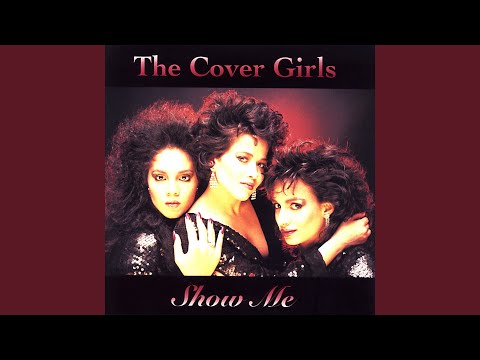
→ More from the 1990s File
View all 1990s hits →
Keep digging