The 1990s File Feature
Almost Unreal (From "Super Mario Bros.")
Almost Unreal by Roxette Imagine the early 1990s, when a Swedish duo had somehow become one of the biggest pop acts on the planet. Marie Fredriksson and Per …
01 The Story
"Almost Unreal" by Roxette
Imagine the early 1990s, when a Swedish duo had somehow become one of the biggest pop acts on the planet. Marie Fredriksson and Per Gessle, working together as Roxette, had spent the late 1980s and early 1990s racking up a string of enormous international hits, polished pop-rock anthems that conquered American radio and dominated charts across the globe. By 1993, they were a known quantity, a band whose name promised a soaring chorus and a glossy, irresistible hook. "Almost Unreal" arrived in that moment of peak fame, tied to a curious piece of cinema history.
Sweden's Pop Powerhouse
Roxette had broken through in America with a run of singles that topped the Billboard Hot 100, an extraordinary feat for a non-English-speaking act. Their formula blended Gessle's knack for songwriting with Fredriksson's powerhouse voice, and it produced some of the defining pop hits of the era. By the early 1990s they were international superstars, filling arenas and selling records by the millions. That success put them in a position to contribute to high-profile projects, and one of those was a major Hollywood film adaptation.
A Song for the Movies
"Almost Unreal" was written for the live-action film based on the wildly popular video game franchise, a movie that became famous more for its troubled production than its box-office triumph. The song carried Roxette's signature gloss, a dreamy, melodic pop number built around a warm and inviting hook. It later also became associated with another film of the period, giving the track a slightly tangled identity. The song itself, however, was pure Roxette, the sound of a band confident in its craft and happy to lend its talents to the big screen.
A Quiet Chart Run in America
Despite the band's track record of American number ones, "Almost Unreal" made only a faint impression on the Billboard Hot 100. It debuted at number 94 on June 19, 1993, which turned out to be its peak, then slipped to number 99 the following week before disappearing. In all, it spent just two weeks on the Hot 100. The modest showing was a notable contrast to the band's earlier American dominance, a sign that even a hitmaking machine could not guarantee a chart smash every time, especially with a song tied to a film that underperformed.
The Roxette Sound in Full Bloom
By 1993, Roxette had refined a signature style that was instantly recognizable, a polished blend of pop melody and rock muscle topped by Fredriksson's commanding voice. "Almost Unreal" leaned toward the softer, more romantic end of their range, favoring a dreamy atmosphere over the propulsive energy of some of their bigger anthems. The production glistens with the lush textures that defined their work, layered keyboards and warm guitars supporting a melody built to linger. It was the sound of a band that knew exactly what it did well and trusted those instincts completely, even when working on a commissioned soundtrack piece rather than a standalone single.
A Curio in a Stellar Catalog
For all its modest American chart performance, "Almost Unreal" fared far better in other parts of the world, where Roxette's popularity remained sky-high. It became a substantial hit across Europe, reminding fans of the band's enduring melodic gifts. Within the broader Roxette story, the song stands as an interesting footnote, a soundtrack contribution from a band at the height of its powers. For devotees, it remains a lovely deep cut that captures their lush, romantic style and their gift for an inviting hook.
Press play and let that dreamy chorus carry you back to 1993, when Roxette could turn even a soundtrack assignment into something gorgeous. The melody still glows with their unmistakable polish, a small reminder of why this Swedish duo conquered so much of the world during those years.
"Almost Unreal" — Roxette's singular moment on the 1990s charts.
02 Song Meaning
The Meaning Behind "Almost Unreal"
"Almost Unreal" is a love song wrapped in a sense of wonder, a track about a feeling so intense and so good that it seems too perfect to be true. The title captures the central idea precisely: an emotion so overwhelming that it blurs the line between fantasy and reality, leaving the singer almost unable to believe their own happiness.
Love as a Dream
The lyrics dwell on the dizzying, dreamlike quality of being swept up in romance. There is a sense of disbelief running through the song, the feeling of looking at something wonderful and wondering whether you might wake up to find it gone. That theme of a love that feels too good to be real taps into a universal experience, the giddy uncertainty that comes with falling hard for someone.
Wonder and Vulnerability
Beneath the romantic glow lies a thread of vulnerability. To call something almost unreal is to admit a fear that it might not last, that such intensity cannot be sustained. This tension between joy and fragility gives the song an emotional depth beneath its glossy surface, acknowledging that the most beautiful feelings often come with a quiet anxiety about losing them.
A Soundtrack to Escapism
Given its origins as a film song, the track also carries an undercurrent of fantasy and escape. It suits a story that transports viewers to another world, matching big-screen spectacle with a feeling of being lifted out of the ordinary. That dreamy, cinematic quality is woven into the song's DNA, making it feel larger than an everyday love story.
The Beauty of Disbelief
There is a poignancy in the song's central conceit, the idea that happiness can be so great it strains belief. To say that love feels almost unreal is to stand slightly outside the experience, marveling at it even while living it. That self-aware wonder gives the song an emotional richness, the sense of someone pinching themselves to make sure they are awake. It captures not just joy but the astonishment that accompanies the very best moments, the feeling that life has, for once, exceeded every expectation.
Why It Connected
The song resonated because its central feeling is one nearly everyone recognizes, the rush of a happiness so complete it hardly seems possible. Roxette's gift for pairing that emotion with a soaring, melodic hook made the sentiment soar. For listeners abroad especially, it became a beloved expression of romantic wonder, a reminder that the best pop songs can make the unreal feel, for a few minutes, entirely true. That ability to capture an overwhelming emotion in a single bright melody is what has kept the song alive in the affections of Roxette's fans.
→ More from Roxette
View all Roxette hits →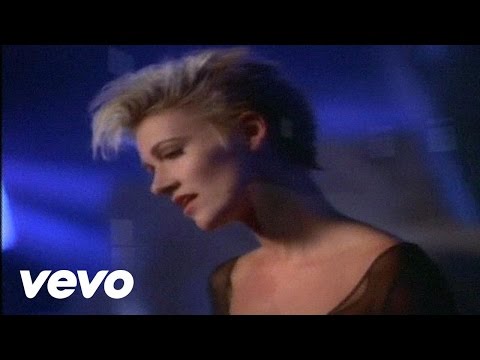


→ More from the 1990s File
View all 1990s hits →
Keep digging