The 1990s File Feature
How Do You Do!
How Do You Do! by Roxette There is a particular kind of joy that Swedish pop seems to manufacture better than anyone, a bright, unstoppable bounce that feels…
01 The Story
"How Do You Do!" by Roxette
There is a particular kind of joy that Swedish pop seems to manufacture better than anyone, a bright, unstoppable bounce that feels engineered to chase away gray skies. This song is pure distilled sunshine of that variety. From its very first seconds it grins at you, a stomping, hand-clapping invitation that sounds like a party already in full swing, daring you to stay in a bad mood. There is no slow build, no moody intro; the song simply throws open the doors and pulls you onto the floor.
A Duo at Their Commercial Peak
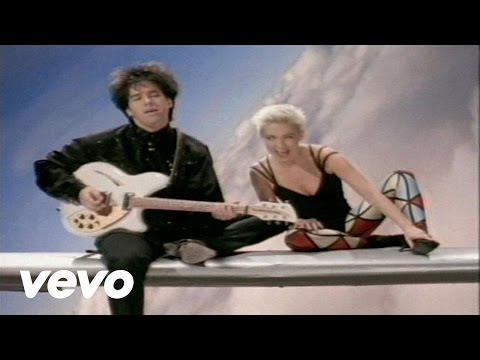
By 1992, Roxette were global superstars. The Swedish pair of singer Marie Fredriksson and songwriter-guitarist Per Gessle had conquered the world with a string of polished anthems, including American number ones that made them household names far beyond Scandinavia. They had spent the previous years dominating radio with both soaring ballads and crunchy rockers, becoming one of the defining pop acts of their generation. This single served as the lead release from the album Tourism, a record assembled partly on the road during their massive world tour, capturing the loose, energized feeling of a band in constant motion. They had nothing left to prove, which freed them to make something loose, playful, and unapologetically catchy, the sound of seasoned hitmakers enjoying themselves.
The Sound of Effortless Pop Craft
The track is a masterclass in hook-building, stacking a chanted chorus on top of crunchy guitars and a rhythm that never lets up. Per Gessle wrote the song, and his gift for melody is everywhere, turning a simple greeting into an irresistible refrain that lodges in your head after a single listen. Fredriksson's powerhouse voice gives the whole thing lift and warmth, balancing the cheeky energy with genuine star quality. She could belt a heartbreak ballad and sell a bubblegum chorus with equal conviction, and here she leans fully into the fun. It is pop precision disguised as spontaneous fun, the work of a duo who made difficult things sound easy and who understood the architecture of a great hook better than almost anyone.
A Brief American Visit
In the United States, the song's chart run was modest compared to the duo's earlier conquests, a sign that the American appetite for their sound was beginning to cool as the musical landscape shifted toward grunge and hip-hop. The single debuted on the Billboard Hot 100 at number 88 on October 17, 1992, then climbed steadily through the autumn, moving from 88 to 82 to 70 and onward as it gained traction. It reached its peak of number 58 on November 14, 1992. The song spent 8 weeks on the Hot 100, a brief but respectable showing, even as it performed far more powerfully across Europe, where Roxette remained titans and the single soared to the upper reaches of countless national charts.
A Reliable Mood-Lifter
Though it never matched the American success of their biggest ballads and rockers, the song endured as a fan favorite and a staple of feel-good radio across the world. It became a reliable burst of energy at concerts and on compilations, the kind of track programmers reach for when they want to lift the room. Its music video has drawn more than 56 million YouTube views, proof that its infectious optimism translates across decades. It captures Roxette at their most carefree, a band confident enough to simply make people smile without a hint of pretension. Decades later it still works as an instant pick-me-up, the kind of song that can turn a gray morning bright in the space of a single chorus, which is no small achievement and exactly the sort of thing the duo did better than most of their contemporaries.
Press play and try to keep still; this is happiness compressed into three glorious minutes of Swedish pop.
"How Do You Do!" — Roxette's singular moment on the 1990s charts.
02 Song Meaning
The Meaning Behind "How Do You Do!" by Roxette
This is a song about attraction at its simplest and most exhilarating: the giddy, slightly silly rush of being smitten. There is no heavy subtext here, no hidden melancholy lurking beneath the surface. The meaning is right there in the bounce, a celebration of the moment when someone catches your eye and the whole world tilts pleasantly off balance.
The Thrill of a Crush
The lyrics capture the dizzy energy of new infatuation, the way a casual greeting can suddenly carry enormous weight when you are falling for someone. The repeated phrase works almost like a flirtatious wave across a room, equal parts confidence and nervous excitement. Roxette lean fully into that lightness, refusing to overthink a feeling that is meant to be enjoyed rather than analyzed. The song understands that the early stages of attraction are mostly silly, breathless, and wonderful, and it captures that giddiness without a trace of irony.
Joy as the Whole Point
The song's deeper message is simply that delight is worth chasing, that pop music can exist to make you feel good without apology. In an era of grunge angst and earnest balladry, choosing pure cheer was almost a statement of its own. The track refuses to be cynical, and that sincerity is precisely its charm. It does not pretend that life is uncomplicated; it simply insists that sometimes a great pop song is reason enough to feel light, and that there is real value in that lightness.
A Counterpoint to the Times
Released as the early-1990s music landscape tilted toward darker, heavier sounds, the song offered a bright alternative for anyone weary of all the introspection. It represented an unfashionable but enduring faith in melody and good cheer, the kind of escapism listeners reach for when life feels complicated. Roxette understood that there is always an audience for a song that simply wants to lift your spirits, and they delivered exactly that without hesitation or apology.
Why It Still Charms
The song endures because joy never goes out of style. You do not need to decode it or connect to a specific memory; you only need to let the chorus carry you. Its generosity is the whole point, an open invitation to feel good for a few minutes. That spirit is why it still surfaces on playlists meant to brighten a dull afternoon, a small reliable burst of sunshine available on demand whenever the mood calls for it. In a culture that often equates seriousness with depth, the song quietly insists that delight has its own kind of value, and that insistence is what keeps people coming back to it year after year.
→ More from Roxette
View all Roxette hits →


→ More from the 1990s File
View all 1990s hits →
Keep digging