The 1990s File Feature
What Are You Doing With A Fool Like Me
What Are You Doing With A Fool Like Me — Joe Cocker By June 1990, Joe Cocker had been a fixture of rock and soul music for over two decades, a singer whose v…
01 The Story
What Are You Doing With A Fool Like Me — Joe Cocker
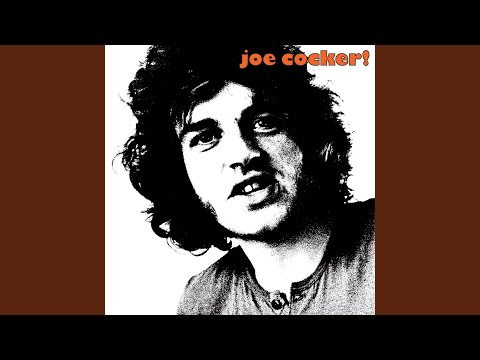
By June 1990, Joe Cocker had been a fixture of rock and soul music for over two decades, a singer whose voice had the texture of experience baked into it, rough-edged and unmistakable, carrying its own history without needing to announce it. His 1969 appearance at Woodstock had become one of the defining images of that entire event, and the film and album documenting the festival had introduced him to an audience that remained loyal through the many shifts in his commercial fortunes over the following years. When What Are You Doing With a Fool Like Me appeared on the Billboard Hot 100 on June 23, 1990, reaching its peak of number 96 in a single week of chart presence, it was a brief commercial moment in the middle of a career that had already sustained itself for a generation.
Joe Cocker's Long Road
Cocker's career arc is one of the more interesting in rock history, tracing a path from breakthrough to commercial wilderness to remarkable mainstream resurrection. His 1983 duet with Jennifer Warnes on "Up Where We Belong" from the film An Officer and a Gentleman reached number one and won an Academy Award for Best Original Song, reintroducing Cocker to an audience that had lost track of him during his commercially difficult late-1970s period. The 1980s that followed that comeback were productive for him, generating a series of albums and singles that maintained his radio presence and touring career. By 1990, he was a reliably performing professional operating in the adult-contemporary space where his blues-tinged soul voice translated most naturally to contemporary radio.
The Record in Context
What Are You Doing With a Fool Like Me belongs to the strand of self-deprecating love ballads that Cocker sang with particular conviction throughout the later portion of his career. The question embedded in the title, expressing genuine puzzlement at being the recipient of someone's affection given one's own perceived inadequacy, was a thematic territory that suited the world-worn quality of his voice better than declarations of romantic triumph would have. Cocker's voice had always been most persuasive when expressing vulnerability or desire or loss rather than celebration, and material in this emotional register gave him something real to work with.
The Chart Appearance
The record's single week at number 96, peaking and departing the Hot 100 on June 23, 1990, was a modest commercial showing by any conventional measure. One week on the chart means the record generated enough activity to register in Billboard's tracking but not enough to sustain momentum into subsequent weeks. For an established artist like Cocker, this kind of chart appearance was not unusual for a non-single album track or a record released without major promotional resources behind it. The chart data is the record's most concrete commercial trace in the American market, a single data point that confirms a real but brief moment of commercial activity.
Adult Contemporary and the Cocker Voice
By 1990, the adult contemporary radio format had become the primary vehicle for Cocker's chart activity. This was a format that rewarded emotional directness, melodic accessibility, and vocal distinctiveness, all qualities that Cocker's voice possessed in abundance. The challenge for artists in this format was maintaining creative vitality within commercial constraints that were relatively narrow, and Cocker's solution was to consistently seek material that matched the emotional range his voice was best equipped to deliver. His ability to find conviction in a love ballad was the product of decades of performance experience, and that experience was audible in every note he sang.
The Woodstock Shadow
It is impossible to write about Joe Cocker's career without acknowledging how thoroughly the Woodstock footage shaped his public identity. His performance of "With a Little Help from My Friends" at that festival, with its involuntary-seeming physical expressiveness and its raw vocal force, became one of the permanent images of the entire era. That single performance cast a long shadow over everything that came after, setting a standard of emotional intensity that most subsequent recordings could not meet and against which later commercial work was inevitably measured by critics and retrospective listeners. Cocker himself continued performing and recording with genuine commitment, but the Woodstock moment was always in the background of how he was discussed.
A Career Measured in Decades
The June 1990 chart appearance represents one small coordinate in a career that extended over five decades of active recording and performing. Cocker continued making records and touring through the 2000s and into the 2010s until his death in 2014, maintaining his connection with audiences who valued the voice above whatever chart positions accompanied it. The one-week Hot 100 appearance of What Are You Doing With a Fool Like Me is a footnote in that larger story, but it is a real footnote, confirmed by the chart data and set in the context of a career built on extraordinary vocal authenticity.
Find the record and let that voice settle into the room.
"What Are You Doing With A Fool Like Me" — Joe Cocker's singular moment on the 1990s charts.
02 Song Meaning
Gratitude and Bewilderment: The Emotional Logic of "What Are You Doing With A Fool Like Me"
Self-deprecation in a love song is a more complex rhetorical act than it might initially appear. The speaker is simultaneously lowering their own status and elevating their beloved, but they are also implicitly complimenting themselves: to be puzzled at being loved is to acknowledge that you are loved, and puzzlement at good fortune is its own form of gratitude. The title of Joe Cocker's 1990 record captures this emotional ambivalence in its question, which never expects an answer because the answer is beside the point.
The Fool as Honest Self-Assessment
The word "fool" in the title's question is doing specific work. Calling yourself a fool is not quite calling yourself stupid or worthless; it is closer to calling yourself impractical, governed by feeling rather than calculation, prone to errors of judgment and excess of feeling. The fool is a figure who cannot help himself, who keeps making the same mistakes because the feeling that drives those mistakes is too strong to suppress. As a self-description in a love song, it positions the speaker as someone whose love is genuine precisely because it is not rational or strategic.
The Cocker Voice and Vulnerability
Joe Cocker's voice carried an inherent quality of vulnerability that made self-deprecating material particularly effective for him. The roughness in his tone, the sense of effortful delivery even when the performance was polished, communicated something about experience and difficulty that smoothly produced voices cannot replicate. When Cocker asked "what are you doing with a fool like me," the voice itself seemed to embody the imperfection the lyric described, creating a unity between the stated content and the sonic delivery that was part of what made his performances so convincing.
The Adult Romantic Landscape
Songs like this one occupy a specific emotional territory within adult romantic experience: the recognition that love is not the province of the perfectly equipped, that relationships form between flawed people who find reasons to stay despite each other's inadequacies. This is not the idealized romantic landscape of early-career pop songs, where partners are beautiful and deserving and the love itself is uncomplicated. It is the landscape of people who have been around long enough to know what they are, to have an honest accounting of their own limitations, and to be genuinely surprised and grateful when someone chooses them anyway.
Gratitude as Romantic Statement
The emotional register of the title's question is, beneath the surface self-deprecation, a form of gratitude. Asking why someone would choose to be with you when you know your own limitations is an indirect way of saying: I know what I am, and I am thankful that you still choose me. This reframing makes the apparent self-deprecation into something more complex, an expression of love that acknowledges imperfection on both sides while affirming that the choice to remain together is real and valued. The fool who asks this question is not asking for reassurance; they are expressing wonder.
Why the Theme Traveled Well
Adult contemporary audiences in 1990 had accumulated enough life experience to recognize the emotional territory the song described. The recognition that love and worthiness are not perfectly correlated, that people are often loved not because they deserve it by some objective measure but because another specific person has decided to love them, is a reality that most adults have encountered. A song that gives voice to that recognition without resolving it into sentimentality touches something real, and Cocker's particular ability to deliver emotional directness without theatrical excess made him the right vehicle for this kind of material.
→ More from Joe Cocker
View all Joe Cocker hits →


→ More from the 1990s File
View all 1990s hits →

Keep digging