The 1960s File Feature
With A Little Help From My Friends
With a Little Help From My Friends: Joe Cocker's Career-Defining Transformation of a Beatles Classic Few cover versions in the history of popular music have …
01 The Story
With a Little Help From My Friends: Joe Cocker's Career-Defining Transformation of a Beatles Classic
Few cover versions in the history of popular music have achieved the status of transformative reinvention as completely as Joe Cocker's 1968 recording of "With a Little Help from My Friends." The original, written by John Lennon and Paul McCartney and recorded by The Beatles for their 1967 album Sgt. Pepper's Lonely Hearts Club Band, was itself a celebrated piece of songwriting, performed on the album in an upbeat, almost vaudevillian style by Ringo Starr. Cocker took this material and rebuilt it from the ground up into something categorically different, a slow-burning soul epic that remains one of the most viscerally powerful performances in British rock history.
Joe Cocker was born John Robert Cocker in Sheffield, England, in 1944. He had been working as a plumber while pursuing music on the side when his recording of "Marjorine" gave him a minor British hit in 1968. His version of "With a Little Help from My Friends" was released in the UK in October 1968 on Regal Zonophone Records, a subsidiary of EMI that was also home to The Move and Procol Harum, and it immediately signaled that Cocker was not a conventional pop singer but something rawer and more powerful.
The production was handled by Denny Cordell, one of the most important British rock producers of the period, who had previously worked with Procol Harum on the landmark "A Whiter Shade of Pale." Cordell created an arrangement that completely recontextualized the McCartney-Lennon composition, stripping away the original's buoyancy and replacing it with a churning, gospel-influenced structure that gave Cocker's extraordinary voice the space to operate as an instrument of raw emotion rather than melodic decoration. The arrangement built slowly over its five-minute length, accumulating intensity through layered instrumentation and the contributions of a gospel-inflected choir.
The record reached number one on the UK Singles Chart, giving Cocker his first chart-topping hit and establishing him as a major commercial force in British rock. The success was immediate and unambiguous, confirming that the transformation of a beloved Beatles song could be accepted and even celebrated when executed with sufficient originality and conviction. The Beatles themselves were reportedly enthusiastic about Cocker's interpretation, which was not a universal response from artists whose work was being substantially reimagined by other performers.
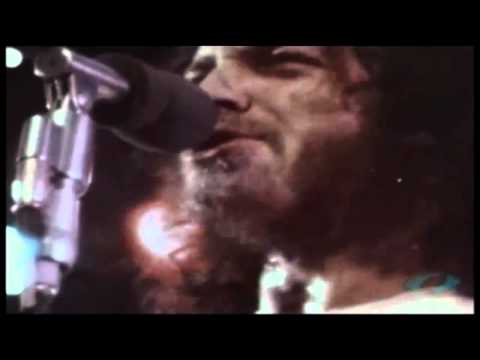
The definitive cultural moment for "With a Little Help from My Friends" came the following year, in August 1969, at the Woodstock Music and Art Fair in Bethel, New York. Cocker's performance there, captured in the documentary film and the accompanying live album that became cultural touchstones, elevated the song to a different level of cultural significance. His convulsive physical performance style, seemingly at odds with itself in its combination of pained concentration and abandoned release, struck observers as one of the most authentically emotional performances the festival produced.
The Woodstock film, released in 1970, was seen by millions of people who had not been at the festival, and Cocker's performance in it became one of the most recognizable sequences in the entire documentary. For an entire generation, the song became inseparable from that moment, from the image of Cocker's spasmodic stage presence and the overwhelming power of his voice at maximum commitment. The cultural impact of that performance extended the reach of the record well beyond what even its chart performance had suggested.
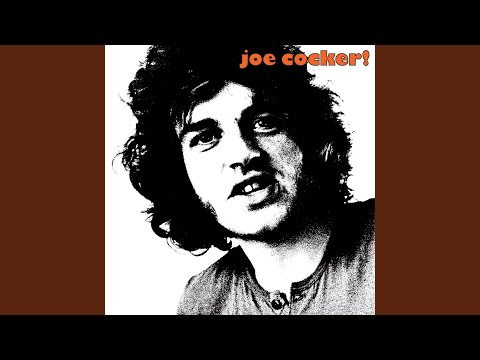
The song also appeared on Cocker's debut album, With a Little Help from My Friends, which was named in its honor and released in 1969. The album reached number 35 on the UK Albums Chart and helped establish Cocker's long-term catalog, making it clear that his artistic approach could sustain an album-length statement rather than just a single. In the United States, the single also charted, introducing American audiences to Cocker's approach ahead of his Woodstock appearance.
The song's legacy has been amplified by its subsequent use in film and television, most notably as the theme to the American television series The Wonder Years, which ran from 1988 to 1993 and used Cocker's recording to establish its setting in the late 1960s. This television exposure introduced the song to an entirely new generation of listeners, ensuring that the emotional power of Cocker's performance continued to reach audiences decades after the original recording. The combination of its chart success, its Woodstock moment, and its television afterlife made "With a Little Help from My Friends" one of the most culturally embedded recordings of its era.
02 Song Meaning
The Meaning of "With a Little Help From My Friends": Community, Vulnerability, and the Art of Reinvention
What Joe Cocker accomplished with "With a Little Help from My Friends" was not merely a successful cover version but a fundamental transformation of the song's emotional meaning. The Lennon-McCartney composition, as performed by Ringo Starr on Sgt. Pepper's, is a charming and warmly affectionate song about mutual dependence among friends, delivered with a light touch that suits both Starr's persona and the album's theatrical framework. Cocker's version preserves the words while completely reimagining their emotional weight, turning a friendly affirmation into something closer to a desperate plea.
In Cocker's hands, the song's central theme, the idea that human beings cannot navigate life's difficulties without the support of others, becomes urgent rather than cheerful. His vocal approach transforms the questions that structure the song into expressions of genuine need rather than rhetorical gestures. Where Starr's delivery suggests comfortable friendship, Cocker's suggests the kind of bone-deep reliance on human connection that comes from actual experience of difficulty and isolation.
This transformation of emotional register is the song's primary artistic achievement and the reason it has endured as one of the most celebrated cover versions in rock history. Cocker did not simply perform someone else's composition; he inhabited its emotional territory so completely that the song came to express something that the original, for all its charm, could not quite reach. The soul and gospel traditions that informed his vocal approach are traditions that emerged from genuine suffering and collective resilience, and those roots give his performance a depth of feeling that the original's poppier sensibility, however delightful, cannot match.
The specific quality of Cocker's voice, its roughness, its sense of emotional exertion barely controlled, is inseparable from the song's meaning in his interpretation. A smoother or more technically polished voice would communicate something different: accomplishment, perhaps, or mastery. Cocker's voice communicates effort, the labor of getting through something difficult, which is precisely what the song's lyrical content describes. The alignment between Cocker's vocal timbre and the emotional content of the lyric is one of those rare moments in popular music where form and content achieve perfect unity.
The communal dimension of the song, its insistence that the individual is sustained by relationships and shared support, also carries particular resonance in the context of its most celebrated performance, at Woodstock in 1969. The festival itself was premised on a collective idealism, a belief in the possibility of a community organized around shared values of peace and mutual care, and Cocker's version of the song, with its emphasis on radical dependence and mutual support, gave that idealism a musical expression of unusual power. The audience's response to his Woodstock performance was not simply appreciation for musical excellence but recognition of something that articulated the communal aspirations of the moment.
For Cocker's artistic identity, the song established a template that he would work within for the rest of his career. He became known as an interpreter of other composers' material, a performer whose contribution lay in the depth and authenticity of his emotional engagement with songs rather than in his compositional originality. This is a form of artistry that popular culture sometimes undervalues but that the greatest interpreters demonstrate is a genuine and demanding creative act. His "With a Little Help from My Friends" proved that the act of performing a song can constitute original artistic expression when the performer brings sufficient insight and emotional commitment to the encounter with the material.
The song's subsequent life, particularly its decades-long association with the nostalgic warmth of The Wonder Years, added another layer of meaning: a song about community and mutual support became, for millions of television viewers, a sound that evoked childhood, simpler times, and the specific emotional texture of American adolescence in the late 1960s. This accumulation of cultural associations has given Cocker's recording a richness of meaning that extends well beyond any single context or interpretation, which is the mark of a truly durable piece of popular culture.
→ More from Joe Cocker
View all Joe Cocker hits →

→ More from the 1960s File
View all 1960s hits →




Keep digging