The 1990s File Feature
How Bad Do You Want It?
How Bad Do You Want It? Don Henley's Working-Man Groove By the summer of 1990, Don Henley had already spent a decade proving he could thrive without the Eagl…
01 The Story
How Bad Do You Want It? — Don Henley's Working-Man Groove
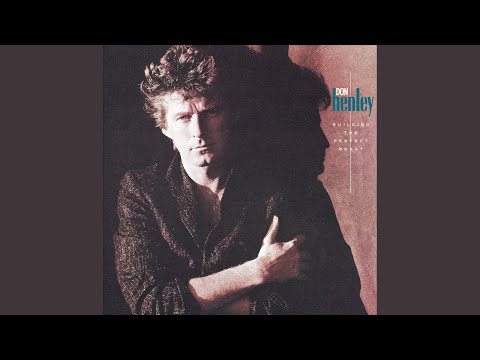
By the summer of 1990, Don Henley had already spent a decade proving he could thrive without the Eagles. The band's implosion in 1980 had left plenty of observers wondering whether its drummer and co-frontman could carry a solo career on his own voice, and Henley answered with a run of albums that treated the question as barely worth entertaining. The End of the Innocence, released in 1989, was the fullest statement of that answer: a meditative, socially conscious record that eventually sold multiple millions of copies and spun off a string of hit singles. "How Bad Do You Want It?" arrived as one of the later singles pulled from that album, a groove-driven track that let Henley stretch into a tighter, funkier pocket than the record's more famous ballads. It is easy to overlook amid the album's grander statements, but it rewards a closer listen precisely because it shows a different, looser side of an artist usually associated with careful, deliberate craftsmanship.
An Album Built for the Long Haul
"How Bad Do You Want It?" never aimed to be the centerpiece of The End of the Innocence; that job belonged to the title track and to "The Heart of the Matter," both of which had already climbed deep into the upper reaches of the Hot 100 before this single's release. But album cuts released a year into a campaign can still find an audience, especially when the parent record has become inescapable on adult contemporary and album rock radio alike. By mid-1990, The End of the Innocence had settled into the kind of cultural presence where a fourth or fifth single could ride existing goodwill rather than fight for attention from scratch. Henley and his collaborators understood the value of that patience, treating the album's rollout less as a sprint than as a long campaign designed to keep the record in rotation well past its initial release window.
The Sound of a Restless Groove
Where much of the album leaned toward lush, string-inflected balladry, "How Bad Do You Want It?" pulled from a leaner, rhythm-forward well. The arrangement favors a tight backbeat and a vocal performance that pushes and needles rather than soars, giving Henley room to work a bluesier, more conversational register than the album's radio staples. It is the sound of a songwriter testing a different muscle: less about panoramic reflection on America at the end of the 1980s, more about the friction of wanting something and not being sure you deserve it. The rhythm section stays economical throughout, leaving space for Henley's phrasing to carry the tension rather than relying on layered production to do the emotional work.
A Modest but Real Chart Run
"How Bad Do You Want It?" entered the Billboard Hot 100 on July 7, 1990, at number 92 and spent the following weeks working its way toward the middle of the chart. It reached its peak position of number 48 during the week of August 25, 1990, and it remained on the chart for a total of twelve weeks. That is a modest run by the standards of Henley's biggest hits, but it reflects the natural arc of a fourth single pulled from an album that had already delivered its signature moments. The steady, unspectacular climb, from 92 to 75 to 65 to 61 to 57 and onward, shows a song finding its own audience gradually rather than exploding out of the gate. Radio programmers at adult contemporary and album rock stations kept the track in rotation through the late summer, giving it the runway to inch upward week after week.
Where the Song Sits in Henley's Catalog
Compared to the anthemic sweep of the title track or the wounded elegance of "The Heart of the Matter," "How Bad Do You Want It?" reads almost like a palate cleanser, proof that Henley could shift gears without losing his identity as a songwriter. It never demanded the spotlight the way those bigger singles did, and it did not need to; its job was simply to extend the album's life on the airwaves while showing a rougher, more immediate side of an artist typically praised for polish and restraint. Session players brought in for the track leaned into that rawer feel, favoring live, in-the-room energy over the meticulous overdubbing that shaped some of the album's more elaborate productions.
A Footnote in a Defining Album
In the context of Henley's catalog, "How Bad Do You Want It?" occupies a quieter corner. It never became one of his signature songs, and it rarely appears on career-spanning compilations ahead of the album's marquee tracks. But its presence on the Hot 100 at all speaks to how thoroughly The End of the Innocence had embedded itself in the culture of that moment. Few artists coming out of a legendary band manage a solo run as durable as Henley's, and even the lesser-remembered singles from that stretch carry the fingerprints of an artist operating at the height of his craft. Give it a spin and hear a songwriter loosening up between his more monumental statements.
"How Bad Do You Want It?" — Don Henley's singular moment on the 1990s charts.
02 Song Meaning
The Meaning Behind Don Henley's "How Bad Do You Want It?"
At its core, "How Bad Do You Want It?" is a song about the gap between desire and effort, framed as a pointed challenge rather than a straightforward love song. The narrator presses a question that could apply equally to romance, ambition, or self-respect: wanting something is easy, but proving that want through action is another matter entirely. That interrogative structure, repeated and varied across the song, gives the track its argumentative energy, and it sets the record apart from the more reflective, backward-looking songs surrounding it on the album.
A Different Register for Henley
Much of The End of the Innocence operates in an elegiac, big-picture mode, surveying lost innocence in American culture and personal relationships alike. "How Bad Do You Want It?" scales that ambition down to something more intimate and confrontational. Rather than mourning a broader loss, the song puts a single relationship, or a single test of character, under a magnifying glass. The narrator is less interested in nostalgia here than in accountability, asking a partner or rival to show their commitment rather than simply declare it. That shift in scale, from a whole culture to a single demand, is part of what gives the song its distinct place on the record.
Desire as a Measurable Thing
The song's central conceit treats desire as something that can and should be demonstrated, not just felt. That idea fit comfortably within the broader adult-pop landscape of 1990, when a generation of listeners raised on the confessional singer-songwriter tradition of the 1970s were now navigating career pressures, shifting relationships, and a culture increasingly skeptical of easy sentiment. Henley's narrator does not ask for reassurance; he asks for proof, and that shift from feeling to evidence gives the lyric a harder, more skeptical edge than a typical love song of the era.
The Groove as Argument
The song's tighter, funkier arrangement reinforces its lyrical stance. Where ballads invite the listener to settle in and absorb a mood, this track's rhythmic insistence mirrors the repeated challenge in its title, pushing forward rather than lingering. The music does not let the question rest; it keeps circling back, the way a real argument does when neither party is ready to concede. That restlessness in the arrangement gives the lyric's central question a physical, almost percussive urgency.
A Test Rather Than a Declaration
What separates this song from a typical plea for commitment is its refusal to soften the demand with sentimentality. The narrator is not begging; he is setting terms, and that posture of quiet insistence gives the song a toughness that distinguishes it from the more openly vulnerable ballads Henley is best remembered for. The lyric functions as a kind of dare, daring the other party to match words with action.
Why It Resonated
For listeners navigating the more transactional realities of adult relationships and careers at the turn of a new decade, the song's blunt reframing of desire as demonstrated effort carried genuine appeal. It offered a version of romantic and personal accountability that felt earned rather than performed, consistent with the more clear-eyed, less romanticized voice Henley had cultivated across his solo work. Even without becoming one of his signature hits, the song added another facet to an album that consistently asked its audience to look honestly at what they wanted and what they were actually willing to do to get it.
→ More from Don Henley
View all Don Henley hits →



→ More from the 1990s File
View all 1990s hits →
Keep digging