The 1980s File Feature
You Got The Power
War's "You Got The Power": The Outlaw Album and a Band Searching for Its Footing By the spring of 1982, War occupied an unusual position in American popular …
01 The Story
War's "You Got The Power": The Outlaw Album and a Band Searching for Its Footing
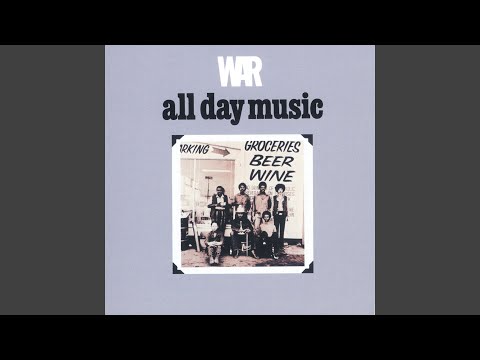
By the spring of 1982, War occupied an unusual position in American popular music: a band of enormous historical importance that was simultaneously struggling to find its commercial bearings in a rapidly changing landscape. The group that had produced "Low Rider," "The World Is a Ghetto," and "Why Can't We Be Friends?" in the early and mid-1970s now found itself navigating a music industry remade by disco's collapse, the rise of new wave, and the early stirrings of hip-hop. "You Got The Power," released from their Outlaw album on MCA Records in 1982, reached number 66 on the Billboard Hot 100 after debuting on April 3 of that year, representing a modest but genuine chart showing for a band whose commercial peak had passed.
The Outlaw album itself was a product of War's continued evolution as a self-contained musical unit. The band had always operated with an unusually democratic internal structure, with members sharing songwriting credits and production responsibilities in ways that were rare in the record industry. Founded in the late 1960s around the nucleus of vocalist and harmonica player Lee Oskar and a rotating cast of Los Angeles-based musicians, War had built its identity on a particular synthesis of funk, soul, rock, Latin rhythms, and jazz improvisation that defied easy categorization. This eclecticism had been their greatest commercial strength in the early 1970s; by the early 1980s, it made them difficult to position in a market that demanded clearer genre signals.
"You Got The Power" was conceived as an uplifting, anthemic track within the War tradition of socially affirmative songwriting. The band had always balanced social commentary with celebration, and this recording fell squarely in the celebratory camp, built around a message of personal empowerment and collective resilience. In the context of 1982, with American unemployment near post-Depression highs and communities of color bearing disproportionate economic burdens, a song about internal strength and the capacity to persevere carried real cultural weight, even if the chart position did not reflect blockbuster commercial acceptance.
The production on "You Got The Power" reflected the sonic conventions of early-1980s funk and soul: a crisp, drum-machine-inflected rhythm section, synthesizer textures layered beneath the brass arrangements that had always been central to War's sound, and the kind of call-and-response vocal interplay that the band had perfected over more than a decade of live performance. Howard Scott, B.B. Dickerson, and the core War ensemble brought the practiced ease of veteran musicians to a track that might have felt formulaic from another group but carried genuine authenticity in their hands.
The chart trajectory of "You Got The Power" told a story common to many War singles of the period: an entry at number 82, a quick climb to the peak of 66 within three weeks, and then a gradual fade from the Hot 100 within six weeks of debut. This pattern suggested a song that found its audience rapidly but lacked the broad crossover appeal needed to push into the top forty. Radio programmers of the era were navigating significant format fragmentation, and a track that fell between the emerging urban contemporary format and the rock-leaning AOR format could fall through the cracks regardless of its quality.
It is worth situating "You Got The Power" within the broader arc of War's recording career to appreciate what the Outlaw album represented. The band had spent the second half of the 1970s releasing material through United Artists before moving to MCA, and neither label period produced the commercial consistency of their early-decade peak. The Outlaw album was, in some respects, an attempt to recapture energy and relevance through tighter, more radio-friendly productions while retaining the musical identity that distinguished War from the many funk and soul acts that had proliferated in their wake.
War's legacy as a band does not rest primarily on individual chart positions from the early 1980s but on the cumulative body of work they had assembled across the previous decade and a half. "You Got The Power" is best understood as a representative document of that legacy: a track that demonstrates the band's continued commitment to music that uplifts and galvanizes, produced at a moment when the commercial winds were blowing in a different direction. The song's modest chart showing did not diminish the quality of the recording, which retained the warmth, rhythmic sophistication, and communal spirit that had always defined War at their best.
The early 1980s would prove to be a transitional period for a great many soul and funk artists of War's generation. The decade's musical landscape, dominated by synthesizer production, post-disco pop, and the emerging sound of hip-hop, left limited room for bands whose identity was rooted in organic ensemble playing and live-band funk. War survived these transitions and continued performing, eventually finding new audiences through nostalgia circuits and the rediscovery of their catalog by younger listeners who encountered their music through samples and classic-soul radio formats.
02 Song Meaning
Personal Authority and Collective Resilience: The Message of "You Got The Power"
"You Got The Power" positions itself within a tradition of popular music that has always believed in the capacity of a song to remind its audience of something they already know but may have temporarily forgotten. The title itself is a declaration directed outward, at a listener or a community, asserting that the resources necessary for survival and self-determination are not external to the individual but resident within them. This is the language of empowerment, and War had been speaking it in various forms throughout their career.
The song's thematic content reflects War's consistent political and social consciousness as a band. Unlike many of their contemporaries who addressed social conditions through protest or lament, War typically chose the register of affirmation: rather than cataloguing injustices in detail, they tended to assert the capacity of marginalized communities to transcend those injustices through solidarity, creativity, and collective will. "You Got The Power" is a concentrated expression of this philosophy, stripped to its essential claim and delivered with the directness of a sermon or a rallying cry.
The timing of the song's release in 1982 gave its message particular resonance. The early years of the Reagan administration had produced significant rollbacks of social programs, increased economic inequality, and a political climate that many in African-American and Latino communities experienced as actively hostile. A song insisting on the inherent power of ordinary people to shape their own circumstances was not merely feel-good pop in that context; it was a quiet counter-assertion against a dominant narrative that located authority and agency primarily with the wealthy and the politically powerful.
The gospel tradition's influence on the song's structure is audible throughout. Call-and-response patterns, the language of witnessing and affirmation, and the sense of a community speaking to itself rather than a soloist addressing an anonymous mass audience all connect "You Got The Power" to a deep tradition of African-American sacred and secular music. War had always drawn on these roots, and the track makes the connection more explicit than much of their earlier work.
There is also a universalizing dimension to the song's message that extended its appeal beyond any single community. The assertion that power resides within the individual, that circumstances can be changed through the exercise of will and the recognition of one's own capacity, speaks to a broadly human experience of doubt and self-discovery. This universality is not achieved by erasing the song's specific cultural context but by finding within that context an emotional truth accessible to anyone who has ever felt overwhelmed by circumstances beyond their immediate control.
War's choice to frame this message through funk and soul instrumentation rather than through the more explicitly political registers of, say, spoken-word recording or folk protest added an important dimension to the song's meaning. The music itself was an embodiment of the empowerment the lyrics described: a group of musicians exercising collective mastery over their instruments, creating something beautiful and forceful through disciplined collaboration. The medium reinforced the message in ways that would have been impossible in a purely verbal context.
Considered alongside War's broader catalog, "You Got The Power" represents a moment of crystallization rather than a departure. The band had been making music about human dignity and communal strength since the early 1970s, and this recording distills those concerns into their most direct and accessible form. Its modest chart performance did not diminish the clarity and conviction of its central idea, which time has demonstrated to be as resonant in subsequent decades as it was in the spring of 1982.
→ More from War
View all War hits →


→ More from the 1980s File
View all 1980s hits →
Keep digging