The 1970s File Feature
Why Can't We Be Friends?
"Why Can't We Be Friends?" — War's Plea for Peace The Band That Refused to Pick a Side Picture summer 1975: the Vietnam War had just ended, the country was s…
01 The Story
"Why Can't We Be Friends?" — War's Plea for Peace
The Band That Refused to Pick a Side
Picture summer 1975: the Vietnam War had just ended, the country was still raw from years of division, and American cities were simmering with racial tension. Into that fractured landscape walked War, a Los Angeles-based multiracial ensemble whose whole identity was a refusal to be categorized. They were Black, white, and Latino. They played funk, rock, Latin rhythms, and street soul in the same breath. And they had already proven, with massive hits like "Slippin' Into Darkness" and "The Cisco Kid," that their approach could reach enormous audiences. By 1975, War was one of the most commercially successful bands in America, and they had every intention of staying that way.
A Groove Built for the Streets
The track arrived as the title cut from War's 1975 album, and its construction was a masterclass in the band's philosophy: make something so infectious that the message rides the groove straight into the listener's body before the brain even processes the words. The song is built around a loping, mid-tempo funk riff that pulls from Afrobeat and soul simultaneously. The horn section locks in with the rhythm guitars, and the layered vocals create an almost communal sound, as though the whole neighborhood is singing together on a front porch. Producer Jerry Goldstein had worked with War since their early days, and by this point the collaboration was intuitive, the sessions loose and organic rather than rigidly arranged.
The genius of the track is its lightness. The subject matter could have been heavy-handed, another well-intentioned protest anthem that preached to the converted. War took the opposite approach, letting the playful, almost joking tone do more work than a thousand solemn declarations could manage. The result sounded less like a manifesto and more like a street-corner conversation, which is exactly why it connected.
Climbing the Charts Through the Summer Heat
The single debuted on the Billboard Hot 100 on May 3, 1975, entering at number 82. Over the following months it climbed steadily, reflecting a patient, word-of-mouth kind of momentum that was typical of War's fanbase. By August 23, 1975, the track had reached its peak position of number 6, spending a total of 20 weeks on the chart. That kind of staying power, nearly five months on the Hot 100, testified to how deeply the song had embedded itself in the summer's soundtrack. It was everywhere: on AM radio between news bulletins about Gerald Ford and gasoline prices, on jukeboxes in diners, on portable transistor radios at barbecues.
The track also performed on the R&B charts, reinforcing War's crossover reach at a time when crossing over was still a genuinely fraught commercial and artistic question for Black artists.
The Song That Kept Resurfacing
The title phrase became something of a cultural shorthand in the years that followed, invoked in political speeches, spray-painted on walls, borrowed by other artists as a sample or a reference point. The song was licensed for use in the 1993 film So I Married an Axe Murderer, and it has appeared in advertising campaigns, sports montages, and goodwill-themed compilations across multiple decades. Each reappearance slightly refreshed the track's audience without diminishing its original context.
War's lineup during this period included core members Lee Oskar on harmonica, Howard Scott and B.B. Dickerson on guitar and bass respectively, Harold Brown on drums, Papa Dee Allen on percussion, Charles Miller on saxophone, and Lonnie Jordan on keyboards and vocals. That ensemble gave the band its characteristic sound: warm, dense, propulsive, and remarkably democratic in the way no single instrument dominates.
A Legacy Written in Simplicity
The enduring thing about this record is how it wears its ambition lightly. War never lost sight of the song's fundamental appeal as a dance track, even as the title carried an obvious social dimension. The best of the band's output operated this way, using pleasure as a vehicle for something more considered. In 1975, with the country exhausted from division and genuinely uncertain about what came next, a song that simply asked a direct, unpretentious question found purchase in ways that angrier or more elaborate music sometimes couldn't manage.
It remains one of the definitive American singles of the 1970s, a document of a band at the height of its powers and a culture trying, however imperfectly, to find common ground. Put the needle down and let that opening riff remind you what a great groove actually feels like.
"Why Can't We Be Friends?" — War's singular moment on the 1970s charts.
02 Song Meaning
"Why Can't We Be Friends?" — The Simple Question That Cut Deep
Disarming by Design
There is something almost radical about asking a question so plain that a child could understand it and a politician could not answer it. "Why Can't We Be Friends?" operates on precisely that frequency, taking the enormous, intractable subject of human conflict and reducing it to something so direct it almost sounds naive. That apparent naivety is the point. War understood that simplicity is not stupidity; sometimes the most penetrating critique arrives without armor, without jargon, without the weight of ideology making it easy to dismiss.
The Social Context of 1975
The song arrived at a specific and volatile cultural moment. The United States in 1975 was a country processing losses: the final collapse of American involvement in Vietnam, the lingering wounds of Watergate, the ongoing friction of racial integration, and the economic anxieties of the oil crisis. Urban communities, particularly in California where War was rooted, were navigating complex tensions between different ethnic groups, between neighborhoods, between political factions that had been at each other's throats for years. A song that simply posed the question of friendship across those divides didn't ignore the difficulty; it found a way to hold it lightly enough that the possibility felt real.
Themes of Belonging and Absurdity
The lyrical content circles a series of small, specific observations about social friction: encounters in bars, on the street, in everyday life where people who should be indifferent to each other treat each other with suspicion or hostility. The narrator notices the absurdity of these situations with a tone that mixes humor with genuine bewilderment. The rhetorical mode is confessional in its honesty, acknowledging the narrator's own imperfections while questioning why those imperfections should prevent human connection. This self-awareness saves the track from the trap of self-righteousness that catches many social-commentary songs.
War was a multiracial band making music for multiracial audiences, and that reality gave the message an authenticity that could not be faked. These weren't outsiders commenting on community tensions from a safe distance; they were people embedded in those communities, and the song carried that grounding.
Music as Argument
The most persuasive element of the track is not the lyrics at all but the groove itself. The arrangement creates a space that feels genuinely communal, where different musical traditions coexist without any one of them dominating. The harmonica, the horns, the percussion, the guitars all share equal claim on the listener's attention, and the result is music that enacts its own argument. The sound of collaboration becomes the meaning of the song, demonstrating through craft what the words are only asking about in theory.
This is a quality the best politically engaged pop music achieves: the form mirrors the content. A song about unity that sounds unified is far more convincing than one that simply states its thesis and hopes for the best.
Why It Still Resonates
The question at the center of this track has not lost its relevance. Across the decades since 1975, the song has been revived and recontextualized in response to new moments of conflict, each time finding audiences who recognized themselves in the frustrated simplicity of the appeal. Its longevity rests on that refusal to date itself by attaching too specifically to any one grievance or political alignment. The question is portable. It travels across eras because the problem it addresses has never fully been solved. That is both the song's limitation and its lasting power.
→ More from War
View all War hits →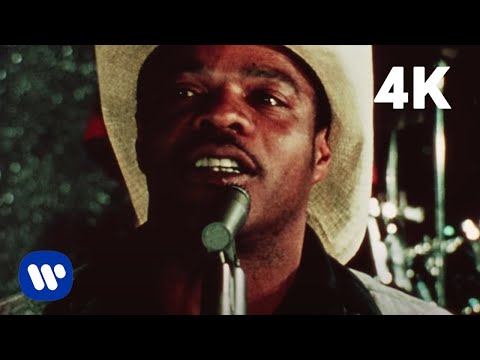


→ More from the 1970s File
View all 1970s hits →




Keep digging