The 1980s File Feature
Hypnotize Me (From "Innerspace")
"Hypnotize Me" — Wang Chung Scores the Summer of 1987 When New Wave Met the Silver Screen The summer of 1987 carried a particular energy on American screens …
01 The Story
"Hypnotize Me" — Wang Chung Scores the Summer of 1987
When New Wave Met the Silver Screen
The summer of 1987 carried a particular energy on American screens and radio dials. Blockbuster season was expanding its cultural footprint, and studios had learned that a carefully placed pop song could serve as both marketing tool and genuine artistic contribution to a film's atmosphere. Innerspace, Joe Dante's science-fiction comedy, arrived in theaters that summer with the full backing of Warner Bros., and Wang Chung's "Hypnotize Me" arrived with it, woven into the promotional apparatus and sonic identity of the project.
Wang Chung had already established themselves as one of the decade's more thoughtful and commercially successful British new wave exports. Their 1984 breakthrough with "Dance Hall Days" introduced the Los Angeles-based British duo of Jack Hues and Nick Feldman to American audiences, and their subsequent work built on that foundation. The band had demonstrated a particular talent for crafting hooks that worked simultaneously on a dance floor and through a car stereo, and that talent made them a natural fit for film soundtrack work.
Built for a Movie's Momentum
"Hypnotize Me" was crafted with the specific energy of Innerspace in mind. The film's premise, involving a miniaturized man injected into an unsuspecting body, leant itself to sonic exploration of altered perception, and the song reflected that thematic territory without becoming a literal soundtrack to the plot. Jack Hues and Nick Feldman composed and produced material that captured the kinetic, slightly surreal quality of Dante's filmmaking while remaining fully functional as a standalone pop record.
The production sits squarely in the mid-1980s new wave aesthetic: synthesizers running alongside live drums, processed guitars adding texture without dominating, and vocals that balance accessibility with a certain cool remove. The arrangement has the propulsive quality that characterized the best dance-pop of the period, built to move listeners physically while engaging them sonically with layers that revealed themselves over repeated listens.
Twelve Weeks of Chart Momentum
The single entered the Billboard Hot 100 on June 6, 1987, debuting at number 87. Its climb through the summer tracked the film's theatrical run, with the promotional synergy between movie and single helping sustain radio interest. By July 25, 1987, "Hypnotize Me" had climbed to its peak position of number 36 on the Hot 100. The track spent a total of 12 weeks on the chart, a solid showing for a soundtrack tie-in that had to compete with the summer's substantial pop and rock releases.
Soundtrack singles operated under specific commercial conditions in 1987. They benefited from the marketing infrastructure of a studio film release, with music video placement on MTV and promotional appearances tied to the movie's publicity campaign. Wang Chung's established profile gave the song credibility that a track from a less recognized act might not have carried, helping it transcend the "movie song" label that could sometimes pigeonhole a release.
Wang Chung's Position in the Mid-1980s Landscape
By 1987, the first wave of British new wave had been filtering through American radio and culture for the better part of a decade. Some of its earliest practitioners had evolved into stadium acts; others had struggled to maintain commercial relevance as tastes shifted. Wang Chung occupied an interesting middle position, critically respected, commercially consistent, and artistically restless enough to keep their work from feeling formulaic.
Their willingness to engage with film and television work reflected a broader understanding that the pop marketplace of the 1980s extended well beyond the album-and-single cycle. The band had provided the entirety of the score for To Live and Die in L.A. in 1985, a project that demonstrated their compositional range and their ability to think in larger sonic architectures than the three-minute pop song. "Hypnotize Me" drew on those capabilities without requiring the same level of sustained compositional effort.
A Perfect Artifact of Its Summer
"Hypnotize Me" captures something essential about 1987 as a cultural moment: the confidence of mid-decade pop, the sheen of professionally executed new wave production, and the particular pleasure of a song that knew exactly what it wanted to be and succeeded at being it. It is a record that places you precisely in a movie theater lobby in the summer of that year, popcorn in hand, ready for something kinetic and fun.
Find it and press play. It will do exactly what it promises.
"Hypnotize Me" — Wang Chung's singular moment on the 1980s charts.
02 Song Meaning
"Hypnotize Me" — Control, Surrender, and the Pleasure of Losing Yourself
The Seductive Logic of Hypnosis as Metaphor
As a metaphor for romantic or physical attraction, hypnosis carries a specific charge. It implies a willing surrender of control, a pleasurable loss of the analytical faculties in favor of pure sensation and instinctive response. Wang Chung's "Hypnotize Me" works within that metaphorical territory with a lightness of touch that keeps the song from collapsing under the weight of its own theme. The desire being expressed is for a kind of total absorption, a state in which ordinary selfconsciousness dissolves in the presence of another person or another force.
The hypnosis theme aligned naturally with the film the song accompanied. Innerspace's premise involved radical alterations of scale and perception, a miniaturized human navigating inside another person's body. The film played with ideas about consciousness, identity, and the strange experience of inhabiting an altered reality. A song about surrendering to a hypnotic state fit that thematic space without requiring heavy-handed literalism.
New Wave's Love Affair with Altered States
The new wave and synth-pop movements of the 1980s had a sustained interest in altered states of perception, drawn partly from their art-rock and krautrock antecedents and partly from the visual aesthetics of early MTV. Wang Chung's songwriting engaged with these themes more thoughtfully than many of their contemporaries, constructing lyrics that gestured toward philosophical and experiential complexity even within the tight formal constraints of pop song structure.
The sonic texture of "Hypnotize Me" reinforced its thematic content. Synthesizer layers that shimmer and pulse, production choices that emphasize the slightly unreal quality of the arrangement, a vocal delivery that sits at the edge of detachment and engagement, these elements created a listening experience designed to mirror the state the lyrics described. The music itself was doing some of the hypnotizing.
The Film Tie-In and Questions of Meaning
Songs written for specific films occupy an interesting position in terms of their interpretive life. They carry two contexts simultaneously: the narrative of the film they accompanied and the independent emotional life they develop when encountered outside of that film context. "Hypnotize Me" works in both registers. Within the context of Innerspace, it contributed to the movie's energetic, kinetic tone. Encountered on its own, it reads as a fairly straightforward pop treatment of romantic fascination and the desire for total absorption in another person or experience.
The dual context actually enriched the song's longevity. Listeners who never saw the film could respond to the track purely on its pop merits, while those who encountered it through the movie brought an additional layer of associative meaning to the experience. Soundtrack tie-ins that succeed as standalone recordings tend to share this quality; they are of their context without being imprisoned by it.
Why the Theme Still Resonates
The desire to be absorbed completely by something, whether a person, an experience, or a piece of music, speaks to something fundamental about human psychology. Ordinary consciousness carries significant cognitive load; the temporary relief of surrendering that load to a compelling external force has powered religious ritual, romantic poetry, and popular music for as long as any of those forms have existed. Wang Chung's treatment of that desire was pop-accessible rather than profound, but accessibility is its own virtue. A song that makes a complex emotional state legible to a mass audience is accomplishing something real.
The 1987 audience that encountered "Hypnotize Me" on the radio or through MTV was being offered a pleasurable three-minute experience of the very thing the song described: a sonic environment carefully designed to disarm resistance and produce involuntary pleasure. The song was, in its modest way, doing exactly what it said.
"Hypnotize Me" — Wang Chung's singular moment on the 1980s charts.
→ More from Wang Chung
View all Wang Chung hits →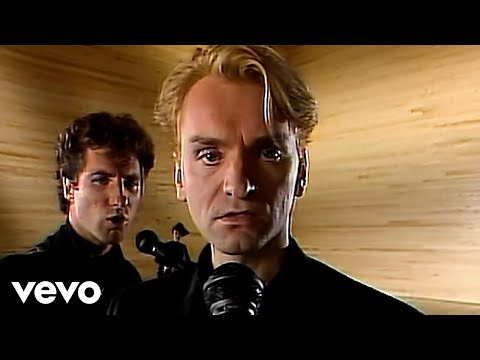

→ More from the 1980s File
View all 1980s hits →

Keep digging