The 1980s File Feature
Don't Be My Enemy
Wang Chung's "Don't Be My Enemy": New Wave Tension in the Commercial Mainstream Wang Chung arrived on the American music scene in the early 1980s as part of …
01 The Story
Wang Chung's "Don't Be My Enemy": New Wave Tension in the Commercial Mainstream
Wang Chung arrived on the American music scene in the early 1980s as part of the substantial wave of British acts whose access to MTV's promotional platform gave them competitive advantages unavailable to their American counterparts. The band, which coalesced around the songwriting and production partnership of Nick Feldman and Jack Hues, had previously recorded under the name Huang Chung before settling on the more pronounceable Wang Chung. Their 1983 debut album Points on the Curve established the essential qualities of their sound: sophisticated pop songcraft, carefully layered synthesizer arrangements, and a melodic sensibility that placed them within the new wave tradition while remaining accessible to mainstream radio audiences.
"Don't Be My Enemy" appeared in 1984, the same year that would eventually produce the band's most commercially successful material. The song was released as a single and entered the Billboard Hot 100 on September 22, 1984, debuting at number 88 before climbing briefly to its peak of number 86 on September 29. It held that position for a second week before exiting the chart, spending a total of three weeks in the Hot 100. The modest chart performance placed the song well below the level of attention that Wang Chung would achieve with their subsequent work, but it documents an important transitional moment in the band's commercial development.
The production of "Don't Be My Enemy" was characteristic of the Anglo-American new wave aesthetic of its moment: synthesizer-dominated arrangements with guitar elements integrated into the electronic texture rather than sitting above it, production sheen that reflected the influence of Trevor Horn and other British producers who were reshaping the sound of mainstream pop during this period. Feldman and Hues were accomplished musicians with formal training, and the technical sophistication of their arrangements distinguished Wang Chung from the more rudimentary synthesizer-pop acts that crowded the market in 1984.
The competitive landscape of September 1984 on the Billboard Hot 100 was formidable. Prince, Cyndi Lauper, Tina Turner, and Wham! were all generating significant chart activity, and the competition for radio attention and consumer purchasing was intense. Wang Chung's ability to achieve any chart presence in this environment reflected both the quality of their songwriting and the support they received from Geffen Records, their American label, which had invested in the band's commercial development.
The period between "Don't Be My Enemy" and Wang Chung's commercial breakthrough was relatively brief. Their 1984 album Mosaic, released on Geffen, eventually yielded the massive hit "Everybody Have Fun Tonight," which reached number two on the Hot 100 in early 1987 after appearing on the Mosaic follow-up Danger Zone. The trajectory from the modest performance of "Don't Be My Enemy" to the near-number-one success of "Everybody Have Fun Tonight" illustrated both the improvement in the band's commercial instincts and the difficulty of predicting which version of a consistent artistic vision would connect with mass audiences.
Wang Chung's contribution to the soundtrack of the 1985 William Friedkin film To Live and Die in L.A. significantly raised their American profile, exposing them to audiences beyond the new wave core that had followed them since their debut. The film's soundtrack, which the band composed in its entirety, demonstrated that their skills extended beyond the pop-single format into more sustained compositional territory, and the critical reception of that work added a dimension of artistic credibility to their commercial activities.
"Don't Be My Enemy" in this context reads as a document of a band still finding its commercial footing while producing work of consistent quality. The song's arrangement and lyrical approach were representative of Wang Chung at their most characteristic: intelligent, melodically focused, and concerned with the emotional complications of contemporary interpersonal life. The song's chart performance may have been brief, but it contributed to the accumulated presence that allowed the band to be taken seriously when their more commercially potent material arrived.
In retrospect, Wang Chung occupies a specific and not unimportant position within the history of 1980s British pop. Their ability to combine sonic sophistication with commercial ambition, and to sustain a consistent artistic identity across the ups and downs of chart fortune, distinguished them from many of their contemporaries who proved unable to manage the transition from MTV novelty to durable commercial act.
02 Song Meaning
The Anatomy of a Plea: What Wang Chung's "Don't Be My Enemy" Communicates
Wang Chung built much of their best work around the emotional territory of interpersonal conflict examined with a degree of analytical distance that distinguished them from the more purely emotive acts around them in the new wave landscape. "Don't Be My Enemy" is a direct expression of that tendency, a song that frames a plea against hostility in terms that acknowledge the complexity of the situation while nonetheless making a clear emotional request. The song does not pretend that the relationship it addresses is uncomplicated; it simply argues that enmity would make it worse.
The word "enemy" in a song about what appears to be a romantic or intimate relationship is deliberately stark. Most songs in this register use softer language, speaking of estrangement or disappointment or distance. Wang Chung's choice of the harder word signals that the situation has escalated beyond ordinary disagreement into something more adversarial, a recognition that transforms the song's central plea from a generic desire for reconciliation into something more specific and more urgent. The singer is not asking to be loved but asking not to be opposed, a smaller and in some ways more poignant request.
The emotional architecture of the song reflects the new wave sensibility that Nick Feldman and Jack Hues had absorbed from the British pop tradition. That sensibility involved a certain emotional coolness at the surface, a willingness to discuss feelings analytically rather than purely expressively. The lyrical approach placed the song in a tradition of British pop songwriting that included the Police and XTC, artists who similarly used melodic appeal as a vehicle for lyrics of unusual precision and complexity. This approach could produce music that rewarded repeated listening, since the surface pleasure and the intellectual content operated on slightly different timescales.
For listeners in 1984, the song addressed a recognizable experience: the moment in a relationship when the emotional temperature has dropped from warmth to something colder, when the other person has begun treating shared history as a source of grievance rather than connection. The desire to arrest that process before it becomes irreversible is entirely common, and the directness of "don't be my enemy" as a statement captures something that people feel but often cannot articulate.
The production of the song contributed to its meaning by creating a sonic environment of controlled tension. The synthesizer textures and the measured rhythmic pulse conveyed a sense of something held carefully in check, which suited the emotional content of a song about trying to prevent deterioration. The music did not escalate; it maintained a kind of anxious steadiness that matched the psychology of someone trying to talk a situation back from the edge.
Wang Chung's broader body of work consistently returned to the examination of how modern people relate to one another across the complications of desire, misunderstanding, and the passage of time. "Don't Be My Enemy" fits within that project as one of the more direct expressions of the emotional stakes involved when relationships go wrong, and as evidence that the band's commercial instincts and their artistic seriousness were more compatible than the mainstream pop format might have suggested.
→ More from Wang Chung
View all Wang Chung hits →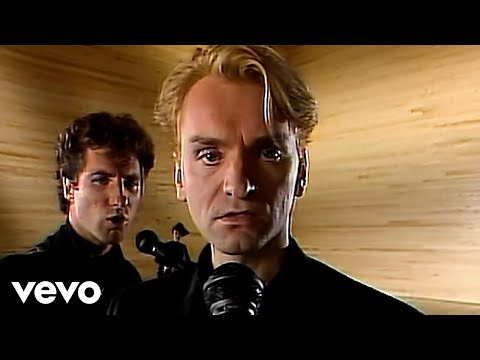



→ More from the 1980s File
View all 1980s hits →


Keep digging