The 1980s File Feature
Heart And Soul
The Monkees Return: "Heart And Soul" and the 1987 Comeback In the spring of 1987, The Monkees released "Heart And Soul" as a single from their reunion album …
01 The Story
The Monkees Return: "Heart And Soul" and the 1987 Comeback
In the spring of 1987, The Monkees released "Heart And Soul" as a single from their reunion album Pool It!, and the record reached number eighty-seven on the Billboard Hot 100, spending four weeks on the chart. The performance was modest by any commercial standard, but the very existence of the single carried a significance that the numbers alone did not capture. The Monkees had not charted a new recording in nearly two decades, and their return to popular consciousness in the mid-1980s was one of the stranger and more affectionate episodes in the history of pop nostalgia, driven not by a cynical cash grab but by a genuine groundswell of audience enthusiasm that the members themselves had not entirely anticipated.
The Monkees' revival had begun in earnest in 1986 when MTV aired marathons of the original 1966-1968 television series. The programming decision was initially motivated by scheduling economics rather than cultural calculation, but its effect on the viewing audience was dramatic. A generation of teenagers who had been born after the group's original run discovered the show and, through it, the music, with an enthusiasm that translated directly into renewed record sales. Rhino Records reissued the original albums to commercial response that no one in the industry had predicted, and the renewed interest prompted the surviving original members to consider whether a genuine reunion was viable.
Three of the four original Monkees — Davy Jones, Micky Dolenz, and Peter Tork — participated in the reunion. Mike Nesmith, who had pursued a successful solo career and later became a pioneer in music video production, declined to participate at this stage, though he would eventually join the others for subsequent anniversary projects. The three-member lineup undertook a major concert tour in 1986 that drew audience numbers sufficient to confirm that the nostalgia had genuine commercial depth, and the success of the tour created the conditions for the recording of new material.
Pool It! was the result: a new album recorded specifically for the reunited lineup, released on Rhino Records in 1987. The production aimed to update the group's sound for the contemporary pop landscape while retaining enough of their essential character to satisfy the audience that had rediscovered them through the reruns. "Heart And Soul" was the lead single from the album, a track that sat squarely within the mainstream pop conventions of the late 1980s without making any particular claim to novelty. The production employed the synthesizer textures, drum machine patterns, and processed vocal treatments that dominated pop production during the period, giving the record a contemporary sheen that distinguished it from the sun-drenched, harmony-rich sound of the original 1960s recordings.
The critical reception of Pool It! was largely indifferent, a response that reflected both the gap between nostalgia-driven expectations and the reality of the new material and the general critical skepticism toward reunion projects that characterized the era. The album was not attempting to be the equal of the original Monkees recordings, which had themselves been produced with an exceptional level of professional craft and had benefited from some of the finest studio musicians and songwriters in 1960s Los Angeles. It was attempting to demonstrate that the three men could make credible pop music together in 1987, a more limited ambition that the album partially fulfilled.
The four-week chart run of "Heart And Soul" placed it well below the peaks the group had achieved during their original run, when they had occupied the number-one position for multiple weeks simultaneously with both singles and albums. That comparison, however, was not entirely fair: the group was operating in a significantly different media environment, without the support of the television show that had made them ubiquitous in 1966 and 1967, and competing in a singles market that had grown considerably more crowded and genre-diverse than it had been at the height of their original popularity. That the single charted at all was itself a small achievement.
Micky Dolenz was prominent on the track, his voice having retained the buoyancy and warmth that had distinguished his original Monkees work. His vocal performances on the original recordings had always been underrated by critics who found it easier to dismiss the group as a manufactured product than to acknowledge the genuine skill of the individual members, and his work on the reunion material demonstrated a consistency and continued range that the intervening years had not diminished. Davy Jones contributed his characteristic charm to the ensemble vocal work, while Peter Tork's musicianship provided the band's credibility as instrumentalists.
The 1987 reunion chapter eventually closed without producing another album or charting single, and Nesmith's absence remained a note of incompleteness that the three-member lineup could not fully overcome. The episode stands in retrospect as an early model of the MTV-driven nostalgia revival that would become a recurring feature of the entertainment industry in subsequent decades, demonstrating that a sufficiently devoted original audience, reactivated by media exposure, could generate commercial returns for acts whose primary commercial moment had apparently passed.
02 Song Meaning
Nostalgia, Identity, and the Late-Career Pop Single: The Monkees in 1987
"Heart And Soul" by The Monkees was released into a cultural moment defined by an unprecedented recirculation of 1960s pop culture through the medium of cable television, and the song cannot be fully understood outside that context. The Monkees of 1987 were not simply a band releasing a new single; they were a cultural institution that had been reactivated by a wave of audience nostalgia that the band members themselves had not generated and could not entirely control. The song they released into this environment bore the weight of a significance far exceeding what its musical content alone warranted.
The song's title — "Heart And Soul" — is worth noting for what it is not. It has no connection to the Hoagy Carmichael standard of the same name, a composition so familiar from piano pedagogy that the title alone carries a specific cultural resonance. The Monkees' 1987 recording is an entirely original composition within the mainstream pop conventions of its era, and the shared title is a coincidence that nonetheless created an additional layer of potential confusion for listeners encountering the recording without context. This disambiguation matters precisely because the standards tradition associated with the older song occupied a very different cultural register from the synthesizer-driven pop of Pool It!
The emotional content of the song itself was consistent with the group's original identity as purveyors of optimistic, romantically oriented pop. The Monkees had never been a band associated with darkness, ambiguity, or social critique in the manner of their British Invasion contemporaries who were also navigating the transition from the mid-to-late 1960s. Their original success had been built on a combination of irresistible melodic craft, charismatic performance, and an emotional directness that appealed to younger audiences in particular. The 1987 material attempted to preserve that essential character while updating its sonic presentation, an attempt that was more successful in intention than in execution but that was not without moments of genuine charm.
The question that "Heart And Soul" implicitly raised — what does a band mean when its original commercial context no longer exists? — was one that the reunion era forced into the open. The Monkees had originally existed in a media ecosystem that no longer operated as it had in 1966: the weekly television series that had turned them into ubiquitous household presences was gone, the AM radio landscape that had carried their singles to simultaneous chart dominance had been transformed out of recognition, and the cultural moment that had made their particular brand of exuberant pop feel like the most natural thing in the world had receded into history. What remained was an audience's love for what the group had represented, and the 1987 recording was in some sense a gift to that love rather than a bid for fresh cultural relevance. Understood in those terms, its modest chart performance was less a failure than an honest accounting of what a reunion single could reasonably accomplish without the infrastructure that had made the original run possible.
→ More from The Monkees
View all The Monkees hits →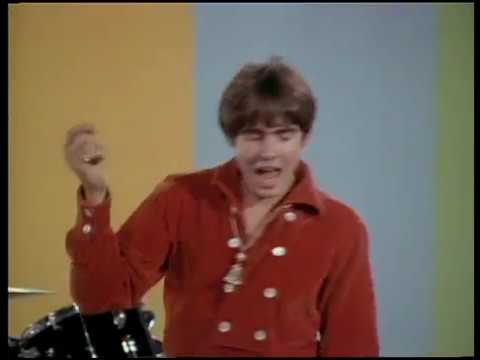

→ More from the 1980s File
View all 1980s hits →



Keep digging