The 1960s File Feature
Valleri
"Valleri" — The Monkees' Final Charge Up the Charts The Machine Slowing Down, The Song Surging Forward Imagine early 1968, and the Monkees are in a strange p…
01 The Story
"Valleri" — The Monkees' Final Charge Up the Charts
The Machine Slowing Down, The Song Surging Forward
Imagine early 1968, and the Monkees are in a strange position. The television show that had made them one of the most commercially dominant forces in American pop has ended its network run; the band has been fighting publicly for creative autonomy and artistic credibility; the psychedelic film Head, which would deconstruct their own mythology with unsettling relish, is being planned. The manufactured teen idols of 1966 are actively dismantling their image even as the sales machine built around them still operates with tremendous efficiency. Valleri is the sound of that machine at full power, released by a band in the middle of an identity crisis and somehow producing one of their strongest pure pop singles.
The song had a convoluted history before its 1968 release. It was first recorded during the frantic early period of the band's existence, when Tommy Boyce and Bobby Hart, the songwriting and production team central to the Monkees' initial commercial success, were working at high speed to supply material for the television show and its associated recordings. A version of the track had actually appeared on an early episode of the show, a fact that gave the song a strange retroactive quality when it was finally released as a proper single.
Boyce and Hart at Their Most Effective
Tommy Boyce and Bobby Hart wrote and produced Valleri, and the track exemplifies what made them such valuable contributors to the Monkees' catalogue. Their approach was disciplined pop craft: strong melodic hooks, efficient arrangements that delivered maximum impact within the three-minute format, and a production style that felt contemporary without being trendy. The result was material that worked on AM radio with the reliability of a well-engineered machine.
The song itself is an address to a specific woman, celebrating her qualities with the straightforward devotion that was Boyce and Hart's specialty. The lyric is not complex, nor is it meant to be; its function is to carry the melody and the emotion, and it performs that function with the professionalism of songwriters who understood their craft and their audience.
The Chart Performance
Valleri entered the Billboard Hot 100 on March 9, 1968, with an explosive debut at number 24. The launch reflected the residual commercial infrastructure still operating on the band's behalf: fan base, radio relationships, and promotional machinery built over two years of television exposure. From that strong debut, the song continued to climb, reaching number 3 on the Hot 100 during the weeks of March 30 and April 6, 1968, and remaining on the chart for 10 weeks in total.
A peak of number 3 in 1968 represented significant commercial achievement in a competitive environment. The chart in early 1968 was crowded with artists who would define the late 1960s: Aretha Franklin, the Temptations, and Paul Mauriat were among those active in the upper reaches of the Hot 100 during this period. For the Monkees to crack the top three at this point in their trajectory, when their television apparatus was winding down and critical opinion of them was mixed at best, required that the song itself be genuinely effective.
A Band Escaping Its Own Category
The fascinating context of Valleri's success is the contradiction it embodied. By 1968, the Monkees had won a very public battle to play their own instruments and write their own material. Micky Dolenz, Peter Tork, and Michael Nesmith had all pushed for greater creative control, and albums like Headquarters and Pisces, Aquarius, Capricorn and Jones Ltd. reflected their desire to be taken seriously as musicians. Yet here was Boyce and Hart, the architects of the Monkees' manufactured commercial formula, delivering one of the band's biggest late-period hits.
Davy Jones's vocal on the track, bright and immediate and aimed directly at the listener's ear, was the voice that radio audiences associated most immediately with the Monkees' biggest singles. His performance on Valleri is a reminder that whatever the band's internal creative tensions, Jones possessed a pop instinct that translated effortlessly to commercial radio.
The End of an Era Disguised as a Hit
In retrospect, Valleri looks like a farewell to the first phase of the Monkees, the period when their commercial apparatus was operating at its most efficient and their audience was responding to pure melodic pop. The band would continue making records and performing, but nothing they released afterward matched this level of commercial performance. The song stands as the final peak of a commercial arc that had begun two years earlier with a television show and a seemingly impossible commercial machine.
Press play and hear what American teen pop sounded like at its most perfectly calibrated, a record designed with the precision of a watch and performed with enough warmth to make you forget the machinery behind it.
"Valleri" — The Monkees' singular moment on the 1960s charts.
02 Song Meaning
"Valleri" — Pop's Pure Gesture and What It Meant
The Name as a Portal
Songs that address a specific person by name carry a particular quality: they create the illusion of overhearing something private, of catching a message intended for someone else and finding it unexpectedly affecting. Valleri operates on this principle, directing its devotion at a named individual with the kind of unguarded enthusiasm that pop music at its most genuine manages to make feel universally applicable. The name "Valleri" becomes both specific and symbolic, standing in for any object of sincere affection that the listener might supply from their own experience.
Tommy Boyce and Bobby Hart understood this mechanism intuitively. Their best work for the Monkees consistently used the conventions of direct address, of songs that speak to a specific imagined person, to create the sense of intimacy that drove the band's connection to their audience. In a cultural moment when the relationship between fan and pop idol was being processed by teenage audiences with an intensity that cultural critics were only beginning to understand, this intimacy was not a minor feature. It was the engine of the entire enterprise.
Devotion Without Complication
The lyrical content of Valleri is uncomplicated devotion: the narrator admires the subject without reservation and wants the listener to understand the qualities that make her remarkable. There is no narrative tension, no threat to the relationship, no complicating factor. The song exists entirely in the register of unclouded affection, a rare emotional territory in pop music, which more commonly requires at least some element of yearning, threat, or loss to generate feeling.
That simplicity is a function of the song's context within the Monkees' operation. Their music served a specific audience that was young enough to find uncomplicated devotion not only plausible but necessary. The teenage experience of strong emotion without the irony or complication that experience eventually imposes is something pop music can preserve in amber, and that preservation is part of its cultural function.
The Manufactured and the Genuine
The Monkees' reputation has been complicated by the circumstances of their creation: a television production company that assembled the group, selected much of their early material, and controlled their commercial presentation with an efficiency that their detractors used to dismiss them as inauthentic. The charge was partly fair and partly irrelevant. The songs themselves were not manufactured in any pejorative sense; Boyce and Hart were real songwriters working from real craft, and the performances on records like Valleri reflect genuine skill regardless of the commercial infrastructure surrounding them.
By 1968, the Monkees had earned the right to be taken somewhat more seriously as artists, having pushed for and won creative control over their recordings. The irony of their biggest late hit coming from their original production team says something about the relationship between authenticity and effectiveness in pop music. The audience did not hear the behind-the-scenes arguments; they heard the record.
Pleasure as Cultural Value
One of the most persistent critical errors about pop music is the assumption that complexity and depth are the only valid criteria for artistic value. Valleri makes no claims to depth; it claims only to give pleasure, to make its three minutes enjoyable through melody, performance, and the warmth of its address. The pleasure it offers is not trivial; it reflects a genuine craft skill and serves a genuine human need. Music that makes people feel good is performing a service that music culture sometimes undervalues because it seems too easy.
The song's chart performance, a top-three finish in 1968 at the peak of one of the most culturally turbulent years in American history, suggests that this kind of uncomplicated pleasure was in considerable demand. That demand has not diminished, and the song continues to deliver on what it promises.
→ More from The Monkees
View all The Monkees hits →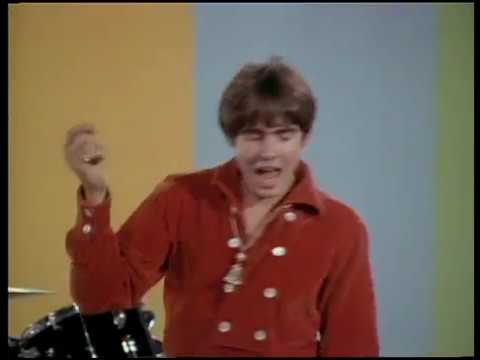

→ More from the 1960s File
View all 1960s hits →




Keep digging