The 1980s File Feature
Take Another Picture
Take Another Picture — Quarterflash The fall of 1983 was a season of transition in American pop. New wave had moved from the art-school margins to the shoppi…
01 The Story
Take Another Picture — Quarterflash
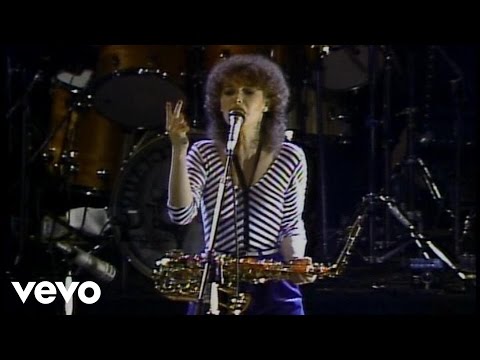
The fall of 1983 was a season of transition in American pop. New wave had moved from the art-school margins to the shopping mall mainstream, MTV was barely two years old but had already reshaped how records got sold, and the synthesizer had completed its takeover of studio arrangements that would have been built on live players just a few years earlier. Quarterflash, the Portland, Oregon outfit built around the husband-and-wife team of Rindy and Marv Ross, arrived in this landscape as something genuinely distinctive: a band with a saxophone-playing female lead vocalist at its center, a combination that resisted easy categorization in a format world increasingly organized around image and genre.
Quarterflash's Particular Angle
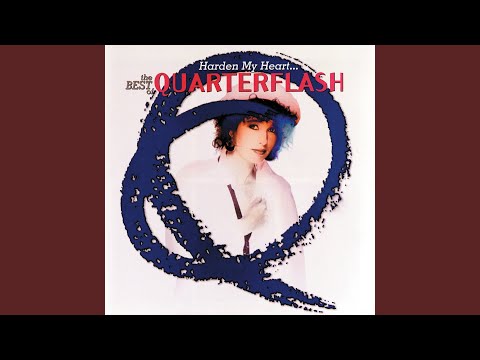
Quarterflash had made a strong initial impression with their 1981 debut, particularly the single "Harden My Heart," which reached number three on the Hot 100 and gave Rindy Ross's saxophone a melodic prominence that set the band apart from the keyboard-dominated new wave of the period. The saxophone riff on that record was distinctive enough to make the band recognizable immediately, and Rindy's vocal delivery carried an emotional directness that translated to radio with real efficiency. By 1983, they were working on their second album and the commercial expectations that follow an unexpectedly successful debut, the pressure to repeat what worked while avoiding the appearance of self-imitation.
The Sound of "Take Another Picture"
The record landed in the AOR/new wave territory that Quarterflash had established as their home. Rindy Ross's voice was the instrument around which the arrangement was built, with the saxophone present but less dominant than on "Harden My Heart," reflecting a production choice to broaden their sonic palette rather than simply recapitulate the formula that had worked. The production had the polished, layered quality of early 1980s major-label rock, with enough synthesizer presence to situate it in its era while the live instrumentation kept it from disappearing into pure electronic homogeneity.
The Chart Run
Take Another Picture debuted on the Hot 100 on October 1, 1983, entering at number 76. It climbed steadily: to 63, then 60, then reaching its peak position of number 58 during the week of October 22, 1983. The record spent six weeks on the chart in total, holding close to its peak before beginning its decline. For a band navigating the difficult commercial terrain of the sophomore release, a top-60 entry on the Hot 100 represented real chart presence, confirmation that their audience had followed them from the debut.
The Sophomore Challenge
The music industry's "sophomore slump" phenomenon is well documented: artists who break through with an unexpected debut often struggle to replicate the commercial performance of that initial record, partly because the debut benefited from the element of surprise and partly because the second record is made under the pressure of expectation. Quarterflash navigated this challenge with reasonable commercial success in 1983, maintaining chart presence without matching the peak positions their first album had generated. That trajectory was common among new wave and AOR acts of the period, many of whom had strong initial showings followed by gradual commercial moderation.
Portland and the New Wave Margins
Quarterflash came from Portland at a moment before that city had developed the cultural identity it would later acquire. In the early 1980s, emerging from the Pacific Northwest with a radio-friendly rock sound meant operating without the kind of regional identity that New York or Los Angeles acts could draw on for press attention and industry credibility. The band's commercial success was, in that sense, earned on purely sonic terms, without the boost of a scene or a city narrative. Their chart presence in 1983 reflected genuine radio acceptance of a record that the audience found worth engaging with across six weeks of commercial activity.
Rindy Ross and the Saxophone in Pop
The saxophone occupied an interesting position in 1983 pop. The instrument had been largely displaced from rock arrangements by the synthesizer in the late 1970s, but a handful of acts had brought it back as a melodic lead voice: Quarterflash was one of them, Toto another, and various soul and R&B acts had never abandoned it. Rindy Ross playing saxophone as the band's most immediately recognizable sound element gave Quarterflash a specific identity in a landscape of largely anonymous keyboard textures, and that distinctiveness was a commercial asset worth protecting. Her dual role as vocalist and saxophonist made her one of the more visually and sonically distinctive frontpeople of the early 1980s radio scene.
Queue it up and let that saxophone cut through the air.
"Take Another Picture" — Quarterflash's singular moment on the 1980s charts.
02 Song Meaning
The Gaze and the Image: What "Take Another Picture" Is About
Photography as a metaphor in pop music has a particular range of emotional registers available to it. The camera can be an instrument of love, capturing what is precious before it disappears. It can be an instrument of obsession, returning compulsively to a subject the observer cannot release. It can represent the desire to freeze time, to hold a moment against the certainty of its passing. When Quarterflash built a song around the request embedded in the title, they were working within this tradition and reaching for one of its more emotionally complex applications.
The Request and Its Implications
Asking for another picture implies that the existing pictures are not enough, which is itself an interesting emotional admission. The records you have are insufficient; the image keeps failing to capture what you need it to capture. This is the emotional logic of the person who cannot let go, returning to photographs of someone or something that has been or is being lost, trying through repetition of the image to retain what the actual experience is releasing. The request contains both love and loss in the same breath.
The Early 1980s Image Consciousness
The early MTV era was acutely conscious of image in ways that previous pop decades had not been. The visual dimension of a recording artist's identity had become commercially primary in a very short time, and the culture was processing this shift with some ambivalence. Songs that engaged with photography and image-making in 1983 were not operating in a vacuum; they were touching something the audience was already thinking about, the way the proliferation of cameras and screens was changing relationships to memory, experience, and the representation of self. Quarterflash's choice of this theme was culturally timely in ways that may have operated below the surface of the song's immediate emotional appeal.
Rindy Ross's Vocal and the Emotional Register
The meaning of a lyric is inseparable from the way it is delivered, and Rindy Ross's vocal style carried a specific emotional quality that inflected every lyric she sang. Her voice had a clean, direct quality without excessive ornamentation, which gave her emotional statements a kind of credibility: this was feeling delivered without theatricality, which in many ways is the most persuasive form of delivery. When the lyric makes its appeal, the voice making it sounds entirely capable of the feeling it describes. That credibility was part of what made Quarterflash's recordings connect with listeners who were not necessarily looking for emotional complexity but recognized the real thing when they heard it.
The Permanence of Images
One of the emotional undercurrents in songs about photographs and pictures is the question of permanence. Images are supposed to last beyond the moment they capture, but they also freeze something that was in motion, creating a kind of melancholy in the gap between the living reality and its static representation. The desire for more pictures is implicitly a desire for more of the thing itself, channeled through the only mechanism available to someone who cannot access the experience directly. This is the emotional territory where the song's title lives: the photograph as consolation for something that cannot be fully possessed or preserved.
Why AOR Audiences Connected
Album-oriented rock audiences of the early 1980s had considerable appetite for emotional directness delivered through polished production. The genre's commercial formula required melodic clarity, vocal accessibility, and emotional themes that resonated with adult experience without requiring either the teenage simplicity of pop or the musical complexity of album rock. Quarterflash occupied this space with genuine craft, and Take Another Picture delivered the emotional register AOR listeners sought: specific enough to feel real, general enough to accommodate individual projection. That combination explained six weeks of Hot 100 presence for a record navigating the commercial pressure of proving a debut was not a fluke.
→ More from Quarterflash
View all Quarterflash hits →


→ More from the 1980s File
View all 1980s hits →
Keep digging