The 1980s File Feature
Yesterday's Songs
"Yesterday's Songs" — Neil Diamond Neil Diamond in 1981: Enduring Commercial Force By the autumn of 1981, Neil Diamond had been a commercial force in America…
01 The Story
"Yesterday's Songs" — Neil Diamond
Neil Diamond in 1981: Enduring Commercial Force
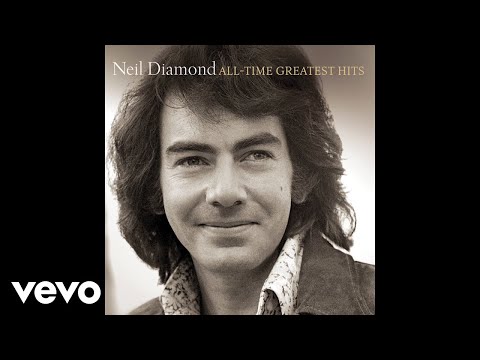
By the autumn of 1981, Neil Diamond had been a commercial force in American popular music for more than a decade and a half. He had survived the shift from the Brill Building songwriting era through the singer-songwriter explosion of the 1970s into the MTV age with his commercial instincts essentially intact. His 1980 album The Jazz Singer soundtrack had been a massive seller, driven by the crossover hit "Hello Again" and the number 1 single "Love on the Rocks." The follow-up album, On the Way to the Sky, arrived in 1981 with "Yesterday's Songs" as its lead single, and the track demonstrated that Diamond's audience had not diminished in the least. It debuted on the Billboard Hot 100 on November 7, 1981, at number 51, and climbed steadily over the following weeks.
The Chart Run
The trajectory of "Yesterday's Songs" on the Hot 100 was methodical and impressive. From its debut at 51, the song moved to 34 the following week, then to 23, 19, and 16 by early December 1981. The climb continued through the holiday season, and the song reached its peak of number 11 on January 9, 1982, having spent 15 weeks on the chart in total. That kind of sustained ascent, taking more than two months to reach its peak, was characteristic of Diamond's chart behavior: his records tended to build through word of mouth and sustained radio play rather than arriving in an explosion of first-week sales. The audience that bought Neil Diamond records was loyal, broad, and not easily distracted by trend.
The Song's Reflective Theme
Diamond had always been drawn to themes of memory, sentiment, and the weight of the past, and "Yesterday's Songs" engaged those themes directly. The title itself announces a meditation on the relationship between old music and present emotion, a subject that was both personally resonant for an artist of Diamond's era and broadly accessible to an audience that shared his generation's relationship to its own musical history. The production on the recording was lush and orchestral in the tradition of Diamond's best-known work, with arrangements that gave the ballad scale without overwhelming its intimate emotional core.
The song was produced with the kind of careful craft that Diamond's recordings consistently displayed during this period. The vocal performance showcases the particular quality of his voice in the early 1980s: deeper, more weathered than his early recordings, carrying the authority of lived experience without any sense of diminishment. Age had added texture to his instrument.
Diamond's Commercial Identity in the Early 1980s
Neil Diamond occupied an unusual position in the early 1980s pop landscape. He was too adult-contemporary for rock radio, too mainstream for any alternative identity, and too established to be marketed as anything new. What he had instead was an audience that was one of the most reliable in the music industry: older, affluent, consistent in their purchasing behavior, and deeply invested in his continued output. "Yesterday's Songs" was perfectly calibrated for that audience, engaging the theme of musical memory in a way that spoke directly to listeners who had their own long history with the music of the previous two decades.
Legacy and Diamond's Continued Relevance
The endurance of Neil Diamond as a commercial and cultural presence through the 1980s and beyond is one of the more interesting stories in American popular music. Artists who had been his contemporaries in the 1960s Brill Building era had largely faded from the commercial mainstream by 1981, but Diamond kept generating chart entries and selling albums at a rate that most artists half his age would have envied. "Yesterday's Songs" is one of the data points in that story of remarkable longevity.
The song's 15-week chart run confirmed that an artist who had been commercially active since the mid-1960s could still move records in 1982, still connect with a mass audience, and still find in his own artistic identity enough material for authentic new work. Put it on and hear an artist who understood that nostalgia is not weakness but craft.
"Yesterday's Songs" — Neil Diamond's singular moment on the 1980s charts.
02 Song Meaning
"Yesterday's Songs" — Meaning and Legacy
Music as Memory Architecture
There is a phenomenon that psychologists have documented extensively but that any music listener knows intuitively: certain songs function as time machines, transporting the listener back to the moment when the song first entered their consciousness. "Yesterday's Songs" by Neil Diamond takes this phenomenon as its explicit subject, examining the relationship between music heard in the past and emotion experienced in the present. The songs of yesterday are not simply aesthetic objects to be appreciated; they are containers for feeling, carriers of memory, anchors to states of being that the years have otherwise made inaccessible.
Diamond's Relationship to Sentiment
Throughout his career, Neil Diamond occupied a distinctive position in American pop regarding sentiment. He neither apologized for it nor wallowed in it cynically; he treated sentiment as a legitimate artistic territory, worthy of craft and commitment. "Yesterday's Songs" demonstrates this approach in concentrated form. The song does not pretend that the pull of the past is rational or productive; it simply acknowledges that the pull is real and powerful, and it meets the listener where they actually are rather than where critical sophistication might suggest they should be.
This refusal to be embarrassed by sentiment was a consistent feature of Diamond's work and one of the primary reasons his audience remained so loyal across so many years and stylistic shifts. He gave people permission to feel what they actually felt without ironic mediation.
Nostalgia and Its Cultural Functions
In 1981, the cultural politics of nostalgia were complex. American culture was simultaneously oriented toward the future, with technology and economic optimism driving a sense of forward momentum, and backward, with a political turn toward traditional values that involved significant idealization of the past. Songs that engaged directly with memory and the past resonated in this environment in ways that went beyond their individual artistic qualities, speaking to a broader cultural mood.
Diamond's audience in 1981 was largely composed of people who had come of age in the late 1950s and 1960s, who had their own songs from that era lodged in their emotional memories, and who recognized immediately what the song was describing. The experience the lyrics pointed to was their own.
The Adult Contemporary Format and Its Listeners
By the early 1980s, adult contemporary radio had consolidated into a format with a distinct aesthetic and a clearly defined audience. "Yesterday's Songs" was precisely the kind of record that this format was designed to play: emotionally accessible, melodically memorable, lyrically direct without being simplistic, and performed by an artist whose name on the label was itself a signal of reliability. The format served an audience that the rock and pop mainstream was increasingly ignoring in its pursuit of younger demographics, and Diamond's ability to deliver what that audience wanted consistently was a significant commercial skill.
The 15-week Hot 100 run of "Yesterday's Songs," culminating in a peak of number 11, reflects both the depth of that adult contemporary audience and the quality of the specific recording that was serving it.
Enduring Relevance of the Theme
The theme of "Yesterday's Songs" does not age because the mechanism it describes is universal and timeless. Every generation accumulates its own yesterday's songs, its own catalog of music that carries emotional cargo from earlier moments in life. The specific songs change; the function they serve does not. Diamond's recording will continue to find listeners who respond to its theme for as long as people form emotional attachments to music, which is to say for as long as there are people and music. That universality, built on a genuinely acute observation about how human beings use art to organize their experience of time, is the song's deepest achievement.
"Yesterday's Songs" — Neil Diamond's singular moment on the 1980s charts.
→ More from Neil Diamond
View all Neil Diamond hits →


→ More from the 1980s File
View all 1980s hits →


Keep digging