The 1970s File Feature
Song Sung Blue
"Song Sung Blue" — Neil Diamond's Journey to Number One The Voice That Kept the Radio Warm Picture the AM dial in the summer of 1972. The Vietnam War was gri…
01 The Story
"Song Sung Blue" — Neil Diamond's Journey to Number One
The Voice That Kept the Radio Warm
Picture the AM dial in the summer of 1972. The Vietnam War was grinding toward its uncertain conclusion, Watergate was weeks away from consuming the national conversation, and pop radio was a strange mix of hard rock, soul, and something softer that people just needed to hear. Into that moment stepped Neil Diamond with a song that felt like it had been around forever, the kind of melody you were certain you already knew the first time you heard it.
Neil Diamond had already spent nearly a decade building one of the most durable careers in American pop by the time "Song Sung Blue" arrived. Starting out as a songwriter for hire in the Brill Building era, he had written for others before his own voice took hold. By 1972, he was no longer just a hitmaker; he was a genuine phenomenon, selling out concerts and releasing albums at a pace that kept him constantly in front of the public.
The Making of a Summer Standard
The song appeared on the 1972 album Moods, one of Diamond's most commercially successful records. Its arrangement was deliberate in its simplicity, built around a gentle acoustic backbone with strings that rose and fell in graceful arcs. The production, credited to Tom Catalano, who had collaborated with Diamond on several of his biggest records, leaned into warmth rather than spectacle. There was no attempt to chase the harder sounds of that era; instead, the track staked out its own emotional territory.
The songwriting itself drew on classical influence. Diamond has been open about the melody's connection to Mozart's Piano Concerto No. 21, and the resemblance is genuinely audible. Taking a centuries-old melodic idea and giving it a pop setting was a bold compositional move, and it worked precisely because Diamond made the adaptation sound completely natural rather than academic.
A Climb That Kept on Going
The chart story for "Song Sung Blue" is a model of steady momentum. The single debuted on the Billboard Hot 100 on May 6, 1972, entering at number 67, a modest start for a record that would ultimately reach the very top. Over the following weeks it climbed with quiet persistence, moving from 67 to 35 to 27 to 18 to 12, each step reinforcing that this was a record with genuine staying power rather than a quick spike.
By July 1, 1972, the song had reached number one, completing a climb that took roughly two months of steady radio saturation. It held a position on the Hot 100 for 13 weeks in total, a respectable run that reflected both the strength of the recording and Diamond's established commercial appeal. The single became one of the defining hits of his career and one of the most recognizable pop songs of the entire decade.
Diamond at His Peak
The summer of 1972 represented something close to the commercial apex of Neil Diamond's recording career. He would go on to score more hits, including the massive "I Am... I Said" and later "Cracklin' Rosie," but "Song Sung Blue" captured a particular version of him: confessional without being overwrought, tuneful without being trivial. The lyrical premise, that singing through sadness can itself become a form of healing, resonated with listeners who wanted pop music to acknowledge difficulty without wallowing in it.
The song became one of the best-selling singles of 1972 in the United States, cementing Diamond's transition from teen idol to enduring mainstream entertainer. Radio programmers loved it because it worked in any context, from afternoon drive time to late-night ballad hours. Listeners loved it because it felt honest.
A Song That Wore In Rather Than Out
Few records from the early 1970s have aged as gracefully as "Song Sung Blue." Part of that longevity comes from the Mozart connection, which gives the melody a kind of pre-existing authority. Part of it comes from the production restraint, which means the recording doesn't carry the sonic markers that date so many of its contemporaries. And part of it is simply that the emotional core, the idea that music itself is the antidote to sadness, is universally true and therefore permanently relevant.
Neil Diamond would continue recording and performing for decades, becoming one of the most bankable concert draws in the world and building an audience that spanned multiple generations. But when people reach for the song that defines him, "Song Sung Blue" remains one of the first and best answers. It is everything that made him worth listening to, gathered into under three minutes of AM-radio perfection. Go find it and let it do what it has always done best.
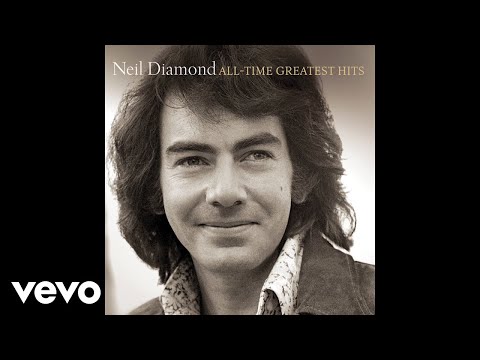
"Song Sung Blue" — Neil Diamond's singular moment on the 1970s charts.
02 Song Meaning
"Song Sung Blue" — Meaning, Themes, and Lasting Resonance
The Oldest Idea in Music
There is something almost paradoxical at the heart of "Song Sung Blue," and it is that paradox that makes the song endure. The central premise is one of music's oldest and most human truths: that sadness, when channeled into song, can transform itself. The act of singing about feeling low becomes, in the very moment of its expression, a form of relief. Neil Diamond did not invent this idea, but he found a way to articulate it for a mass pop audience with a directness that still feels quietly remarkable.
The lyrics do not dramatize grief or catastrophe. They describe the ordinary weight of life, the blues that visit everyone, and the instinct to respond by making sound. The song argues that emotional expression through music is itself a kind of medicine, and that this medicine is freely available, requiring nothing more than a willing voice.
Catharsis Made Accessible
What gave the song its particular cultural reach in 1972 was its accessibility. Pop music in that era was growing increasingly fragmented. Rock was getting harder and more elaborate; soul was becoming more political; singer-songwriter confessionalism was deepening in ways that sometimes felt exclusionary. "Song Sung Blue" occupied a different space, open and welcoming, making an emotional argument that anyone could receive without specialized taste or context.
The song democratizes the idea of catharsis, suggesting that you do not need to be a trained musician or a performing artist to use music as an emotional outlet. Every person who hums while working, who sings to themselves in the car, who turns on the radio when the day has been too much, is participating in exactly the dynamic the song describes. Diamond was speaking to that universal habit and giving it a name.
The Classical Shadow
The melody's kinship with Mozart's Piano Concerto No. 21 adds a dimension that is easy to underestimate. By grounding a pop song in a classical source, even an uncredited and adapted one, the recording carries an unconscious weight of musical tradition. Listeners in 1972 did not need to recognize the Mozart connection to feel it; the melody simply seemed to carry more authority than the average single, as though it had been around for much longer than it had.
That sense of pre-existing familiarity is central to the song's emotional effect. A melody that sounds like something you already know makes the listener feel at home more quickly, which is exactly the emotional state Diamond needed to establish before the lyrical argument about music and sadness could land. The form and the content were reinforcing each other at every moment.
Why It Stayed
Across the decades since its 1972 peak, "Song Sung Blue" has remained a presence in the cultural memory. It appears in film soundtracks evoking the early 1970s, in retail playlists, and on classic-radio formats that span several generations of listeners. The reason is partly nostalgic, but the song also works independent of nostalgia for listeners who have no memory of the era. Its emotional proposition is simply too solid to fade.
The song also benefits from what might be called emotional generosity. Diamond does not compete with the listener for the sadness; he shares it. The lyrical voice is companionable rather than performatively suffering, and that companionship is something listeners return to because it consistently delivers what it promises.
A Small Song with a Large Truth
In the broader catalogue of songs about the healing power of music, "Song Sung Blue" holds a special place because it makes its argument without grandiosity. It is not an anthem or a proclamation. It is closer to a gentle acknowledgment between friends, the kind of thing you say when you want to reassure someone without making a fuss about it. That restraint is the source of its power, and it explains why a three-minute AM single from the early 1970s continues to find new ears and new meaning more than fifty years after its release.
→ More from Neil Diamond
View all Neil Diamond hits →


→ More from the 1970s File
View all 1970s hits →




Keep digging