The 1980s File Feature
True Love Ways
"True Love Ways" — Mickey Gilley's Country Reading of a Classic The summer of 1980 found country music in an unusual commercial position. The crossover succe…
01 The Story
"True Love Ways" — Mickey Gilley's Country Reading of a Classic
The summer of 1980 found country music in an unusual commercial position. The crossover success of the film Urban Cowboy, released that same summer, was about to trigger one of the more unusual pop culture moments of the early Reagan era: a wave of mainstream interest in country aesthetics, line dancing, mechanical bulls, and the music that filled honky-tonks from Texas to Tennessee. Mickey Gilley was positioned perfectly to benefit from this moment, partly because of his Houston nightclub Gilley's, which became famous as the real-world inspiration for the film, and partly because of his genuine gifts as a country performer.
Mickey Gilley and the Urban Cowboy Connection
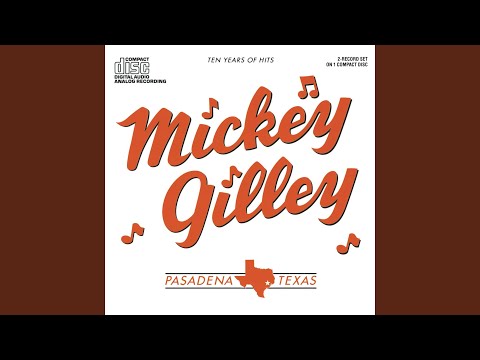
Mickey Gilley had been recording country music for years before the Urban Cowboy moment, building a regional audience around his Houston club and developing a commercial relationship with Playboy Records that had produced consistent country chart entries. He was a cousin of Jerry Lee Lewis and shared some of that figure's piano-driven energy, though his own style was warmer and more country-friendly than Lewis's wilder rockabilly approach. The Urban Cowboy connection gave Gilley a commercial platform that extended well beyond the country format, and he made the most of it with several mainstream chart appearances in 1980 and 1981.
The Buddy Holly Original
"True Love Ways" was written by Buddy Holly and Norman Petty, and Holly's 1958 recording of it with orchestral accompaniment had been one of the most tender and emotionally direct recordings of his brief career. The song was an outlier in Holly's catalog, a slow ballad that contrasted sharply with the driving rock and roll that had made him famous, and it demonstrated a romantic sensitivity that his more energetic recordings sometimes obscured. Gilley's choice to record this Holly composition reflected both his genuine affection for the song and the commercial instinct that its combination of romantic sincerity and recognizable musical pedigree would play well with the broad audience the Urban Cowboy moment had made available to him.
Seven Weeks to Number 66
The song debuted on the Billboard Hot 100 on August 16, 1980, at position 86. It climbed to 76, then to its peak of 66 on the week of August 30, 1980, where it held for a second week before declining. Seven weeks on the Hot 100, peaking at number 66 on the week of August 30, 1980: a solid mid-chart showing for a country record crossing over to the mainstream pop chart. The pop crossover chart result reflected Gilley's particular benefit from the Urban Cowboy moment, which had given him exposure to mainstream pop audiences who might not otherwise have been listening to country radio.
The Crossover Moment
The Urban Cowboy era was brief but commercially significant: it opened the Hot 100 to country acts in ways that had not been true in the preceding years and would not remain true in the years following. Mickey Gilley was among the primary commercial beneficiaries of this moment, along with Kenny Rogers and a handful of other artists whose sound was sufficiently polished to appeal across format boundaries. His ability to chart in the pop mainstream in 1980 reflected both his own commercial strengths and the unusual cultural moment that was making country music newly fashionable to non-country audiences.
Honoring a Legacy
A cover of Buddy Holly carries with it the obligation of genuine respect for the source material, and Gilley's performance on this track meets that obligation. He does not try to transform the song into something different from what it is; he delivers its romantic sincerity with the kind of conviction that honors Holly's original intent while bringing his own vocal warmth to the material. That approach, of serving the song rather than demonstrating himself at its expense, reflects the instinct of a performer who understood the material he was working with.
Let this one settle in on a quiet evening and feel what Buddy Holly put into a melody that has survived every decade since.
"True Love Ways" — Mickey Gilley's singular moment on the 1980s charts.
02 Song Meaning
Love's Endurance: What "True Love Ways" Means
Buddy Holly wrote "True Love Ways" as one of his last recordings, and it has accumulated additional resonance from that biographical fact in the decades since his death. But the song stands entirely on its own merits, independent of any knowledge of when or how it was made: it is a statement about the nature of genuine love that achieves its effect through simplicity and conviction rather than through complexity or sophistication.
The Promise of the Long View
The song's central proposition is that true love has a temporal dimension that distinguishes it from simpler forms of attraction or affection. True love, in this lyric's understanding, persists and deepens over time rather than burning briefly and fading. It has "ways": habits, patterns, forms of expression that are cultivated over years of shared life rather than generated in the initial excitement of new connection. This is a more demanding conception of love than the romantic tradition usually offers, one that requires not just feeling but commitment, not just attraction but the slow accumulation of shared experience.
Romantic Sincerity as Artistic Statement
In the context of late-1950s popular music, a song as straightforwardly sincere as "True Love Ways" occupied a specific position. The era was producing both cynical novelties and genuine emotional statements, and Buddy Holly's capacity for the latter, demonstrated throughout his brief career, was one of the qualities that distinguished him from more disposable figures in early rock and roll. Mickey Gilley's decision to record this song in 1980 was an implicit argument about the value of this kind of sincere romantic statement, a claim that it had not lost its power across the two decades since Holly's original.
What Country Brings to the Material
Country music has its own relationship to the themes of genuine love and its endurance over time, and Gilley's recording frames the song within that tradition in ways that add a different texture to its meaning. The country tradition values the testimony of experience, the word of someone who has lived through enough to know what love actually looks like over the long term rather than just at its beginning. Gilley's mature vocal approach to the material suggests a performer who has the accumulated understanding to deliver this message with authority rather than simply with enthusiasm.
The Urban Cowboy Context
The cultural moment in which Gilley's version appeared, the summer of 1980 and the Urban Cowboy phenomenon, gave the song an ironic context. The film was partly about the gap between the romantic mythology of country culture and the actual experience of the young people who were trying to live within it. Against that backdrop, a genuine love song, one that made sincere claims about love's endurance without irony or qualification, had a particular resonance. Its sincerity was almost countercultural in the context of a moment that was largely about the performance of a lifestyle rather than the genuine living of one.
The Melody as Vehicle for the Message
Holly's melody for this song has a quality that suits its lyrical content: it is patient, unhurried, and generous, qualities that mirror the understanding of love the lyric advances. A love that endures and deepens over time should be expressed in music that does not demand immediate payoff but rewards sustained attention. The melody's willingness to take its time is itself a statement about the values the song is advancing, and it is one of the reasons the song has survived translation across vocalists, eras, and genres without losing its essential character.
→ More from Mickey Gilley
View all Mickey Gilley hits →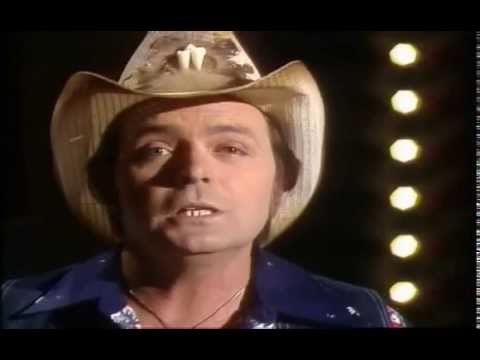

→ More from the 1980s File
View all 1980s hits →


Keep digging