The 1980s File Feature
It's My Job
Jimmy Buffett's "It's My Job": A Conway Twitty Song Finds a New Home (1981) By 1981, Jimmy Buffett had built one of the most distinctive identities in Americ…
01 The Story
Jimmy Buffett's "It's My Job": A Conway Twitty Song Finds a New Home (1981)
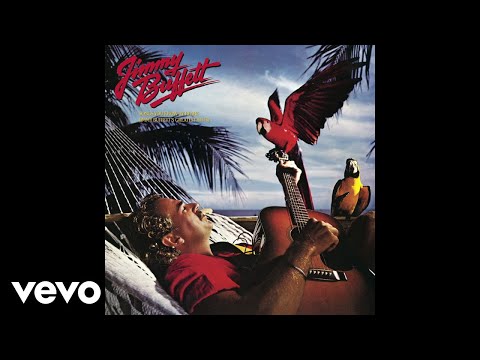
By 1981, Jimmy Buffett had built one of the most distinctive identities in American popular music, a persona built around sun, salt water, margaritas, and a philosophical ease that his growing fan base, eventually to be known as Parrotheads, found both aspirational and deeply comforting. His Coconut Telegraph album, released in February of that year, arrived at a moment when that identity was becoming fully consolidated, and one of its most interesting tracks was a song that Buffett had not written himself: "It's My Job," composed by Mac McAnally and originally recorded by Conway Twitty.
The song was released as a single from Coconut Telegraph and entered the Billboard Hot 100 on February 21, 1981, at number 87. It climbed steadily through the late winter and early spring, reaching its peak position of number 57 during the week of March 28, 1981, and spending eight weeks on the chart. For an artist whose commercial identity was increasingly associated with album sales and concert attendance rather than hit singles, a top 60 pop chart placement represented meaningful mainstream visibility.
Mac McAnally, who wrote the song, was a gifted Alabama-born songwriter and musician who would go on to become one of Buffett's most important musical collaborators and a recurring member of the Coral Reefer Band. McAnally's writing had a melodic directness and a lyrical clarity that made his songs accessible to a wide range of performers, and his composition found a particularly sympathetic interpreter in Buffett, whose easygoing vocal style suited the song's unpretentious working-class Coconut Telegraph was produced with the characteristic looseness and warmth that defined Buffett's studio work during this period. The album featured a core band that had developed considerable chemistry through years of touring and recording together, and the production approach favored the kind of relaxed, organic sound that matched Buffett's lyrical preoccupations with leisure, travel, and the pleasures of living outside conventional ambition. "It's My Job" fit naturally within that framework despite coming from an outside source, because McAnally's thematic concerns aligned well with Buffett's own sensibility. own sensibility.
The song's emphasis on finding dignity and meaning in whatever work one does resonated with a particular strand of American working-class philosophy that Buffett had always understood intuitively despite his increasingly comfortable personal circumstances. His audience included a significant proportion of working people who used Buffett's music as a form of mental escape, and a song about the pride available in ordinary labor connected with their experience in a genuine way rather than coming across as condescension from above.
Conway Twitty's original recording had appeared in the country market, and the song's crossover to Buffett's more pop-oriented context demonstrated its lyrical universality. The core idea of the song was simple enough to survive the translation between musical environments without losing its essential meaning, which is a mark of well-crafted material that reaches something true about human experience rather than merely something specific to a particular genre's conventions.
Buffett's decision to include the song on Coconut Telegraph alongside original material demonstrated his confidence in his own interpretive abilities and his willingness to serve a great song regardless of its source. Throughout his career, he had shown the instincts of a genuine music lover who responded to quality without excessive concern for proprietary attachment to any single stylistic tradition.
The Coconut Telegraph album as a whole was well received by the Parrothead community and performed respectably on the album charts, reaching number 30 on the Billboard 200. "It's My Job" was among its most radio-friendly tracks, and its chart performance helped maintain Buffett's pop visibility during a period when album-oriented rock radio was becoming an increasingly important alternative to the hit single format that had dominated popular music for the previous two decades.
02 Song Meaning
The Meaning Behind "It's My Job" by Jimmy Buffett
"It's My Job" presents a philosophy of work and dignity that runs counter to the conventional narrative of success that dominates much of popular culture. Where the mainstream American mythology tends to valorize work primarily as a means to achievement, accumulation, or eventual escape from work itself, Mac McAnally's song suggests something different: that the dignity available in doing one's job well is not contingent on the nature of the job or on where it falls in any external hierarchy of prestige. The sweeper cleaning the street finds the same source of self-respect in craftsmanship as the executive in the boardroom, if both approach their work with the same quality of attention and care.
This is a genuinely democratic message, and it carries a particular resonance coming through Jimmy Buffett, whose public persona was largely organized around the pleasures of leisure and the appeal of escaping conventional obligation. Buffett's interpretation of a song about the dignity of work created an interesting tension with his established identity, but it also revealed a depth in that identity that the easy Margaritaville mythology sometimes obscured. Buffett had worked seriously and consistently throughout his career, and his celebration of a song about working pride was not as paradoxical as it might initially appear.
The song presents its central argument through a series of portraits, each showing a different person finding meaning and self-respect in the particular demands of their occupation. The cumulative effect is of a world where dignity is distributed more equitably than most social arrangements acknowledge, available to anyone who chooses to take their responsibilities seriously regardless of what those responsibilities are. This egalitarian vision of work's meaning had a natural appeal to a broad audience that included many people doing jobs that were not glamorous but that they performed with genuine competence and care.
There is also an implicit argument in the song about the relationship between external recognition and internal satisfaction. The workers the song celebrates are not necessarily well compensated or publicly acknowledged; their dignity comes from their own assessment of whether they have done what they set out to do. That internal standard is presented as sufficient, as a genuine and sustainable source of self-respect that does not depend on validation from others. This is a particularly important message for people whose work is frequently invisible or taken for granted by the society that depends on it.
Buffett's vocal delivery emphasized the song's warmth and lack of condescension. He did not perform the material as if he were observing working people from a comfortable distance but as if he genuinely shared the values the song articulated. Whether or not that reflected his own daily experience, the quality of the performance communicated a real identification with the song's perspective, which made its message land with greater sincerity than a more detached interpretation would have allowed.
The song has endured as a fan favorite in Buffett's catalogue partly because it offered something different from the pure escapism that defined much of his most famous work. It acknowledged that life involves responsibility and effort, and it argued that meeting those responsibilities with integrity was itself a form of fulfillment. That argument complemented rather than contradicted the broader Buffett philosophy, because the ability to truly enjoy leisure is enhanced by having genuinely earned it through honest work.
→ More from Jimmy Buffett
View all Jimmy Buffett hits →


→ More from the 1980s File
View all 1980s hits →


Keep digging