The 1980s File Feature
Valley Girl
Valley Girl by Frank Zappa Picture the summer of 1982, when a peculiar slang dialect from the suburbs of Los Angeles suddenly swept across the entire country…
01 The Story
"Valley Girl" by Frank Zappa
Picture the summer of 1982, when a peculiar slang dialect from the suburbs of Los Angeles suddenly swept across the entire country. Frank Zappa, the famously uncompromising avant-garde composer and satirist, found himself with the biggest hit single of his long, idiosyncratic career, thanks to an unlikely collaborator: his teenage daughter. "Valley Girl" turned a sharp cultural satire into an inescapable novelty smash.
An Unlikely Hit for a Maverick
Zappa had spent decades as one of rock's most singular figures, a prolific composer who blended rock, jazz, classical, and biting social commentary into music that rarely troubled the pop charts. Commercial success was never his goal, which made "Valley Girl" all the more surprising. The song featured his daughter, Moon Unit Zappa, delivering a monologue in exaggerated "Valspeak", the trendy slang of San Fernando Valley teenagers. It appeared on the 1982 album Ship Arriving Too Late to Save a Drowning Witch, and it became, improbably, his only single to crack the upper reaches of the Hot 100. For an artist who had spent his life resisting the mainstream, landing there by accident was a twist worthy of his own sense of humor.
Satire That Became a Phenomenon
The track is built around Moon Unit's spoken riffs over her father's quirky musical backing, mocking the materialism and vapid chatter of a certain Southern California teen culture. The collaboration reportedly grew out of a real desire to spend time with his daughter, which makes the family chemistry feel genuine. Zappa intended it as satire, a pointed jab at empty consumerism, yet the public embraced the very slang he was lampooning. The contrast between the biting intent and the playful delivery made it irresistible, and phrases from the song entered the national vocabulary almost overnight. Teenagers across the country began imitating the very voice Zappa was mocking. The irony of its success was not lost on Zappa himself, who watched his critique transform into a celebration he never intended.
A Strong Run on the Hot 100
The single climbed quickly as the novelty caught fire. "Valley Girl" debuted at number 75 on the Billboard Hot 100 on July 17, 1982, then rose rapidly through 62, 52, 48, and 46 over the following weeks. It reached its peak of number 32 on September 11, 1982, by far the highest chart placement of Zappa's career. The song spent a total of 12 weeks on the chart, riding the wave of its cultural moment.
An Accidental Cultural Landmark
"Valley Girl" did more than chart; it helped push Valley slang into the mainstream and shaped pop culture's image of the California teenager for years. For a man who disdained commercial pandering, it remains a delicious irony that his biggest hit was a satire embraced as a celebration. With over 1.1 million views on YouTube, the song still draws listeners curious about this strange peak in an unconventional career. It captures a moment when high satire and pop novelty collided in the most unexpected way. Decades later, the slang and the stereotype it spawned remain instantly recognizable, a sign of just how deeply the song embedded itself in the culture. That a famously difficult avant-garde composer should be partly responsible for shaping a pop archetype is one of music history's more delightful accidents. The collaboration also gave his daughter a memorable moment in the spotlight, turning a family in-joke into a genuine cultural touchstone. For all his serious ambitions, Zappa ended up leaving one of his most lasting marks with a three-minute novelty, a fact he surely appreciated for its sheer absurdity. It remains the single most accessible entry point into a vast and challenging body of work, the one Zappa song almost everyone has heard.
Press play, catch that unmistakable slang, and hear the strangest hit of an avant-garde legend.
"Valley Girl" — Frank Zappa's singular moment on the 1980s charts.
02 Song Meaning
The Meaning Behind "Valley Girl" by Frank Zappa
"Valley Girl" is a sharp piece of social satire dressed up as a novelty hit, a pointed mockery of the materialism and shallow chatter Frank Zappa saw in a corner of Southern California teen culture. Its enduring irony is that the public embraced the very thing it was meant to criticize.
Satire of Consumer Culture
At its heart, the song skewers a vapid, status-obsessed lifestyle, using the exaggerated slang of Valley teenagers to expose what Zappa saw as empty materialism. The monologue is a caricature, not a celebration. The track is built as a critique, holding up a mirror to a culture preoccupied with shopping, appearances, and trivial concerns. That satirical intent is the key to understanding it.
The Power of Language
The song fixates on the distinctive way its subject speaks, the breathless, slang-heavy patter that came to define an entire stereotype. Zappa uses that language as both target and tool. The exaggerated speech becomes the satire's weapon, revealing the emptiness behind the words through sheer repetition and absurdity. Ironically, the slang it mocked spread further because of the song.
A Generational Snapshot
The track captures a very specific cultural moment, the early-1980s rise of a particular suburban teen identity. It froze that moment in time, preserving its sound and attitude for posterity. The song works as a time capsule, documenting a slice of American youth culture with both affection and disdain. That dual quality is part of what keeps it interesting decades later, a song you can enjoy on the surface or read more deeply.
Why It Resonated
Audiences responded to the song's humor and its catchy, instantly recognizable voice, often missing or simply ignoring the critique underneath. The slang was fun to repeat, which fueled its spread far beyond what anyone expected. Its blend of comedy and commentary is what made it a phenomenon, appealing to listeners who wanted a laugh and to those who appreciated the sharper edge. It invites you to laugh at a cultural type while quietly asking you to consider what that type says about the values of the moment that produced it. That the joke landed so well it became the thing it mocked only makes the song more fascinating in hindsight. It stands as a case study in how satire can slip free of its creator's control, taken up by the very people it was meant to critique. Whether you hear it as a sharp piece of social commentary or simply a goofy, infectious novelty, the song rewards the attention either way, which is more than most one-off hits can claim. That layered quality, funny on the surface and pointed underneath, is the signature of a genuine satirist, and it is what keeps the song worth discussing long after its slang fell out of fashion.
→ More from Frank Zappa
View all Frank Zappa hits →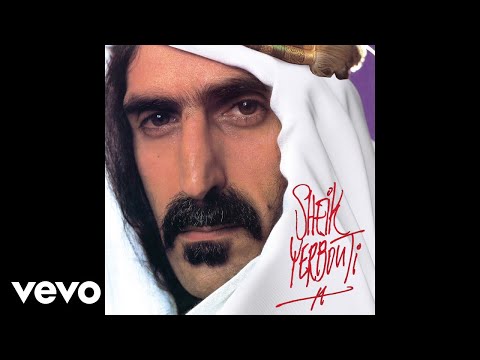
→ More from the 1980s File
View all 1980s hits →
Keep digging