The 1970s File Feature
Dancin' Fool
Frank Zappa's "Dancin' Fool": The Satirist's Assault on Disco In 1979, Frank Zappa achieved something genuinely unlikely: a top 50 hit on the Billboard Hot 1…
01 The Story
Frank Zappa's "Dancin' Fool": The Satirist's Assault on Disco
In 1979, Frank Zappa achieved something genuinely unlikely: a top 50 hit on the Billboard Hot 100. The recording that accomplished this feat was "Dancin' Fool," a satirical attack on disco music and culture drawn from the double album Sheik Yerbouti, which Capitol/Zappa Records released in March of that year. The song's chart performance, reaching a peak of position 45 over an eight-week run, represented Zappa's most significant commercial penetration of the mainstream pop market and earned him a Grammy nomination for Best Rock Vocal Performance.
Frank Zappa occupied one of the most singular positions in American music during the 1970s. A genuinely experimental composer and guitarist who had built his reputation through recordings with the Mothers of Invention beginning in the late 1960s, Zappa produced a body of work that encompassed classical composition, jazz-rock fusion, doo-wop parody, political satire, and elaborate conceptual theater. His relationship to the commercial mainstream was consistently adversarial and satirical; he saw pop music not as an art form to aspire to but as a cultural phenomenon to analyze, critique, and mock.
"Dancin' Fool" emerged from this satirical disposition with particular effectiveness. The song constructed a narrator who, by his own admission, lacks rhythm and coordination but throws himself into the disco experience anyway, driven by the music's irresistible pull. The self-deprecating comedy of the narrator's situation masked a sharp satirical point about the disco phenomenon: the music's mechanical regularity and the culture's emphasis on physical display over musical sophistication made it accessible even to those with no genuine musical gifts. This critique was consistent with Zappa's broader contempt for what he viewed as the dumbing-down of American popular culture.
The song debuted on the Hot 100 on April 14, 1979, at position 88. It climbed steadily through its chart life, reaching 80 on April 21, 71 on April 28, 61 on May 5, and 52 on May 12 before arriving at its peak of 45 during the chart week of May 26, 1979. The consistent upward movement across multiple consecutive weeks indicated that the song was building genuine radio momentum rather than experiencing an initial burst followed by decline.
The timing of the recording's success was historically significant. By mid-1979, the disco backlash was gathering force. The Disco Demolition Night event at Comiskey Park in Chicago occurred in July 1979, marking a cultural turning point in which the genre's dominance became vulnerable to organized hostility. Zappa's satirical assault on disco, delivered through musical means that parodied the genre's conventions while maintaining enough energy to be entertaining on its own terms, positioned him on the correct side of that cultural shift from the perspective of his rock audience while reaching a broader audience through disco-adjacent production elements.
The Sheik Yerbouti album from which "Dancin' Fool" was drawn was itself a commercial breakthrough for Zappa. It became one of his best-selling records, demonstrating that his satirical approach could reach listeners well beyond his existing fan base when packaged effectively. The double album format and its deliberately provocative cover art were consistent with Zappa's career-long approach to the commercial dimensions of the music business as additional material for satirical commentary.
The Grammy nomination for Best Rock Vocal Performance represented the mainstream music industry's acknowledgment that Zappa had produced a recording of genuine popular appeal, even if the content of that recording was explicitly mocking the same mainstream that was now honoring it. This irony was not lost on Zappa himself, who had spent years criticizing the Grammy awards and the music industry's taste-making apparatus. The nomination was a perfect example of the kind of paradox his career consistently generated.
Zappa's guitar performance throughout "Dancin' Fool" and the broader Sheik Yerbouti album demonstrated his continuing development as an instrumentalist of the first order, even within a recording context that foregrounded comedy and satire. His ability to generate genuine musical excitement within a parodic framework was central to the song's appeal; it worked as satire precisely because it also worked as music. The Billboard Hot 100 peak of 45 confirmed that this combination of musical quality and satirical intelligence could reach a mass audience when properly packaged and promoted.
02 Song Meaning
Satire, Authenticity, and the Paradox of Parody: The Meaning of Frank Zappa's "Dancin' Fool"
Frank Zappa's 1979 recording "Dancin' Fool" operates on multiple thematic registers simultaneously, which is characteristic of Zappa's most successful satirical work. On its surface, the song presents a first-person narrator who lacks dancing ability but participates in disco culture regardless, generating comedy from the gap between aspiration and capability. At a deeper level, the song is a systematic critique of disco's cultural logic, its emphasis on surface over substance, spectacle over skill, and the mechanical production of physical pleasure. At its deepest level, it raises questions about authenticity in popular music that Zappa had been pursuing throughout his career.
The central satirical target is not simply disco as a musical form but disco as a social phenomenon and cultural ideology. The narrator of "Dancin' Fool" is a perfect consumer of disco culture precisely because disco's mechanical regularity makes it accessible regardless of individual talent or genuine musical engagement. Zappa built his career on the proposition that music should challenge both performer and listener, demanding genuine skill and attention. A musical form that eliminated those requirements was, from his perspective, not merely commercially regrettable but culturally dangerous.
The comedy of the self-deprecating narrator also contains a deeper satirical point: if even someone with no musical gifts can participate fully in disco culture, what does that reveal about the culture's relationship to musical value? The song implies that the democratization of participation achieved by disco is purchased at the cost of quality discrimination, that a form accessible to everyone who can physically move is a form that has abandoned any meaningful standard of musical engagement. This is a conservative aesthetic argument delivered through comedy, which was Zappa's characteristic method.
The paradox at the heart of the song's commercial success is thematically rich. "Dancin' Fool" achieved its best chart performance, reaching number 45 on the Billboard Hot 100, partly through radio play in formats that also programmed genuine disco music. The satirical assault on a genre found its largest audience partly through the commercial infrastructure of that genre. This paradox is not lost on careful listeners: a song mocking the disco audience was consumed by that audience, a situation that itself demonstrates something Zappa might have recognized as either ironic vindication of his critique or evidence that satire is ultimately absorbed by what it attacks.
The Grammy nomination for Best Rock Vocal Performance added another layer of thematic irony. Zappa had long criticized the Grammy awards as an instrument of commercial interest rather than aesthetic judgment. A nomination for a record that satirized one of the most commercially successful genres in Grammy history placed his satirical work squarely within the commercial validation system he had spent years attacking. Whether this represented the triumph of satire or its defeat is a question the recording continues to pose.
Within Zappa's broader career, "Dancin' Fool" occupies a position as one of his most accessible and commercially successful works, which means it has served as an entry point for listeners who subsequently explored his more demanding material. In this respect, the song performed a function that Zappa's most uncompromising work could not: it used the tools of popular accessibility, comedy, a memorable hook, and production values familiar from the genre it parodied, to introduce a larger audience to a sensibility fundamentally opposed to those tools. The thematic tension between the song's means and its ends is what makes it a genuinely interesting cultural document rather than merely a period joke about a passing trend.
→ More from Frank Zappa
View all Frank Zappa hits →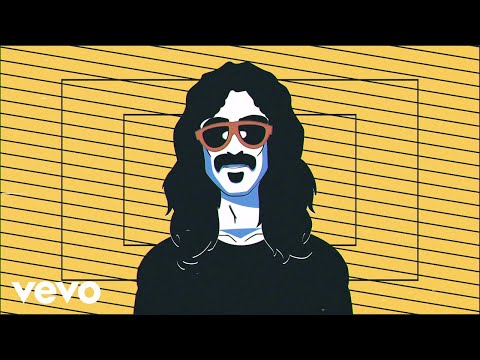

→ More from the 1970s File
View all 1970s hits →




Keep digging