The 1980s File Feature
Same Old Lang Syne
Same Old Lang Syne: Dan Fogelberg's Real Encounter Becomes an American Standard Few songs in the soft rock canon have aged as gracefully or retained as much …
01 The Story
Same Old Lang Syne: Dan Fogelberg's Real Encounter Becomes an American Standard
Few songs in the soft rock canon have aged as gracefully or retained as much genuine emotional resonance as "Same Old Lang Syne" by Dan Fogelberg. Released in 1980 and charting well into 1981, the song peaked at number nine on the Billboard Hot 100 and spent eighteen weeks on the chart, numbers that understated its cultural impact. In the four-plus decades since its release, it has become one of the most reliably affecting holiday recordings in the American pop catalog, though the holiday association is almost incidental to the song's actual emotional substance.
What makes "Same Old Lang Syne" unusual among pop hits of its era is its direct autobiographical foundation. Dan Fogelberg was not writing a hypothetical scenario or borrowing a narrative structure from literary tradition. He was describing, with only minor adjustments for songwriting purposes, an actual encounter that took place on Christmas Eve in a grocery store in Peoria, Illinois, where he ran into an ex-girlfriend. The details of the song, the chance meeting in the frozen food section, the six-pack purchased and consumed in her car while the snow fell, the conversation about the years since they had parted, the recognition that both their lives had evolved in ways that made reunion impossible, were drawn directly from life.
The woman Fogelberg encountered was reportedly Jill Anderson, a former girlfriend from his years before fame. By the time of the meeting, Fogelberg was one of the most successful singer-songwriters of the late 1970s, with a series of well-received albums and a dedicated following built on his blend of acoustic folk, rock, and classical influences. His former girlfriend had moved on into a life that included marriage to an architect. The meeting was warm but bittersweet, freighted with the accumulated weight of paths not taken and time that could not be recovered.
The production of "Same Old Lang Syne" was handled with characteristic care by Fogelberg and his longtime collaborator Norbert Putnam, who served as co-producer. The arrangement built gradually from an intimate acoustic foundation to a fuller band sound, with a saxophone solo in the final section that has become one of the most emotionally recognized instrumental moments in soft rock history. The decision to reference Auld Lang Syne in the saxophone line connected the song to the New Year's tradition, which explained the recording's eventual association with the holiday season, though the encounter it described occurred on Christmas Eve rather than New Year's Eve.
Fogelberg's vocal performance achieved the difficult balance between narrative delivery and genuine emotional engagement that the song required. The story demanded a quality of presence that made the details feel lived rather than literary, and Fogelberg's ability to inhabit the material without forcing its emotional content was central to the song's success. His voice carried the wistfulness of the narrator's situation without veering into self-pity or sentimentality, which would have made the song difficult to revisit as often as its subsequent cultural presence demanded.
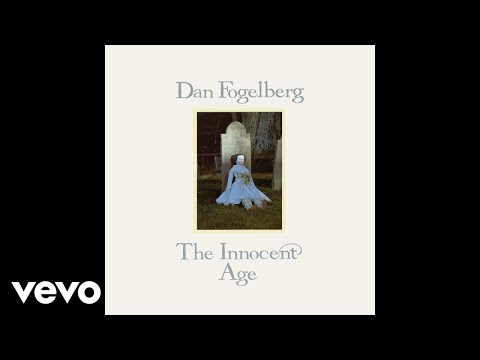
The album that contained "Same Old Lang Syne," titled "The Innocent Age," was a double LP concept album that represented one of the more ambitious undertakings in Fogelberg's career. The album traced the arc of a life from youth through middle age, dealing with themes of time, memory, ambition, love, and loss with a thoroughness that impressed critics who had sometimes found his earlier work overly polished. "Same Old Lang Syne" fit naturally into this larger thematic structure, representing the moment when the past and present collide with enough force to make the narrator take genuine stock of where his life had arrived.
The song's chart performance of eighteen weeks and a peak of nine was respectable for a slow-building, atmospheric piece that ran considerably longer than standard radio edit length. Its longevity on the chart reflected genuine audience attachment rather than aggressive promotional support, the kind of staying power that comes when listeners feel a song speaking to something real in their experience and return to it repeatedly rather than moving on after initial exposure.
Fogelberg died in 2007 after a battle with prostate cancer, but his legacy was already secure. "Same Old Lang Syne" had by then achieved the status of a perennial, one of those recordings that surfaces every December in a way that feels less like radio programming than like cultural ritual. The song's endurance is a testament to the power of specificity in autobiographical songwriting: because Fogelberg was precise about the details of a particular real evening, the song achieves a universality that more general treatments of the same themes rarely manage.
02 Song Meaning
The Meaning Behind "Same Old Lang Syne": Memory, Roads Not Taken, and the Grace of Goodbye
"Same Old Lang Syne" by Dan Fogelberg is one of popular music's most precise and honest accounts of a universal human experience: the encounter with a former lover in the midst of ordinary life, the sudden collision between the present and a particular version of the past, and the recognition of who both people have become in the time since they parted. The song's power comes from its specificity and from its refusal to resolve the emotional complexity it honestly presents.
At its center, the song is about the gap between the life imagined and the life lived. Both the narrator and his former girlfriend have arrived at present circumstances that neither fully intended. The narrator has achieved professional success as a musician but carries the particular loneliness that often accompanies that kind of singular focus on career at the expense of other relationships. The woman has married someone her mother approves of, a formulation that carries its own gentle irony, suggesting that the external measures of a successful life and the internal sense of genuine fulfillment do not always coincide.
The encounter between them is marked throughout by what remains unsaid as much as by what is spoken. Two people catching up after years apart have access only to the surface of what the other's life has become, and the song's narrator is acutely aware of this limitation. The conversation happens in a parked car while snow falls, which is both a literal circumstance and an atmospheric enclosure that creates a space temporarily set apart from the ongoing flow of their separate lives. Within that space, something honest and tender can exist, but only briefly.
The title's reference to Auld Lang Syne invokes the Scottish tradition of acknowledging the passage of time at the new year, the custom of remembering old acquaintances and the times shared with them. Fogelberg's use of the phrase is ironic in the warmest possible sense: the "same old lang syne" is not a celebration but a recognition that certain emotional patterns, certain unresolved connections, certain feelings that were never fully closed, persist through time with remarkable durability. The old acquaintance who is being remembered has become present, which transforms the abstract sentiment of the tradition into something immediate and personal.
The snow that begins to fall at the end of the encounter functions as a moment of grace, an environmental response to the emotional situation that transforms a bittersweet goodbye into something closer to a benediction. There is no resolution to what the meeting has stirred up, no possibility of undoing the years or the choices that have led each person to where they are. But there is the snow, and the saxophone's Auld Lang Syne, and the acknowledgment that the connection was real and that it mattered even though it belongs to the past.
The song's deepest meaning may be that love does not end so much as it transforms, that people who mattered to each other continue to matter even when the form of that mattering changes beyond recognition. The narrator and his former girlfriend are not sad exactly, nor are they happy. They are something more complicated: two people who understand each other's value without any longer knowing where to put that understanding in the architecture of their current lives. That complexity, honestly rendered, is what makes "Same Old Lang Syne" endure as more than a seasonal novelty and justifies its place among the most emotionally truthful songs in the American pop canon.
→ More from Dan Fogelberg
View all Dan Fogelberg hits →

→ More from the 1980s File
View all 1980s hits →
Keep digging