The 1980s File Feature
Leader Of The Band
Leader Of The Band: Dan Fogelberg's Billboard Top Ten Tribute to His Father (1981) Few songs in the soft rock canon carry the emotional directness of "Leader…
01 The Story
Leader Of The Band: Dan Fogelberg's Billboard Top Ten Tribute to His Father (1981)
Few songs in the soft rock canon carry the emotional directness of "Leader of the Band" by Dan Fogelberg, a song that dispensed almost entirely with the romantic subject matter that dominated the format and replaced it with something rarer in popular music: an unambiguous tribute from a son to his father. Released in 1981 on Full Moon/Epic Records, the song became one of the defining moments of Fogelberg's career and one of the most emotionally candid pieces in the singer-songwriter tradition of its era.
Lawrence Fogelberg, Dan's father, had spent his professional life as a bandleader and music educator in Peoria, Illinois. He led the Peoria Municipal Band for decades and had a direct, formative influence on his son's musical development, providing both the inspiration and the early training that would eventually carry Dan to national prominence. The son's debt to the father was not abstract or sentimental in the usual pop sense but concrete and biographical, rooted in specific lessons, specific encouragement, and a specific understanding of music as a vocation worthy of a lifetime's dedication.
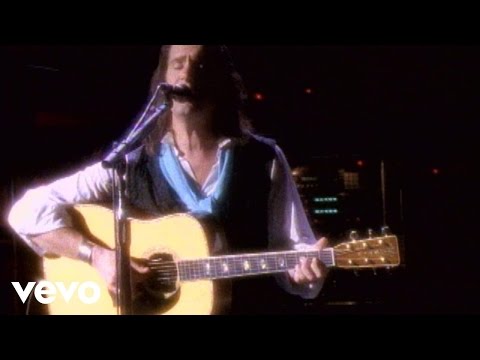
Fogelberg wrote the song with characteristic directness, moving through biographical detail and personal acknowledgment with a fluency that suggested the material had been forming for years before it reached its final shape. The production was spare, anchored by Fogelberg's acoustic guitar and piano playing, with orchestral touches that elevated the emotional content without overwhelming the song's fundamental intimacy. The recording was produced with the kind of careful attention to dynamic that distinguished Fogelberg's best work from the more formulaic soft rock of the period.
"Leader of the Band" was released as a single and entered the Billboard Hot 100, where it climbed to number 9 in early 1982, giving Fogelberg a significant chart success that validated the risk of releasing a song so personal and so departing from the romantic conventions of adult contemporary radio. The record spent multiple weeks on the chart and became one of the most requested songs on the adult contemporary format, where it also performed strongly, demonstrating that radio audiences were receptive to emotional candor when it was delivered with sufficient musical craft.
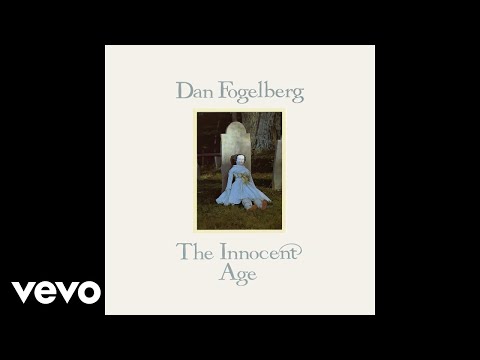
The album on which "Leader of the Band" appeared, "The Innocent Age," was an ambitious double album that Fogelberg had conceived as an autobiographical song cycle, tracing his life from childhood through young adulthood. The Innocent Age was released in 1981 and became one of Fogelberg's most commercially and critically successful projects, reaching high on the album charts and spawning multiple hit singles. "Leader of the Band" was accompanied on the charts by "Same Old Lang Syne," another deeply personal Fogelberg composition from the same album, giving the project an unusual degree of visibility for a singer-songwriter releasing an extended autobiographical work.
The critical reception of the song recognized its distinctiveness. In an era when soft rock was often dismissed as commercially calculated and emotionally shallow, Fogelberg was consistently treated as a more serious artist, and "Leader of the Band" was cited repeatedly as evidence that his commitment to autobiographical depth was genuine rather than performed. The song's directness, its willingness to simply and clearly express filial love and gratitude without irony or complication, was seen as either refreshing honesty or sentimental indulgence depending on the reviewer, but even skeptical critics acknowledged the quality of the craftsmanship.
Lawrence Fogelberg lived to hear the song become a hit, a fact that gives the record an additional dimension that purely posthumous tributes lack. The elder Fogelberg reportedly received the song with the quiet pride that the lyric itself had predicted, making the biographical circle complete in a way that life rarely accommodates so neatly. Dan Fogelberg died in 2007 of prostate cancer, leaving behind a catalog in which "Leader of the Band" stands as perhaps the most personal and the most lasting of all his recordings, a document of a relationship that shaped not just one musician but the music of a generation of listeners who found in Fogelberg's voice a reflection of their own complicated love for their parents.
02 Song Meaning
The Meaning of Leader Of The Band: A Son's Reckoning With Inherited Music
"Leader of the Band" is, on its surface, a tribute from son to father. Below that surface, it is something more nuanced: a meditation on inheritance, on the particular form of love that passes between parents and children through the transmission of a vocation, and on the son's attempt to account for what he owes and how inadequately any accounting can capture it. Dan Fogelberg approached this material not with sentimentality but with the precision of a writer who understood that the most powerful emotional statements are made through specific, concrete detail rather than generalized feeling.
The song traces the lineage of musical gift and dedication, positioning the father's work, his years leading bands and teaching music in a Midwestern city, as the foundational act from which the son's career descended. The emotional logic is one of compound interest: the father invested something in the son that the son then carried into a far larger arena, and the song exists as an attempt to acknowledge that the larger arena would not have been possible without the foundational investment. This is a specific kind of gratitude that most cultures struggle to articulate, because it requires the grateful person to admit that their apparent achievements were partly enabled by someone else's less visible dedication.
The biographical specificity of the song distinguishes it sharply from generic tributes. Lawrence Fogelberg was a real man with a real career, and the song's details reflect genuine biographical knowledge rather than stock imagery of paternal wisdom. This specificity is what gives the song its emotional authority. The listener feels they are being shown something real rather than told something conventional.
The song also grapples with the asymmetry of the relationship. The son became famous; the father remained a local figure. The son's musical gifts were nurtured by the father, but those gifts then carried the son to a world the father never inhabited. "Leader of the Band" navigates this asymmetry with considerable care, neither sentimentalizing the father's smaller stage nor suggesting that the son's larger one represents a straightforward improvement. The father's work was complete in itself; it did not require national fame to be meaningful. This is a mature and somewhat unusual position for a pop song to occupy.
Within Fogelberg's catalog, the song represents the fullest expression of a tendency toward autobiographical emotional directness that distinguished him from most of his soft rock contemporaries. He was always more interested in mapping his actual emotional life than in constructing the romantic fantasies that the genre's commercial conventions encouraged. "Leader of the Band" took this tendency to its logical conclusion by abandoning romantic subject matter entirely in favor of familial love, a choice that proved commercially viable in a way that might have surprised industry observers who assumed radio audiences wanted romance above all else.
The cultural resonance of the song extended far beyond its chart performance. It became a standard selection at Father's Day events and memorial services, adopted as a vehicle for collective expression of filial gratitude and loss that its original biographical context had made powerfully available. The song's place in American sentimental culture grew steadily after its initial chart run, suggesting that Fogelberg had accessed something genuinely universal beneath the specific biographical surface. The particular, faithfully rendered, had opened into the general, which is precisely what the best autobiographical songwriting achieves.
→ More from Dan Fogelberg
View all Dan Fogelberg hits →

→ More from the 1980s File
View all 1980s hits →

Keep digging