The 1970s File Feature
Slick
"Slick" — Willie Hutch Motown's Craftsman at Work The summer of 1973 belonged, in significant measure, to funk. Sly Stone had cracked the door open, James Br…
01 The Story
"Slick" — Willie Hutch
Motown's Craftsman at Work
The summer of 1973 belonged, in significant measure, to funk. Sly Stone had cracked the door open, James Brown had built the house, and now dozens of artists were furnishing the rooms. Willie Hutch was one of those artists, though his relationship to the genre was always filtered through his primary identity as a songwriter, arranger, and Motown insider. By the time "Slick" arrived on the charts, Hutch had already established himself as one of the label's most versatile contributors, a man who could write a ballad for the Jackson 5, produce a concept album for the blaxploitation era, and then turn around and deliver something as street-level and groove-focused as this.
Willie James Hutchison, who recorded as Willie Hutch, had joined Motown in the early 1970s after years of writing and producing in Los Angeles. His work on the soundtrack for the 1973 film The Mack, released earlier that year, had given him a significant platform. That album was a portrait of street life in Oakland told through sophisticated funk and soul arrangements, and it established Hutch's credibility in a register that Motown had not always occupied. "Slick" arrived in that same spirit.
The Sound of the Track
As a piece of music, "Slick" operates in the pocket between funk and soul that Motown was beginning to explore more seriously in the early 1970s. The production carries the hallmarks of Hutch's approach: a rhythm section that locks and holds, guitar parts that chop and shimmer, and horns that punctuate without overwhelming. The overall feel is urban and assured, the sound of someone who knows exactly what they are doing and is not interested in explaining it.
Hutch's vocal delivery on the track matches the title perfectly. There is an ease to the performance, a quality of controlled cool that was not accidental. It reflected both the character the song describes and the persona Hutch had built across his early Motown recordings. The production does not rush; it moves at exactly the pace the groove demands, and that patience is itself a kind of virtuosity.
Six Weeks on the Hot 100
"Slick" debuted on the Billboard Hot 100 on August 11, 1973, entering at number 95. From there it climbed steadily, spending six weeks on the chart and reaching its peak of number 65 on the chart dated September 8, 1973. That peak placed it in the middle tier of the crowded Hot 100 during a particularly competitive summer for R&B and soul. The chart in the fall of 1973 was filled with records from artists working in overlapping genres, and "Slick" held its ground respectably before exiting the chart.
For Hutch, the chart performance represented a continuation of the commercial momentum he had built with The Mack soundtrack. The film had been a surprise success, and its music had found an audience beyond the blaxploitation genre's immediate fan base. "Slick" extended that reach into the pop mainstream, even if its position there was modest rather than dominant.
Hutch in Context
The early 1970s at Motown were years of transition. Berry Gordy had moved the label from Detroit to Los Angeles in 1972, and the musical direction was shifting to accommodate the changing tastes of Black radio audiences. Willie Hutch represented one strand of that evolution: the artist who brought street-level funk and soul aesthetics into a label that had built its reputation on polished, crossover-friendly pop. His willingness to engage with the grittier end of the spectrum gave Motown a credential it needed during this period.
The blaxploitation era was both a commercial opportunity and a genuine cultural moment, reflecting and amplifying anxieties and aspirations that were very real in Black urban communities in the early 1970s. Hutch engaged with that material seriously, and "Slick" belongs to that larger project: music that celebrated a certain kind of street intelligence and autonomy without romanticizing the hardships that came with it.
A Catalog Gem
Willie Hutch's work has enjoyed significant rediscovery among soul and funk collectors, DJs, and the producers who have sampled his records across hip-hop's history. "Slick" is part of that catalog: a tight, focused piece of early 1970s R&B that rewards close listening with the kind of craft that was everywhere in that era and is considerably harder to find now. Put it on and the groove makes its own argument for why Hutch deserves a more prominent place in the story of Motown's 1970s evolution.
"Slick" — Willie Hutch's singular moment on the 1970s charts.
02 Song Meaning
"Slick" — Themes and Legacy
Cool as a Survival Strategy
The concept of being "slick" in the early 1970s African American cultural context carried meanings that went well beyond mere cleverness. It implied a studied composure under pressure, the ability to read a situation and move through it without revealing vulnerability. In the streets and neighborhoods that Willie Hutch was drawing on for his music, that quality was not affectation; it was a practical tool. "Slick" celebrates a particular kind of intelligence, the kind that operates at the margins of conventional society and builds its own code of conduct, its own hierarchy of respect, and its own understanding of success.
The song belongs to a tradition of African American music that has always had one foot in the world it describes and one foot in the aspirational image of that world. The blues had its gamblers and traveling men; soul had its hustlers and survivors; and the funk and soul of the early 1970s, inflected by the blaxploitation moment, had its slick operators who navigated systems not designed for them with a grace that demanded recognition.
Motown Meets the Street
Understanding "Slick" requires placing it in the context of what Motown was doing in the early 1970s and where Willie Hutch fit within that project. The label had built its commercial success on a crossover formula designed to make Black music palatable to white pop audiences. By 1973, that formula was being revised. Artists like Marvin Gaye with What's Going On and Stevie Wonder in his classic-album period had demonstrated that the Motown audience was ready for something more ambitious and less carefully calibrated for comfort.
Hutch's work on The Mack soundtrack, and songs like "Slick" that followed in its wake, represented a parallel evolution: the incorporation of street-level realism into a musical framework that Motown could distribute and promote. The themes were grittier, the arrangements looser and more funk-oriented, and the worldview less concerned with presenting respectability to a mainstream gaze.
The Politics of Self-Presentation
The early 1970s were a moment of heightened political consciousness in Black American culture, and that consciousness inflected even the most commercially oriented music. Songs that celebrated cool, slick, street-smart characters were also, in a broader sense, asserting the dignity and intelligence of people and communities that mainstream culture consistently underestimated. The "slick" figure in Hutch's song is not simply a swagger archetype; he is someone who has developed skills and awareness that allow him to operate effectively in a world that has given him few advantages.
That subtext was legible to audiences in 1973 even when it was not stated explicitly. The music carried it in the confidence of the groove, in the assurance of the performance, in the very texture of a sound that did not apologize for what it was.
Sampling, Rediscovery, and Lasting Influence
Willie Hutch's catalog has proven remarkably durable as source material for hip-hop producers and soul enthusiasts. His records from the early to mid 1970s have been sampled extensively, and the rediscovery of his work by younger audiences through those samples has kept his music alive long after the original chart runs faded from memory. "Slick" exemplifies the qualities that make his recordings valuable: a tight rhythm section with distinctive phrasing, horn arrangements that leave space for creative interpolation, and a groove that holds together under any treatment.
That durability reflects the quality of the original production. Music that survives decades of reuse and recontextualization does so because something essential in it transcends its original moment. "Slick" survives because the intelligence and energy it celebrates are permanently recognizable and permanently relevant, regardless of what decade you are listening from.
→ More from Willie Hutch
View all Willie Hutch hits →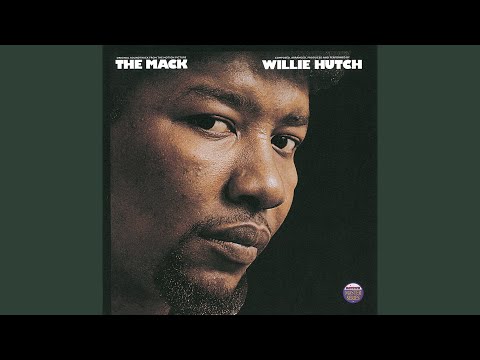
→ More from the 1970s File
View all 1970s hits →




Keep digging