The 1970s File Feature
The World Is A Ghetto
"The World Is a Ghetto" — War A Band Built From the Margins The story of War in the early 1970s is one of the most improbable and satisfying in rock and soul…
01 The Story
"The World Is a Ghetto" — War
A Band Built From the Margins
The story of War in the early 1970s is one of the most improbable and satisfying in rock and soul history. The Los Angeles-based ensemble had formed from several different musical communities, including members of the rhythm and blues circuit, and had found an unlikely starting point in a collaboration with Eric Burdon of the Animals. That partnership eventually dissolved, but by 1971 War had established themselves as a fully independent force, releasing records that drew on an extraordinarily wide set of influences: funk, soul, Latin music, rock, and blues all flowed through their arrangements with genuine fluency. "The World Is a Ghetto" was the title track of the album that would make them commercially dominant in a way that few acts of any genre achieved in the early 1970s.
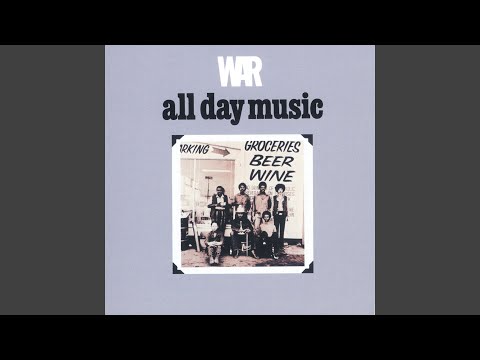
The The World Is a Ghetto album was released in late 1972 and spent two weeks at number one on the Billboard 200, making it the best-selling album of 1973 in the United States. That commercial achievement was remarkable for an album with such uncompromising thematic content, addressing poverty, racial inequality, and urban despair with a directness that most commercially successful acts carefully avoided.
The Single's Long Chart Run
The title track entered the Billboard Hot 100 on November 18, 1972, debuting at a modest number 93. What followed was a patient, extraordinary climb. Week after week the record moved upward through the chart, slowly but with remarkable consistency: 93, 92, 81, 71, 62 through December, then continuing its ascent into January and February of 1973. By the week of February 10, 1973, the single had reached its peak position of number 7 on the Hot 100. The record spent sixteen weeks on the chart in total, an extended run that reflected both the album's commercial momentum and the track's sustained radio appeal.
Reaching number 7 on the Hot 100 with a nearly eight-minute album track required significant audience engagement at a level that radio programmers could not ignore. The edited single version made the track more compatible with radio formats, but the music's depth still translated clearly even in abbreviated form.
The Sound of the Record
The full album version of "The World Is a Ghetto" runs close to eight minutes, an extended meditation on its subject that builds gradually through multiple sections. Howard Scott's guitar work and the rhythm section's measured, deliberate groove created a platform for the track's atmospheric development. The arrangement was patient, almost cinematic in the way it allowed ideas to develop over time rather than compressing everything into conventional verse-chorus structure.
This was characteristic of War's production approach, which trusted listeners to stay engaged through extended musical development. Their records rewarded attention in ways that three-minute pop songs structurally could not, and the group's audience responded to that trust. The harmonica contributions and the various instrumental voices that moved through the arrangement gave the track a textural richness that held up across its full duration.
War in the Context of 1972
The autumn of 1972 was a politically charged moment in American life. The Vietnam War was in its final years, the civil rights movement's legislative achievements were still fresh in living memory while their implementation remained contested, and urban poverty and racial inequality were daily realities for enormous portions of the American population. War's music addressed these realities without flinching, which set them apart from most commercially oriented acts of the period who preferred to keep their art at a distance from such uncomfortable material.
The fact that a song this direct about the conditions of American life could reach the top ten of the Hot 100 and anchor the year's best-selling album is itself a significant piece of cultural history. American audiences in 1972 and 1973 were ready, apparently, for music that looked at their world without softening what it saw.
A Record That Endures
Decades on, "The World Is a Ghetto" retains its emotional and political force because the conditions it described have not disappeared. The song's geographical metaphor, the ghetto as both a literal place and a state of social abandonment, remains legible to listeners across subsequent generations who recognize the landscape it describes. Press play and let War's most ambitious statement remind you of what popular music can reach when it tries.
"The World Is a Ghetto" — War's singular moment on the 1970s charts.
02 Song Meaning
"The World Is a Ghetto" — Poverty, Solidarity, and the Sound of Social Truth
The Ghetto as Universal Condition
The central argument of "The World Is a Ghetto" is announced in its title and sustained throughout its extended musical meditation: that the condition of poverty, exclusion, and neglect associated with the urban ghetto is not a marginal or exceptional experience but a widespread human reality. War's lyrical framework extends the term beyond its specific American racial and geographic context to make a claim about the broader organization of society, in which some people are systematically left outside the boundaries of opportunity and full participation. This universalizing move gave the song both its political ambition and its capacity to resonate with listeners across different backgrounds.
The idea was genuinely radical for a record that would achieve mainstream commercial success. Most popular music of the early 1970s that touched on social themes did so through individual emotional narratives. War chose a more explicitly political frame, and audiences received it.
The Great Migration and Urban Reality
The song's imagery draws on a specifically American urban experience that had been shaped by decades of migration, policy, and economic force. The Great Migration of Black Americans from the rural South to the industrial North and West had created the conditions in which the urban ghetto formed, a process driven by both economic aspiration and the constraining forces of racial discrimination in housing and employment. By 1972, the second and third generation of that migration was living with the accumulated results of those forces in cities across the United States.
War's membership came from Los Angeles, a city with its own complicated geography of racial settlement and segregation. Their firsthand familiarity with the world the song described gave the record an authenticity that critics and listeners recognized. This was not outside commentary but inside knowledge.
Music as Witness
One of the most important cultural functions that "The World Is a Ghetto" served was that of witness. In the tradition of African-American protest music that runs from the blues through soul and into funk, the act of naming one's conditions in song carries specific weight. It asserts that the experience is real, that it deserves to be heard, and that it will not be silently absorbed. The song's eight-minute duration in its album version was itself a form of insistence: this is not something to be dispatched in three minutes and forgotten.
The musical setting reinforced the witnessing function. War's arrangement created a sonic environment that felt like the world it was describing: layered, complex, containing beauty and sorrow simultaneously, with a groove that made the experience habitable rather than simply painful. This combination allowed the song to function as both social commentary and musical pleasure without those two qualities contradicting each other.
Why It Reached Number Seven
The commercial success of "The World Is a Ghetto" is worth examining directly, because it is not obvious why a record this explicitly political should have achieved mainstream chart success on the scale it did. Part of the answer lies in War's musical sophistication: the track worked as music independent of its lyrical content, and listeners who engaged it as groove first and statement second found both dimensions rewarding. Part of the answer lies in the historical moment, in which the combination of civil rights awareness, anti-war sentiment, and urban social crisis had produced a genuine appetite for music that did not look away.
And part of the answer is simply that War was very good at what they did. The quality of the musicianship, the depth of the arrangements, and the sincerity of the performance all contributed to a record that earned its audience rather than simply demanding it. A message, however true and important, needs excellent music to carry it to the people who need to hear it.
→ More from War
View all War hits →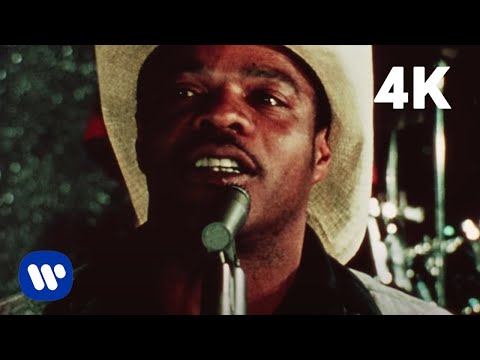


→ More from the 1970s File
View all 1970s hits →




Keep digging