The 1970s File Feature
Ballero
"Ballero" — War The Band That Refused to Be Pinned Down By the summer of 1974, War had spent four years proving that genre categories were a cage they had no…
01 The Story
"Ballero" — War
The Band That Refused to Be Pinned Down
By the summer of 1974, War had spent four years proving that genre categories were a cage they had no intention of entering. The Long Beach-based band had emerged from the soul and R&B circuits of Southern California to create something that blended funk, rock, jazz, and Latin rhythms with a social consciousness that was never preachy but always present. Their catalog already included "Slippin' Into Darkness," "The World Is a Ghetto," and "The Cisco Kid," songs that demonstrated a range most bands could not approach. "Ballero" arrived as another expression of the band's restless creative intelligence, drawing on traditions that reached south of the border while maintaining the hypnotic groove that was War's signature.
Drawing from the Corrido Tradition
The word "ballero" itself signals War's engagement with the Mexican corrido tradition, the narrative song form that had been telling stories of outlaws, rebels, and ordinary people along the US-Mexico border for generations. War's lineup included musicians with deep roots in the Latino communities of Southern California, and their ability to draw on that cultural inheritance gave the band a distinctive sonic vocabulary. The track blended percussive energy with a melodic sophistication that required no single genre label. War's horn section brought a jazz-inflected brightness to the production, while the rhythm section maintained the kind of locked, hypnotic pulse that made the band's music so effective on a dance floor and so satisfying through headphones simultaneously.
Riding the Charts Through a Hot Summer
"Ballero" debuted on the Billboard Hot 100 on June 8, 1974, entering at number 85. The climb was measured but consistent, moving from 68 to 58 to 48 to 44 over the course of June and into July. The single reached its peak of number 33 on July 20, 1974, completing a run of 10 weeks on the chart. This was strong but not spectacular performance for a band that had, just two years earlier, seen The World Is a Ghetto become the best-selling album of 1972. "Ballero" demonstrated that War could sustain commercial relevance even as the band continued to explore musical territory that lay outside straightforward pop formulas. The peak of 33 placed the track solidly in the upper third of the chart.
The Mid-Period War Sound
By 1974, War had settled into what might be called the classic period of their output. The albums were ambitious in scope, the performances were musically adventurous, and the combination of social awareness and pure groove made the band a favorite not just with mainstream radio audiences but with critics who were beginning to take funk and soul music seriously as art forms. "Ballero" appeared on the album Deliver the Word, which had been released the previous year and continued to generate airplay and commercial attention well into 1974. The album's range was characteristic of the band's ambitions, moving from extended instrumental workouts to concentrated pop songwriting within a single listening experience.
War's Place in American Music
War's achievement across the early 1970s was significant enough that their influence is still felt in contemporary music through sampling, direct homage, and the simple persistence of their recordings on playlists and radio stations. "Ballero" captures the band at a moment when they were genuinely expanding the vocabulary of American popular music, incorporating Latin elements not as decoration but as structural components of their sound. That commitment to authentic cultural synthesis gave their music a depth that purely trend-driven artists could not match. The track rewards a focused listen; put it on and let the arrangement reveal itself layer by layer.
It is worth noting that War achieved this cross-cultural synthesis at a time when radio programmers and record label executives routinely sorted music into narrow demographic boxes. The band's multiracial lineup was itself a statement in 1974, as was their insistence on recording music that drew from African American, Mexican American, and white working-class traditions with equal seriousness. This refusal to occupy only one lane in the musical highway made them a more difficult commercial proposition in some respects, but it also made their catalog uniquely durable. Songs like "Ballero" aged better than many of the more narrowly conceived hits of the era precisely because they were built from a broader foundation.
"Ballero" — War's singular moment on the 1970s charts.
02 Song Meaning
"Ballero" — Meaning and Legacy
The Narrative Song as Cultural Bridge
War's engagement with the corrido tradition in "Ballero" represented something more than a musical experiment. The corrido had long served as a form of popular history and social commentary in Mexican and Mexican-American communities, a way of preserving stories that official histories ignored. By drawing on this tradition, War was honoring the cultural heritage of their Latino members and signaling to Latino listeners that their stories had a place in the mainstream of American popular music. This was not a trivial gesture in 1974, when Latino representation in commercial music remained limited despite the enormous cultural contributions of communities throughout the American Southwest.
Groove as a Political Act
War's music in the early 1970s consistently demonstrated that political consciousness and physical pleasure were not opposites. "Ballero" asked listeners to dance and to think simultaneously, to let the rhythm work on the body while the imagery and arrangement worked on the imagination. This fusion was War's particular gift to American music. The band understood that the most effective way to carry a message was to make the delivery irresistible, that a groove people couldn't stop moving to would carry its meanings deeper than any earnest lecture. The track's sustained percussive energy served this philosophy well.
Southern California's Cultural Geography
Long Beach and the broader Los Angeles basin that produced War was one of the most culturally diverse urban environments in the United States, and the band's music reflected that geography. Black, Latino, and white musicians shared the bandstand, and the songs they created together drew on all of their inheritances. "Ballero" made this cultural complexity audible: listeners who knew the corrido tradition would hear one thing in the song's architecture, while listeners coming from soul and funk backgrounds would hear another. Both hearings were valid. The song worked for multiple audiences precisely because it was built from multiple traditions rather than a single one.
The Enduring Quality of Cultural Synthesis
Decades after "Ballero" appeared on the Hot 100, War's commitment to musical and cultural synthesis looks increasingly prescient. Contemporary artists across hip-hop, pop, and Latin music have increasingly embraced the kind of boundary-crossing that War practiced as a matter of course, and the critical vocabulary for understanding such work has expanded enormously. The track stands as an early model of what happens when musicians refuse to accept that their various cultural inheritances must be sorted into separate boxes. The result, then and now, is music that is richer and more resonant than any single tradition could produce alone.
"Ballero" — War's singular moment on the 1970s charts.
→ More from War
View all War hits →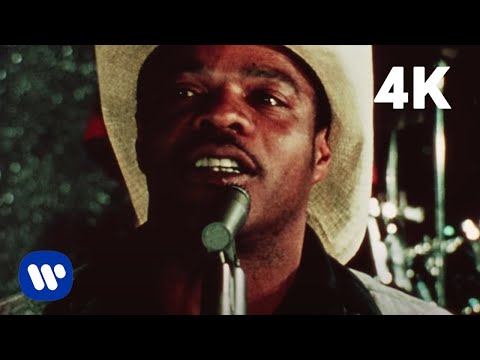


→ More from the 1970s File
View all 1970s hits →




Keep digging